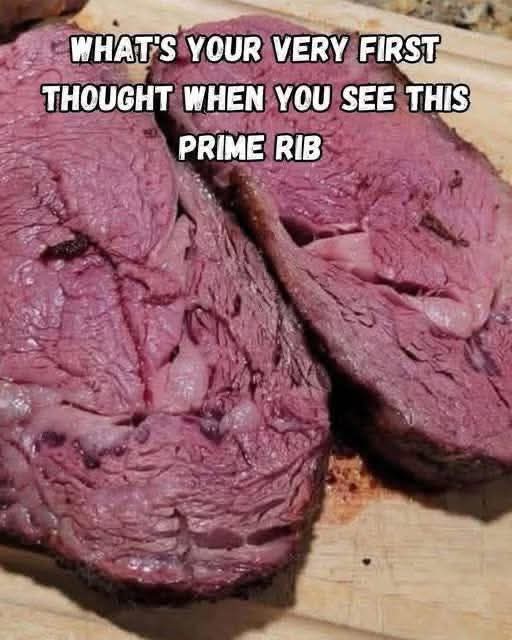
Here’s a complete, in-depth guide to Prime Rib—starting with my very first thought when I see it.
—
🧠 My Very First Thought When I See Prime Rib
“That magnificent, crusty, herb-crusted beast of beef is a celebration on a bone. Carving into it should reveal a tender, juicy, perfectly pink interior—and someone at this table is about to propose marriage to the chef.”
—
📜 History of Prime Rib
Prime rib (also called standing rib roast) comes from the primal rib section of the cow (ribs 6–12). Its roots trace back to medieval England, where large cuts of beef were roasted over open hearths for feasts. The name “prime rib” refers both to the USDA Prime grade (high marbling) and the cut’s prominence at holiday tables. In Victorian times, it became the centerpiece of the classic English “Sunday roast” with Yorkshire pudding. Today, it remains the king of roasts for Christmas, New Year’s, and special occasions worldwide.
—
✅ Benefits (Nutritional & Culinary)
· High-quality protein – supports muscle repair and satiety.
· Rich in B12, zinc, and iron – boosts energy and immunity.
· Conjugated linoleic acid (CLA) – found in grass-fed beef, linked to heart health.
· Culinary benefit – feeds a crowd with minimal active cooking time.
· Leftover gold – sandwiches, tacos, hash, or fried rice.
—
🥩 Prime Rib Recipe – Classic Herb-Crusted Standing Rib Roast
Serves: 6–8
Prep: 20 min + resting
Cook: ~2–3 hours (depending on size)
🛒 Ingredients
· 1 bone-in prime rib roast (3–4 ribs; about 5–7 lbs / 2.5–3 kg) – ask butcher to “French” the bones (optional)
· ½ cup unsalted butter (softened)
· 6 cloves garlic (minced)
· 2 tbsp fresh rosemary (finely chopped)
· 2 tbsp fresh thyme (finely chopped)
· 2 tbsp fresh sage (finely chopped)
· 2 tbsp coarse kosher salt (or 1 tbsp table salt)
· 1 tbsp freshly ground black pepper
· 1 tbsp olive oil (for searing)
🔥 Method (Step-by-Step)
1. Bring to room temp – Remove roast from fridge 2 hours before cooking.
2. Make herb butter – Mix butter, garlic, rosemary, thyme, sage, salt, and pepper.
3. Dry & coat – Pat roast dry with paper towels. Rub herb butter all over meat and bone ends.
4. Sear (optional but recommended) – Heat oil in a large pan or directly in a roasting pan on stovetop. Sear all sides until deep brown (2 min per side).
5. Roast low & slow – Preheat oven to 250°F (120°C). Place roast bone-side down on a rack in a roasting pan. Roast until internal temp reaches 120°F (49°C) for rare (about 15–18 min per lb).
6. Rest – Remove from oven, loosely tent with foil, rest 30–40 minutes (temp will rise to 130–135°F / 54–57°C for medium-rare).
7. Final sear (reverse sear method) – Crank oven to 500°F (260°C). Return roast for 6–10 min to crisp crust. Or use a blowtorch!
8. Carve – Slice between bones or cut meat off the bone, then into ½-inch slabs.
🌡️ Target Internal Temps (before resting)
· Rare: 115–120°F (46–49°C)
· Medium-rare: 120–125°F (49–52°C)
· Medium: 130–135°F (54–57°C)
—
🧪 The Science (Formation of a Perfect Roast)
· Reverse sear – Low heat first cooks evenly edge-to-edge; high heat at the end creates a Maillard reaction (brown, savory crust) without overcooking the interior.
· Resting – Juices redistribute; carryover cooking adds ~5–10°F.
· Fat marbling – Melts at 130–140°F, basting the meat naturally.
—
🍽️ Serving & Lovers
Traditional pairings:
Horseradish cream, au jus, Yorkshire pudding, roasted potatoes, creamed spinach.
Who loves prime rib?
· Holiday hosts – impressive but forgiving.
· Carnivores – pure beef flavor without fancy sauces.
· Meal preppers – leftovers multiply into 5 different meals.
· Steakhouse fans – that salty, fatty, beefy bite is unmatched.
—
📊 Nutrition (per 4 oz / 113g cooked, trimmed, medium-rare)
Nutrient Amount
Calories ~320
Protein 28g
Fat 22g
Saturated fat 9g
Iron 15% DV
Vitamin B12 80% DV
Zinc 35% DV
(Values vary with fat cap and grade.)
—
🧑🍳 Methods Recap
Method Why It Works
Room temp rest Even cooking
Herb butter rub Flavor + browning
Low-temp roasting Tender, uniform doneness
Long rest Juicy slices
High-temp finish Crispy crust (reverse sear)
—
🏁 Conclusion
Prime rib is not just food—it’s a ritual. From its medieval English origins to your holiday table, this roast rewards patience with beefy perfection. Master the reverse sear, respect the rest, and you’ll convert any skeptic into a lover. Serve it rare, pink, and salty, and watch people close their eyes with that first bite. That’s the power of prime rib.
—
❤️ Final Note for Lovers of Prime Rib
To the prime rib lover: You don’t need steak sauce. You don’t need gimmicks. You understand that salt, fire, time, and a great cut of beef are all that’s required for a transcendental eating experience. Keep your fork sharp and your oven low.