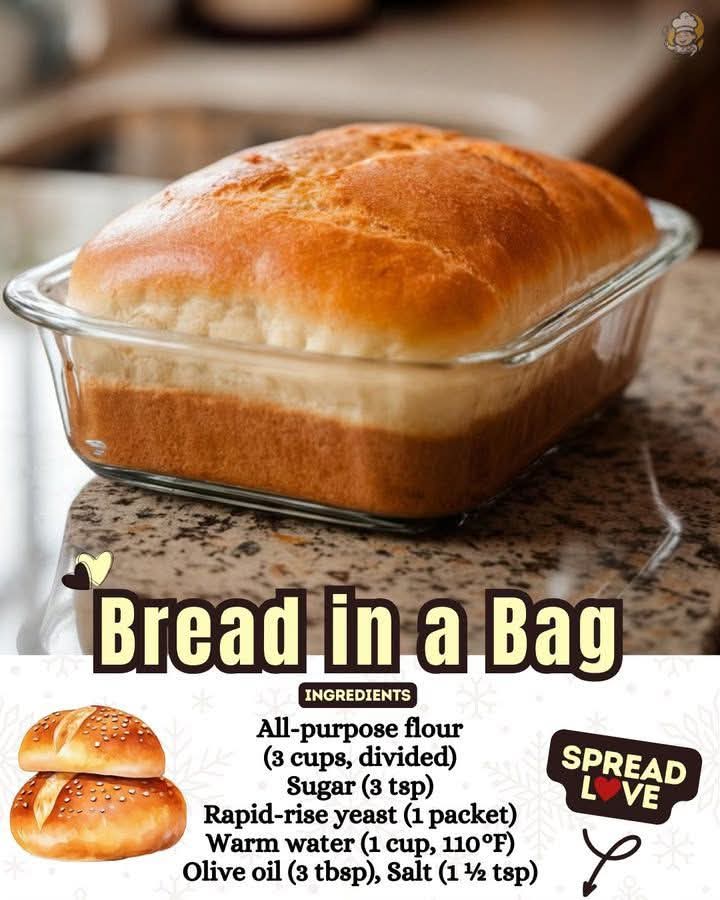
Rustic Homemade Bread — “The Bread That Smells Like Home”
There’s a kind of bread that doesn’t just feed a table—it changes the atmosphere of a kitchen. It rises slowly, quietly, almost like it’s thinking. Then it bakes into something simple but unforgettable: a crackling crust, a soft warm crumb, and a smell that feels like comfort itself.
This is that kind of bread. The one people remember without knowing why.
🥖 Introduction
Homemade rustic bread is one of the oldest and most universal foods in human history. Every culture has its version—flour, water, salt, time. What makes it special isn’t complexity, but patience.
Before industrial yeast and supermarket loaves, bread was made with natural fermentation, often shared between families and neighbors. The act of baking wasn’t just cooking—it was routine, ritual, and rhythm.
This recipe keeps that spirit: simple ingredients, slow rise, and a crust that sings when it comes out of the oven.
🧂 Ingredients
Basic Dough
- 3 ½ cups all-purpose flour (or bread flour for stronger structure)
- 1 ½ teaspoons salt
- 1 teaspoon sugar (optional, helps yeast activate)
- 2 teaspoons instant dry yeast
- 1 ¼ cups warm water (not hot, just comfortably warm)
- 2 tablespoons olive oil (optional for softness)
For finishing
- Extra flour for dusting
- A little olive oil or butter (optional for crust shine)
🍞 Method & Instructions
1. Activate the dough (if using active yeast)
Mix warm water, sugar, and yeast. Let it sit 5–10 minutes until foamy.
2. Form the dough
In a large bowl, combine flour and salt. Slowly add the yeast mixture and olive oil. Mix until a shaggy dough forms.
3. Kneading — the heart of the bread
Turn the dough onto a floured surface and knead for 8–10 minutes. You’re looking for:
- smooth texture
- elasticity
- slight spring when pressed
This is where gluten develops—the structure that gives bread its chew.
4. First rise (fermentation)
Place dough in a lightly oiled bowl. Cover with a cloth. Let it rise for 1 to 2 hours until doubled in size.
This slow transformation is where flavor is built.
5. Shaping
Punch down gently. Shape into a round loaf or oval batard. Don’t overwork it—keep the air inside.
6. Second rise
Place on a baking tray or floured basket. Let it rest 30–45 minutes.
7. Baking
Preheat oven to 220°C (430°F).
Before baking:
- lightly dust top with flour
- optionally score the top with a knife for rustic cracks
Bake for 25–35 minutes until:
- crust is deep golden brown
- bottom sounds hollow when tapped
🔥 Methods (The Craft Behind It)
Traditional method
Long fermentation (up to overnight) gives deeper flavor and better texture.
Quick method
Using instant yeast shortens rise time but keeps structure.
Artisan method
Using steam in the oven (placing a tray of hot water) creates a thicker, cracklier crust.
Each method changes the personality of the bread—but not its soul.
📜 History & Formation
Bread dates back over 10,000 years, beginning when early humans mixed crushed grains with water and baked them on hot stones.
Later, Egyptians discovered fermentation—accidentally allowing dough to rise with wild yeast. That discovery changed bread forever.
From there:
- Roman bakeries spread bread culture across Europe
- Medieval villages relied on shared ovens
- Modern baking standardized ingredients but lost some of the slow ritual
This recipe is a return to that earlier feeling—simple formation through patience and heat.
❤️ Serving “Lovers” (Pairings & Moments)
This bread belongs to moments more than meals.
Best enjoyed with:
- butter melting into warm slices
- honey or fruit jam at breakfast
- olive oil and herbs for dipping
- soups, stews, or tagines
- cheese boards and shared tables
And sometimes, just warm from the oven—torn by hand, no plate needed.
🍽️ Conclusion
This is not just bread.
It’s flour becoming memory. It’s patience turning into warmth. It’s the kind of baking that slows a house down for a moment and makes everything feel closer.
Once you make it yourself, store-bought bread doesn’t disappear from your life—but it quietly stops feeling like the same thing.
If you want, I can turn this into a sourdough version, a crusty baguette style, or a soft milk bread (tangzhong method).