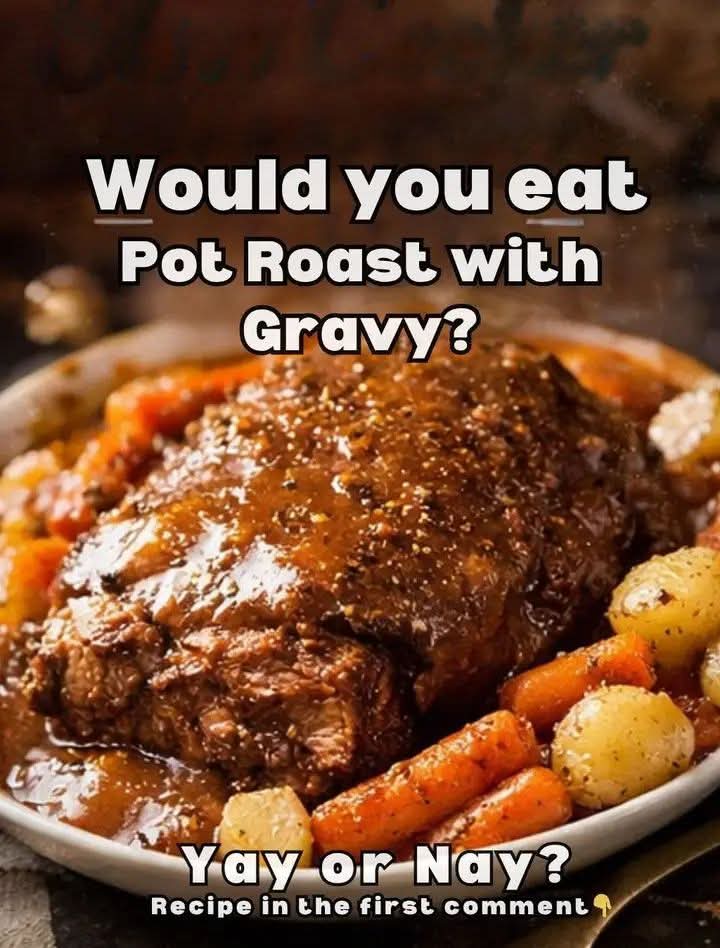
Let’s be honest: pot roast is either your “Sunday comfort food legend”… or the meal you only respect when someone else cooks it. There’s no in-between 😄
Either way, here’s a full, rich, slow-cooked classic pot roast recipe that actually delivers that fall-apart beef, deep gravy, and cozy kitchen smell.
🥘 Classic Pot Roast Recipe (Ultimate Comfort Food)
is a traditional slow-braised beef dish where tough cuts are transformed into melt-in-your-mouth tenderness through low heat, moisture, and time. It’s the definition of “patience pays off.”
🧡 Introduction
Pot roast is one of those dishes born from practicality: cheap cuts of beef, slow cooking, and simple vegetables turned into something luxurious. It became especially popular in American home cooking during the early 20th century, when families needed hearty, filling meals that could stretch ingredients and feed many people.
Today, it’s less about survival and more about comfort, nostalgia, and that “home smells amazing” feeling.
🛒 Ingredients
🥩 Main
- 1.5–2 kg beef chuck roast (best cut for tenderness)
- 2 tbsp oil (vegetable or olive oil)
- 1 large onion, chopped
- 4 carrots, cut into chunks
- 4 potatoes, quartered
- 3 cloves garlic, minced
🥣 Liquid & Flavor Base
- 2 cups beef broth
- 1 cup red wine (optional but highly recommended)
- 2 tbsp tomato paste
- 1 tbsp Worcestershire sauce
- 1 tsp salt (adjust to taste)
- 1 tsp black pepper
🌿 Herbs
- 2–3 sprigs rosemary
- 2–3 sprigs thyme
- 2 bay leaves
🔥 Instructions
1. Sear the beef (CRUCIAL step)
Heat oil in a large pot or Dutch oven.
Sear the beef on all sides until deep brown. This builds flavor—don’t rush it.
2. Build the base
Remove beef. In the same pot:
- Sauté onions until soft
- Add garlic and tomato paste
- Cook for 1–2 minutes until fragrant
3. Deglaze
Pour in red wine (or a bit of broth).
Scrape all browned bits from the bottom—this is pure flavor gold.
4. Slow braise
Return beef to pot. Add:
- broth
- Worcestershire sauce
- herbs
Cover and cook:
- Oven: 160°C (320°F) for 3–4 hours
OR - Stovetop: very low heat, same time
5. Add vegetables
Add carrots and potatoes in the last 1.5 hours so they don’t turn mushy.
6. Finish
When the beef falls apart easily with a fork, it’s done.
Remove herbs, adjust seasoning, and spoon that rich gravy over everything.
🧪 Method (Why it works)
- Searing: creates Maillard reaction = deep flavor
- Slow cooking: breaks collagen into gelatin → tenderness
- Moist heat: prevents drying out
- Time: transforms tough meat into silky texture
This is not fast food. It’s “let it simmer while life happens” food.
📜 History & Formation
Pot roast traces back to European braising traditions brought to America by immigrants. French “boeuf à la mode” and German-style braises heavily influenced it.
In the U.S., it became a staple during the Great Depression because:
- cheap cuts of beef were accessible
- one pot could feed a whole family
- slow cooking made tough meat edible and delicious
It formed into the modern “Sunday roast” culture in many households.
🍽️ Formation (How it becomes pot roast magic)
Raw beef → seared crust → slow braise → collagen breakdown → sauce thickening → vegetable infusion → final harmony
What you get is not just meat… it’s a self-made gravy ecosystem.
❤️ Lovers Section (Who actually loves this dish?)
Pot roast lovers usually fall into three categories:
- 🏡 Comfort seekers: “I want my house to smell like home”
- 👨👩👧👦 Family cooks: feeding many with one pot
- ❄️ Cold weather eaters: winter = pot roast season
And honestly? Even the skeptics convert after the first forkful of tender beef.
🍲 Conclusion
Pot roast isn’t flashy. It doesn’t try to be trendy.
It just quietly delivers deep flavor, softness, and warmth in every bite.
If fast meals are noise, pot roast is silence—with gravy.
💛 Final thought (for lovers & skeptics)
You don’t “like” pot roast…
you grow into it 😄