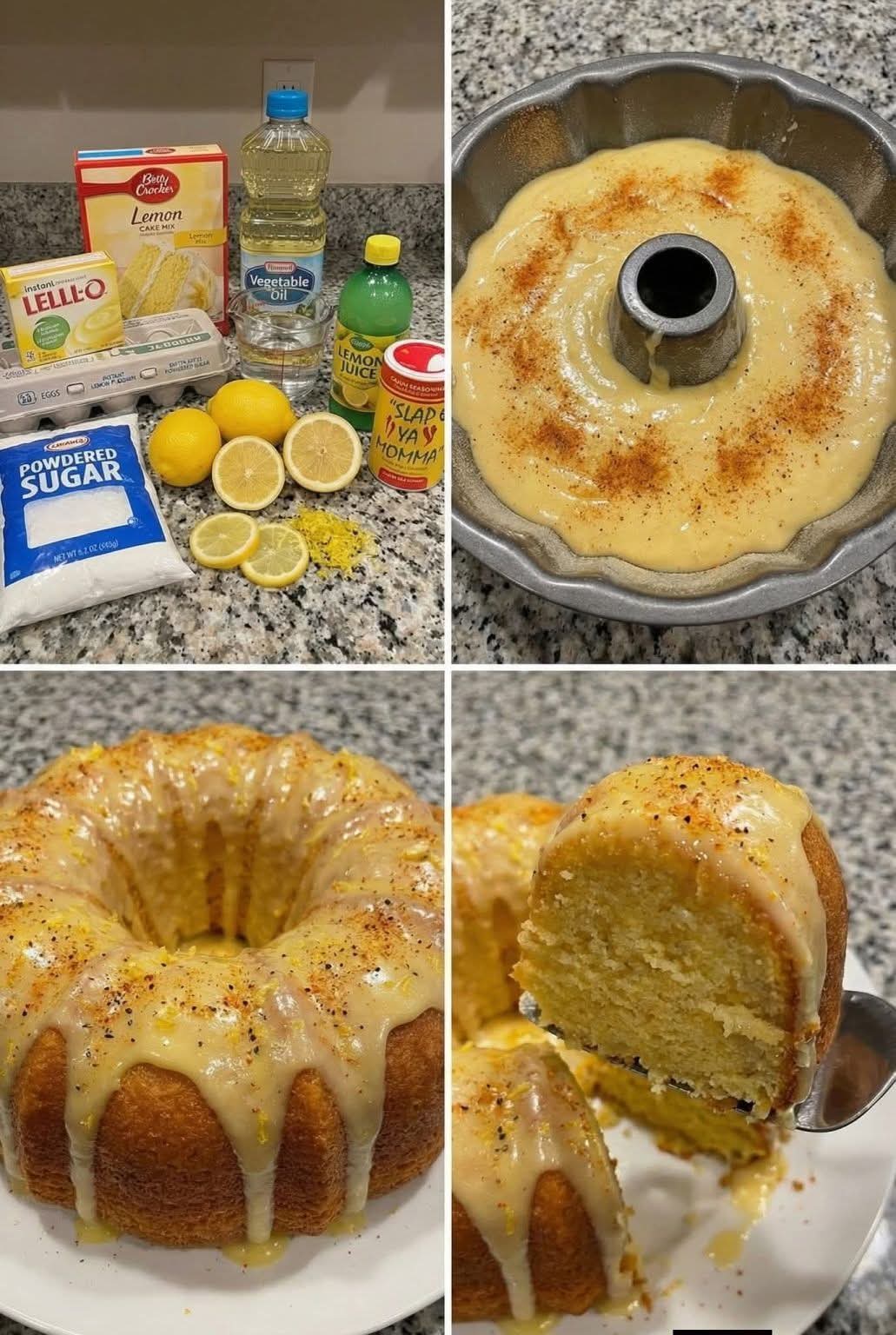
🍋 Classic Lemon Cake Recipe (Soft, Buttery & Bright)
🌿 Introduction
Lemon cake is one of those timeless desserts that feels both refreshing and comforting at the same time. Its bright citrus flavor cuts through the richness of butter and sugar, creating a perfectly balanced cake that works for celebrations, afternoon tea, or simple family gatherings. The aroma alone—fresh lemon zest baked into soft sponge—has a way of filling the kitchen with warmth and nostalgia.
This version is a classic homemade lemon cake: soft crumb, buttery texture, and a gentle tang that makes every bite light yet satisfying.
🧾 Ingredients
🍰 For the Cake:
- 2 ½ cups (310g) all-purpose flour
- ½ teaspoon baking powder
- ½ teaspoon baking soda
- ½ teaspoon salt
- 1 cup (2 sticks / 226g) unsalted butter, softened
- 1 ¾ cups granulated sugar
- 4 large eggs
- 1 tablespoon lemon zest (fresh)
- ½ cup fresh lemon juice
- 1 teaspoon vanilla extract
- 1 cup buttermilk (or milk + 1 tbsp lemon juice)
🍋 Optional Lemon Glaze:
- 1 cup powdered sugar
- 2–3 tablespoons lemon juice
👨🍳 Instructions
1. Preparation
Preheat your oven to 175°C (350°F). Grease and flour a 9-inch cake pan or line it with parchment paper.
2. Dry Ingredients
In a bowl, sift together:
- flour
- baking powder
- baking soda
- salt
Set aside.
3. Creaming Method
In a large mixing bowl, beat the butter and sugar together until light, fluffy, and pale (about 3–5 minutes). This step is essential for a soft cake texture.
4. Add Eggs & Flavor
Add eggs one at a time, mixing well after each addition. Then add:
- lemon zest
- vanilla extract
Mix until fully combined.
5. Combine Wet & Dry
Add the dry ingredients in three parts, alternating with buttermilk:
- dry → wet → dry → wet → dry
Mix gently—do not overmix.
6. Add Lemon Juice
Stir in fresh lemon juice at the end for that signature citrus brightness.
7. Bake
Pour batter into prepared pan and bake for 35–45 minutes, or until a toothpick inserted in the center comes out clean.
8. Cooling
Let the cake cool in the pan for 10–15 minutes, then transfer to a wire rack.
🍋 Lemon Glaze (Optional but Recommended)
Mix powdered sugar with lemon juice until smooth. Drizzle over cooled cake for extra shine and tang.
🧪 Methods Explained (Baking Science)
- Creaming butter and sugar traps air, helping the cake rise and stay fluffy.
- Buttermilk reaction with baking soda creates softness and tenderness.
- Lemon juice + zest provide both aroma oils and acidic brightness.
- Proper mixing control prevents gluten overdevelopment, keeping the crumb light.
📜 History of Lemon Cake
Lemon-based cakes became popular in Europe during the 17th–18th centuries when lemons were imported more widely from Mediterranean regions. Bakers quickly discovered that citrus not only added flavor but also helped balance rich butter cakes.
Over time, lemon cake became a staple in British teatime baking and American home kitchens, evolving into many forms: pound cakes, sponge cakes, loaf cakes, and glazed celebration cakes.
🧬 Formation (Why This Cake Works)
This lemon cake forms its structure through:
- Flour proteins (gluten) → structure
- Eggs → stability and richness
- Butter → moisture and flavor
- Leavening agents → lift and softness
- Acid (lemon juice) → enhances texture and taste balance
The result is a tender crumb that holds together while still feeling light.
🍰 Serving & Lovers’ Ideas (Variations for Lemon Cake Lovers)
For people who love lemon desserts, here are creative ways to enjoy it:
- 🍓 Add fresh berries (blueberries or raspberries) into the batter
- 🍯 Replace glaze with honey-lemon drizzle for a floral twist
- 🍫 Pair slices with white chocolate ganache
- 🍦 Serve warm with vanilla ice cream
- ☕ Enjoy with tea or espresso for a café-style experience
You can also turn it into:
- Lemon cupcakes
- Lemon loaf cake
- Layer cake with lemon cream filling
💛 Conclusion
This lemon cake is more than just a dessert—it’s a balance of freshness and comfort. The buttery crumb, paired with citrus brightness, makes it suitable for both everyday baking and special occasions. Whether glazed, plain, or served with fruit, it’s a recipe that always feels uplifting and satisfying.
If you want, I can also turn this into: 🍋
🍋
🍋 Or a