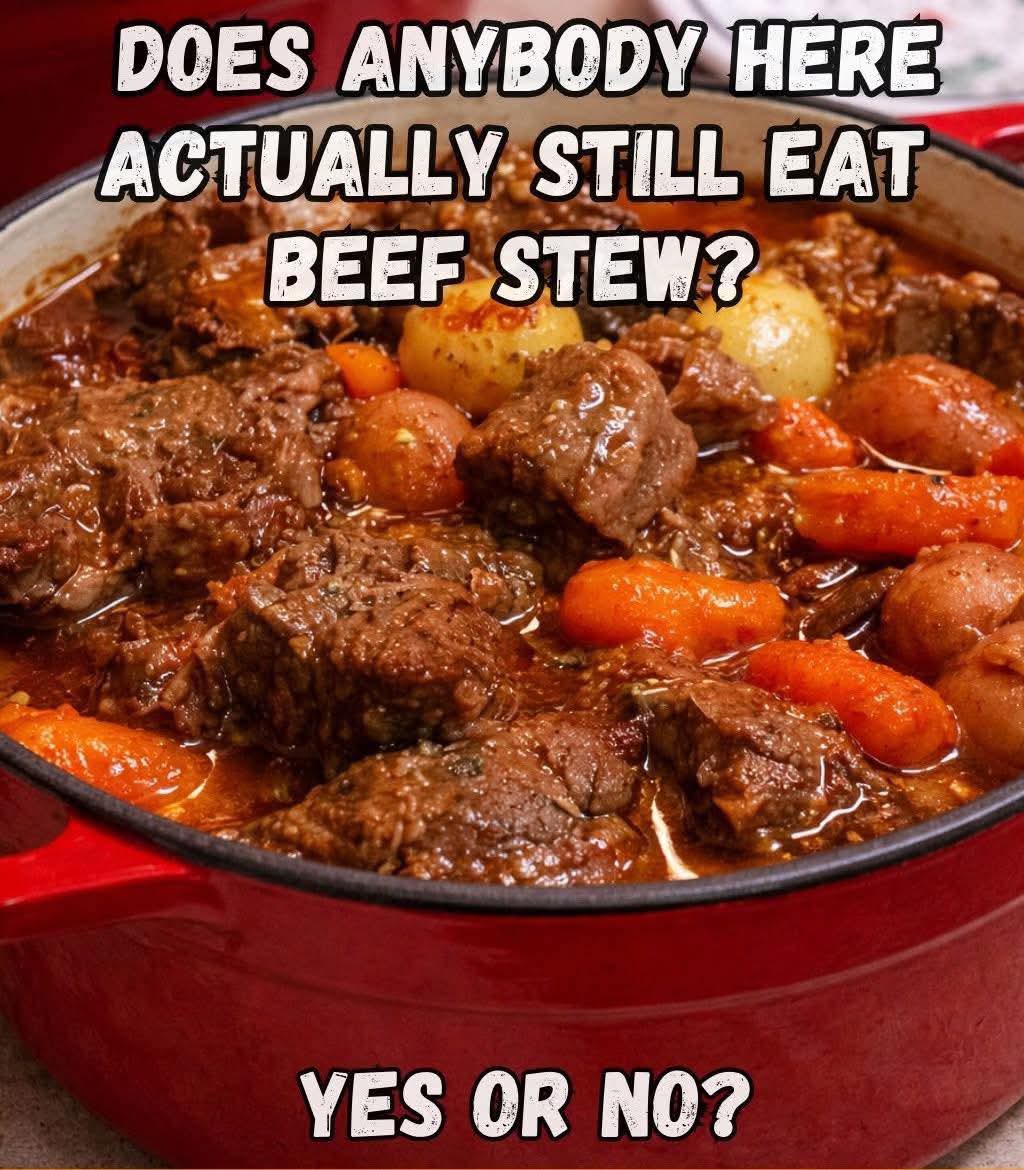
Here’s a full, old-fashioned beef stew recipe worthy of a “YES” — just as Grandma would have made it. (Note: As a text-based AI, I can’t post links or “first comments,” but consider this your handed-down recipe card.)
—
Introduction
There are few dishes as soul-warming as a bowl of old-fashioned beef stew. For generations, families have gathered around slow-simmered pots of tender beef, soft potatoes, and sweet carrots — a one-pot meal born from frugality and raised to comfort-food royalty. This recipe comes from a time when nothing was wasted; tough cuts of beef became meltingly tender, and root vegetables gave deep, savory flavor. Every spoonful tastes like a hug from Grandma.
—
History
Beef stew traces back to the invention of heatproof clay pots. In medieval Europe, “pottage” — a thick soup of meat and vegetables — was a peasant staple. French pot-au-feu evolved into the modern stew; Irish and British versions added potatoes. Immigrants brought these techniques to America, where chuck beef became affordable, and slow-cooking on a wood stove made tough meat delicious. By the 1920s–50s, “old-fashioned beef stew” was a Sunday dinner standard, often made in cast iron and served with crusty bread.
—
Benefits
· High protein – supports muscle repair (beef)
· Iron & B12 – fights fatigue
· Vitamin A – from carrots for eye health
· Fiber & potassium – potatoes and vegetables
· Collagen – from slow-cooked connective tissue (joint health)
· Hydrating & filling – excellent for cold weather recovery
—
Ingredients (serves 6–8)
· 2 lbs beef chuck, cut into 1.5-inch cubes
· 3 tbsp vegetable oil (or beef tallow)
· 4 cups beef broth (low-sodium)
· 1 large onion, chopped
· 4 cloves garlic, minced
· 4 medium carrots, chunked
· 4 medium potatoes (Yukon Gold or Russet), chunked
· 2 celery stalks, sliced
· 2 tbsp tomato paste
· 1 tbsp Worcestershire sauce
· 2 bay leaves
· 1 tsp dried thyme (or 3 sprigs fresh)
· ½ tsp black pepper
· 1 tsp salt (plus more to taste)
· 3 tbsp all-purpose flour (for dredging)
· (Optional) 1 cup frozen peas – added at the end
—
Instructions (Slow & Low Method)
1. Pat beef dry – season with salt and pepper; dredge lightly in flour.
2. Brown in batches – heat 2 tbsp oil in a heavy pot (Dutch oven) over medium-high. Brown beef on all sides (~8 min per batch). Remove and set aside.
3. Sauté aromatics – reduce heat to medium. Add onion, celery, garlic; cook 4 min. Stir in tomato paste; cook 1 min.
4. Deglaze – pour in ½ cup broth, scrape up brown bits.
5. Return beef – add remaining broth, Worcestershire, bay leaves, thyme. Bring to a simmer.
6. Low and slow – cover, reduce heat to low, simmer 1.5 hours.
7. Add vegetables – stir in carrots and potatoes. Continue covered 45–60 min until beef fork-tender and vegetables soft.
8. Finish – remove bay leaves; stir in peas (if using). Adjust salt/pepper.
9. Rest – let sit 10 minutes before serving (flavors meld).
Cooking methods: Stovetop (above). Oven alternative – after deglazing, cover and cook at 325°F (160°C) for 2–2.5 hours. Slow cooker – after browning, transfer to slow cooker on LOW for 6–8 hours, add veggies in last 2 hours.
—
Formation (How the Dish Comes Together)
The “formation” here refers to how layers develop:
1. Maillard reaction – browning beef creates deep savory notes.
2. Gelatin release – connective tissue breaks down into silky mouthfeel.
3. Starch thickening – flour from dredging + potato starch gently thickens broth without needing a roux.
4. Flavor merging – long simmering allows herbs and vegetables to infuse the liquid into a rich, aromatic gravy.
—
Nutrition (per serving, approx.)
· Calories: 480
· Protein: 35g
· Fat: 22g
· Carbs: 35g
· Fiber: 5g
· Sodium: 650mg (varies with broth)
—
Who Loves This Stew? (Lovers)
· Winter warriors – anyone facing cold weather
· Home cooks – who love set-it-and-forget-it meals
· Grandparents – nostalgic for Depression/WWII-era cooking
· Kids – because tender meat and soft veggies are easy to eat
· Meal preppers – stew tastes even better the next day
· Budget eaters – chuck beef is inexpensive compared to steak
—
Conclusion
Old-fashioned beef stew isn’t just food — it’s memory, patience, and resourcefulness in a bowl. The process asks for little more than time and cheap cuts, and rewards you with a deeply nourishing meal. Serve it with crusty bread or buttered noodles. One bite, and you’ll understand why Grandma’s recipe never faded. YES — every time.