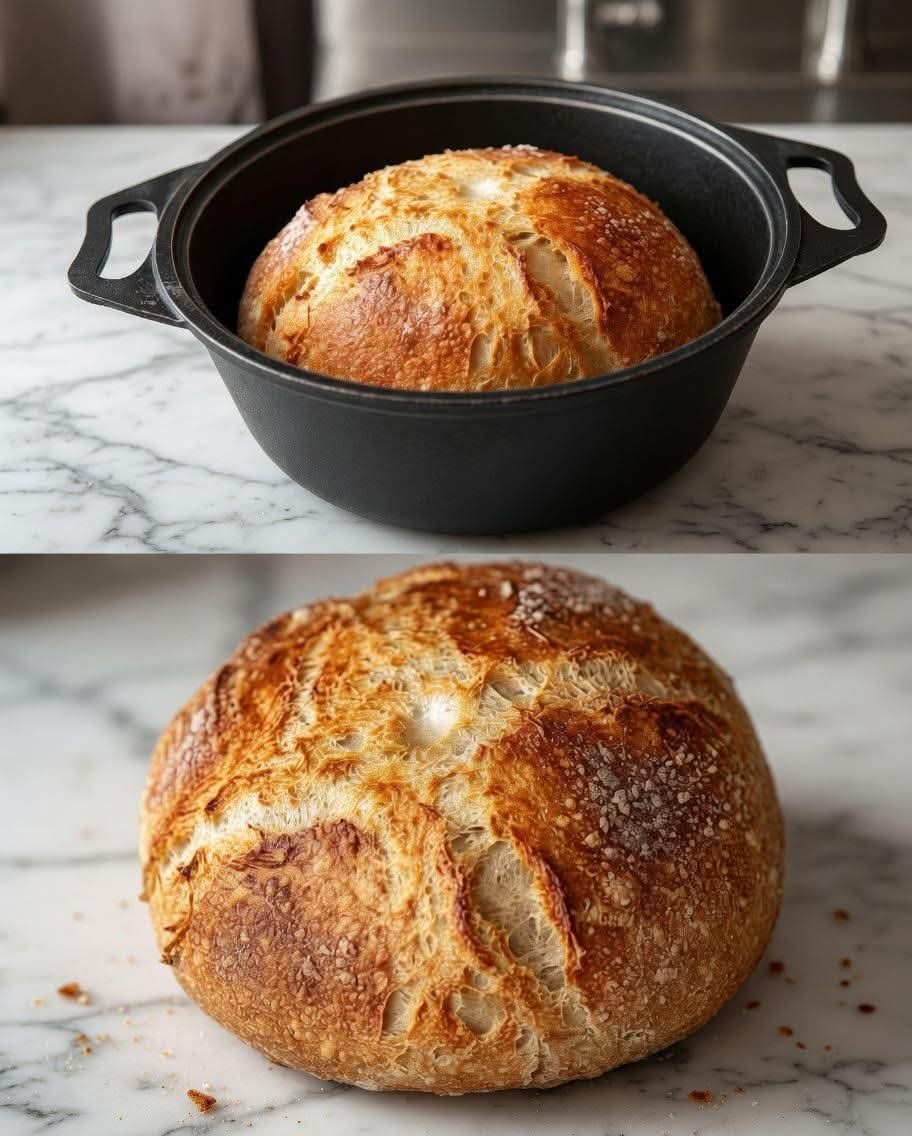
Here is a full, expanded homemade bread recipe based on your ingredients, written in a rich, detailed style as requested.
🥖 Homemade Olive Oil Bread (Soft & Fluffy Everyday Loaf)
✨ Introduction
There is something deeply satisfying about baking your own bread at home. The smell filling the kitchen, the golden crust forming in the oven, and the first warm slice with butter melting into it — it’s simple comfort food at its best.
This olive oil bread is soft, slightly chewy, and perfect for sandwiches, toast, or eating fresh out of the oven. Once you try it, you’ll understand why many people stop buying store-bought bread altogether.
🧾 Ingredients
- 4 tablespoons (60 ml) olive oil
- 1 tablespoon (10 g) dry yeast
- 1 teaspoon salt
- 1 1/3 cups (320 ml) warm water
- 4 3/4 cups (570 g) plain flour (all-purpose flour)
👩🍳 Instructions
1. Activate the yeast
In a large bowl, mix warm water and dry yeast. Let it sit for 5–10 minutes until it becomes foamy. This step ensures the yeast is alive and ready to help the dough rise.
2. Build the dough
Add olive oil and salt into the yeast mixture. Slowly begin adding flour, one cup at a time, mixing as you go.
3. Kneading
Once the dough comes together, transfer it onto a floured surface. Knead for 8–10 minutes until the dough becomes smooth, elastic, and slightly springy.
4. First rise
Place the dough in a lightly oiled bowl. Cover with a cloth and let it rise for 1 to 1.5 hours, or until it doubles in size.
5. Shaping
Punch down the dough gently to release air. Shape it into a loaf or divide into rolls depending on your preference.
6. Second rise
Place shaped dough on a baking tray. Cover and let it rise again for 30–40 minutes.
7. Baking
Preheat oven to 180°C (350°F). Bake for 25–30 minutes until golden brown on top and hollow-sounding when tapped underneath.
8. Cooling
Let the bread cool on a rack before slicing. This helps the texture set properly.
🔬 Methods (Baking Science Explained)
This recipe uses yeast fermentation, where yeast consumes sugars in the flour and releases carbon dioxide gas. This gas creates air pockets, making the bread soft and fluffy.
- Olive oil adds moisture and softness
- Kneading develops gluten, giving structure
- Rising time builds flavor and airy texture
- Baking locks everything into a golden crust
📜 History of This Style of Bread
Bread with olive oil has roots in Mediterranean baking traditions, especially in countries like Italy and Greece. Olive oil was added not just for flavor, but also for preservation and softness.
Unlike industrial bread, traditional homemade bread was always about simplicity — flour, water, yeast, salt, and sometimes oil. This recipe carries that same spirit.
🌱 Formation (How the Dough Transforms)
- Sticky stage → ingredients just combined
- Elastic stage → gluten begins forming
- Smooth stage → dough becomes soft and stretchy
- Risen stage → yeast creates airy structure
- Golden stage → baking transforms dough into bread
Each stage is a transformation from simple mixture to living, rising dough.
💛 Conclusion
This homemade olive oil bread is more than just a recipe — it’s a return to simplicity. With only a few basic ingredients, you get fresh, warm bread that tastes far better than most store-bought versions.
Once you bake it a few times, it becomes second nature — and yes, you might really stop buying bread altogether.
💕 For the Lovers of Homemade Baking
For those who love the smell of fresh dough, flour on their hands, and warm bread straight from the oven — this recipe is for you.
- For the bread lovers, it’s soft comfort in every bite
- For the home bakers, it’s a relaxing ritual
- For the food lovers, it’s pure satisfaction
- For the family lovers, it’s something to share at the table
Because bread is never just food — it’s an experience, a memory, and a moment of warmth.
🍞 Final Thought
If you’ve ever wanted to start baking at home, this is the perfect recipe to begin with. Simple ingredients, easy steps, and a rewarding result every single time.
Once you make it, you’ll understand why homemade bread always wins.