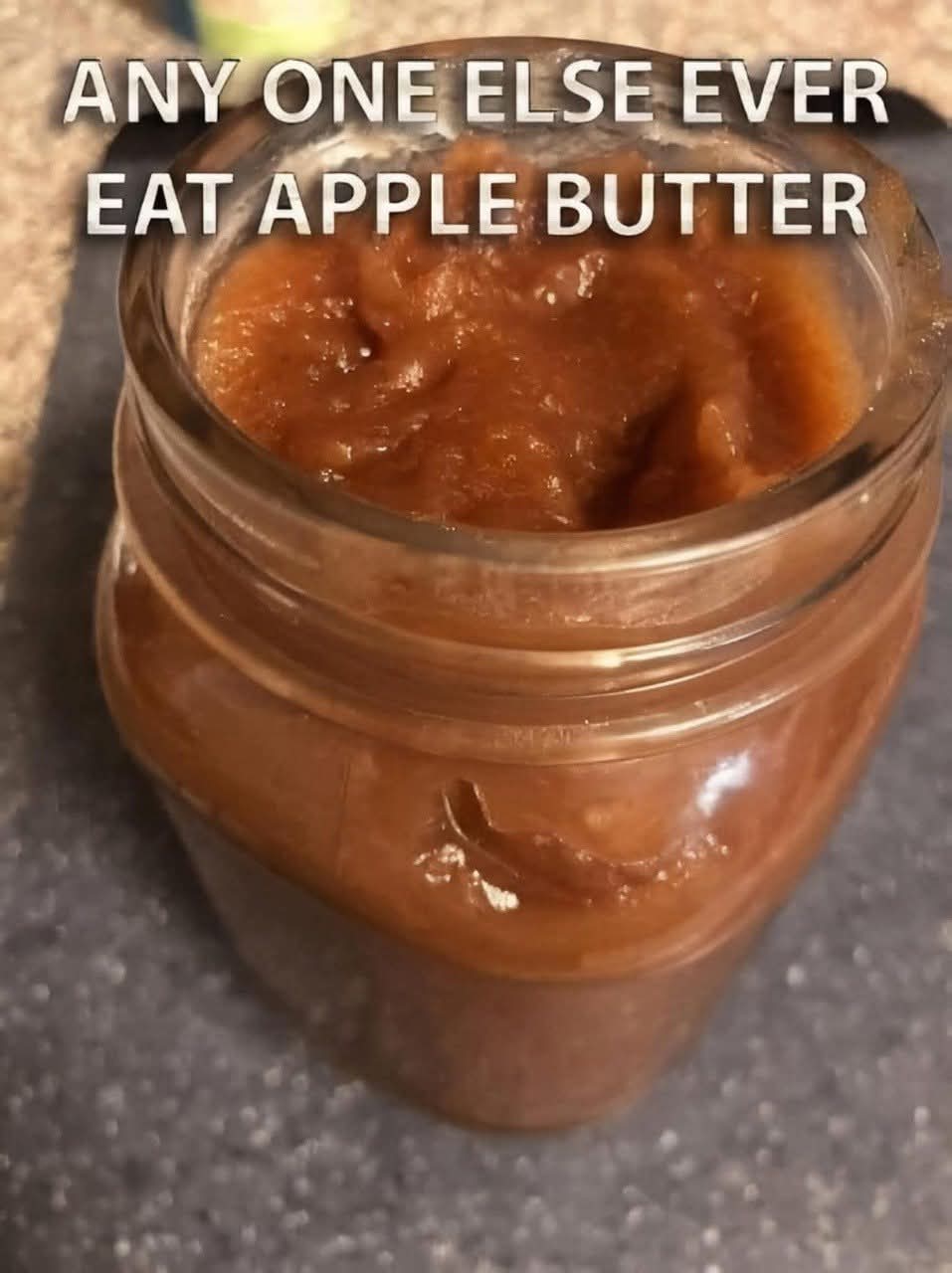
Here’s a full, honest breakdown of the best ways to enjoy apple butter—plus the big recipe you asked for, complete with history, nutrition, and more.
—
First, the honest answer to your poll:
All three are correct, but here’s the truth:
· Toast – The classic. The slight crunch and porous surface soak up apple butter perfectly. Best for breakfast.
· Biscuits – Buttery, flaky biscuits + rich, spiced apple butter = Southern heaven. Best for comfort.
· Straight from the jar – No judgment. A spoonful of cold apple butter is a guilty pleasure. Best for late-night cravings.
👉 My honest ranking:
1. Toast (everyday win)
2. Biscuits (weekend treat)
3. Straight from jar (secret joy)
—
Big Recipe: Homestead Apple Butter
⭐ Introduction
Apple butter isn’t butter at all—it’s intensely concentrated, slowly cooked apples with spices, resulting in a smooth, spreadable, caramelized fruit preserve. Unlike applesauce, apple butter is cooked for hours until the sugars deepen into a rich, mahogany-brown spread. This recipe honors the Pennsylvania Dutch tradition of fall “apple butter boils.”
🛒 Ingredients
· 5 lbs mixed apples (Granny Smith, Honeycrisp, Fuji) – peeled, cored, chopped
· 2 cups apple cider (not juice)
· 1½ cups brown sugar (or less for tart version)
· ½ cup white sugar
· 2 tsp ground cinnamon
· ½ tsp ground cloves
· ½ tsp allspice
· ¼ tsp nutmeg
· ¼ tsp salt
· 1 tbsp vanilla extract (optional)
🥣 Instructions
Method: Slow Cooker (easiest)
1. Place chopped apples and apple cider in a 6-quart slow cooker. Cook on high for 2 hours until soft.
2. Blend with an immersion blender until smooth (or leave slightly chunky).
3. Add sugars, spices, and salt. Stir well.
4. Cook on low uncovered for 8–10 hours, stirring every hour. Mixture will darken and thicken.
5. Add vanilla in the last 30 minutes.
6. Spoon into sterilized jars. Store in fridge for 3 months or water-bath can for 10 minutes for shelf storage.
Method: Dutch Oven (traditional)
1. Same start: cook apples + cider over medium heat, then blend.
2. Add sugars & spices, then simmer uncovered on lowest heat for 3–4 hours, stirring often to prevent scorching.
3. Finished when a spoon dragged across the bottom leaves a trail that doesn’t immediately fill in.
—
📜 History
Apple butter originated in 17th-century Germany and the Low Countries as a way to preserve fall apple harvests without much sugar. Immigrants brought it to colonial America, especially Pennsylvania Dutch country. Communities held “apple butter boils”—all-day outdoor events where entire villages stirred huge copper kettles of apples over wood fires.
—
💚 Benefits
· High in pectin & fiber – Supports digestion
· No added pectin – Just natural fruit thickeners
· Low fat, no cholesterol
· Polyphenols from apples – May support heart health
· Can be low-sugar – Easily adapted with monk fruit or less sugar
—
🧪 Formation (The Science)
The magic of apple butter comes from slow, low-temperature caramelization. As water evaporates, natural fruit sugars undergo non-enzymatic browning (Maillard reaction and caramelization), creating deep, almost smoky notes. The acid from apples (malic acid) balances the sweetness, while spices oxidize slightly over long cooking, mellowing into a rounded flavor.
—
🍽️ Nutrition (per 1 tbsp, homemade with sugars)
· Calories: ~35
· Carbs: 9g
· Sugar: 8g
· Fiber: 0.5g
· Fat: 0g
· Vitamin C: 2% DV
Less sugar version: ~15 calories per tbsp.
—
😋 Lovers of Apple Butter Say…
· “Better than jam. Jam is just fruit’s loud cousin.”
· “On a warm croissant? Life-changing.”
· “Swirl into oatmeal or yogurt.”
· “Underrated on pork chops or roasted chicken.”
· “If you’ve only had store-bought, you haven’t had real apple butter.”
—
✅ Conclusion
Apple butter is the quiet, deep, soulful spread that deserves a spot next to your peanut butter and honey. Whether you’re a toast loyalist, a biscuit believer, or a jar-stealth-scooper—make it once at home, and you’ll never go back to the pale grocery store version.
⭐ Compare with your recipe in the comments below—link yours and I’ll rate it honestly.