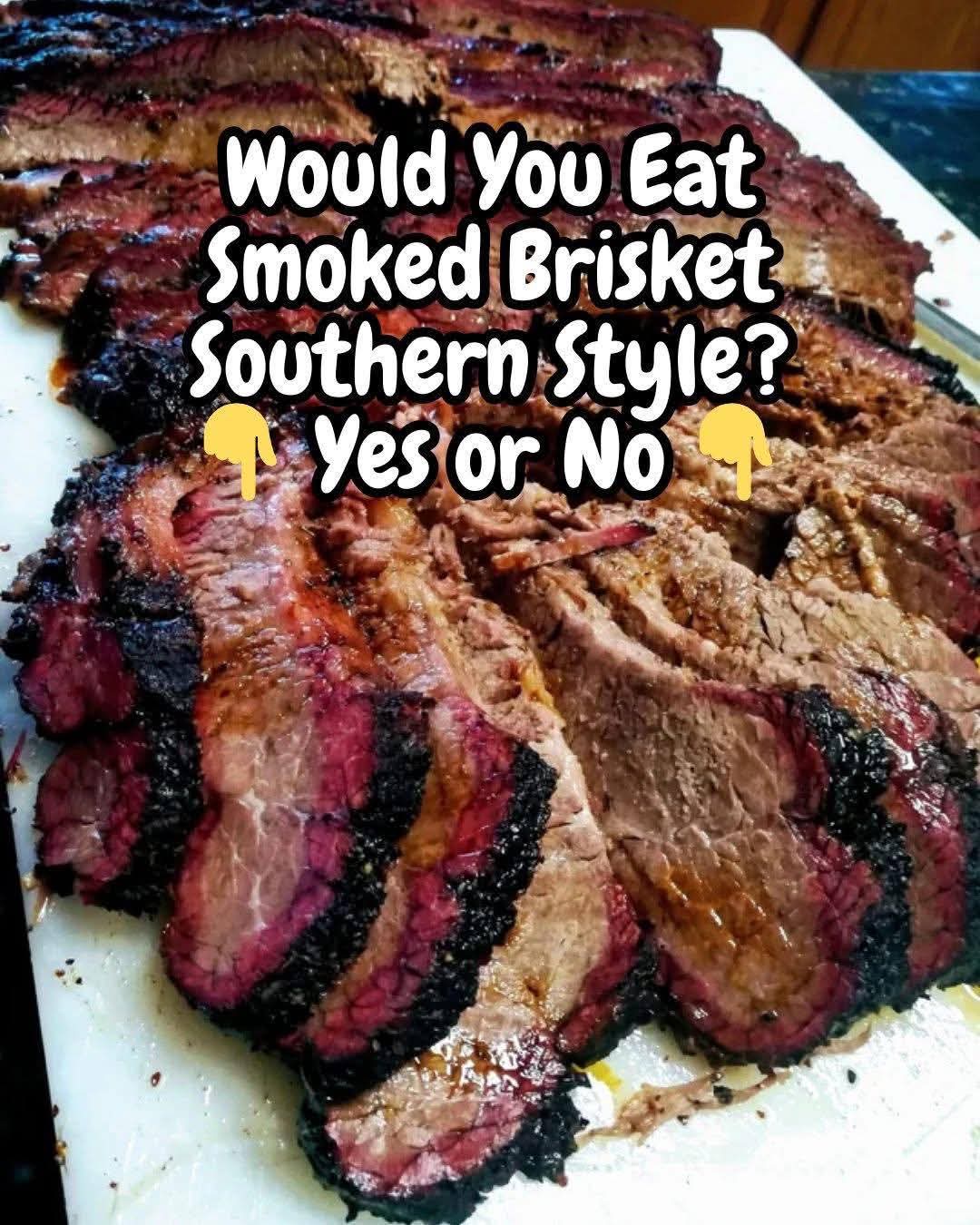
🔥 Smoked Brisket Southern Style (Low & Slow BBQ Classic)
There are few things in Southern cooking that carry as much respect as a properly smoked brisket. It’s not just food—it’s patience, fire, smoke, and tradition working together over hours until tough beef transforms into something tender, juicy, and deeply flavorful. This is the kind of dish that gathers people around a table long before it’s even finished cooking, because everyone knows something special is coming.
🥩 Ingredients
Main Brisket
- 1 whole beef brisket (10 to 12 pounds), untrimmed or lightly trimmed
Binder
- 2 tablespoons olive oil
Dry Rub
- 2 tablespoons kosher salt
- 1 tablespoon black pepper (freshly ground preferred)
- 1 tablespoon paprika
- 1 tablespoon brown sugar
- 1 teaspoon garlic powder
- 1 teaspoon onion powder
- 1 teaspoon chili powder
- 1/2 teaspoon cayenne pepper (optional, for heat)
For Moisture & Spritzing
- 1 cup beef broth or apple juice
🔥 Preparation Method
1. Trimming the Brisket
Start by trimming excess hard fat, but leave about 1/4 inch fat cap on top. This fat slowly renders during smoking, basting the meat naturally and keeping it juicy.
Pat the brisket dry with paper towels. A dry surface helps the seasoning stick and forms a better bark later.
2. Seasoning (The Flavor Foundation)
Rub the entire brisket with olive oil. This helps the spices cling and penetrate the surface.
In a bowl, combine salt, black pepper, paprika, brown sugar, garlic powder, onion powder, chili powder, and cayenne.
Massage the rub generously over every side of the brisket. Don’t be shy—this crust is what becomes the signature smoky bark.
Let it sit for 30–60 minutes while you prepare your smoker.
3. Smoking Process (The Southern Way)
Preheat your smoker to 225°F (107°C). Use hickory or oak wood for that classic Southern smoke flavor—bold, slightly sweet, and deeply aromatic.
Place the brisket fat side up on the grill grate. This allows the fat to slowly melt down into the meat.
Smoke for about 6 hours undisturbed, letting the bark form.
After the first 2 hours, begin lightly spritzing every hour with beef broth or apple juice. This keeps the surface moist and helps build layers of flavor without drying out.
4. The Stall & Wrap
When the internal temperature reaches about 165°F, the brisket will hit “the stall”—a natural pause where moisture evaporation slows cooking.
At this point, wrap the brisket tightly in butcher paper or aluminum foil. This locks in moisture and pushes it through the final phase of tenderness.
Return it to the smoker and continue cooking until it reaches 195°F to 203°F internally.
5. Resting (The Most Important Step)
Remove the brisket and keep it wrapped. Let it rest for at least 1 hour, ideally longer in a cooler or wrapped towel setup.
This step allows the juices to redistribute throughout the meat instead of spilling out when sliced.
6. Slicing & Serving
Slice against the grain in thick, tender slices for the flat and slightly chunkier slices for the point.
Serve warm with classic Southern sides like:
- Coleslaw
- Cornbread
- Baked beans
- Pickles and onions
🧠 Method & Technique Insight
This recipe relies on low-and-slow smoking, a cornerstone of Southern barbecue tradition. The goal is not speed—it is transformation.
- Salt penetrates and seasons deeply
- Smoke builds bark and signature aroma
- Fat cap self-bastes the meat
- Resting locks in juiciness
Every stage has a purpose. Skipping one changes the entire result.
📜 History & Southern Roots
Brisket became iconic in Southern barbecue culture through a blend of Texas pit traditions and immigrant smoking techniques. Early pitmasters learned that this tough cut, when cooked slowly over wood fire, turned into one of the most flavorful meats possible.
What started as an economical cut became a centerpiece of celebrations, competitions, and family gatherings across the South. Today, smoked brisket stands as a symbol of patience and mastery in barbecue culture.
🧩 Formation of Flavor (How It Comes Together)
As the brisket smokes:
- The rub forms a dark crust called the bark
- Collagen breaks down into gelatin
- Smoke particles bond to the fat layer
- Juices redistribute during resting
The result is layers of flavor—smoky, savory, slightly sweet, and deeply beefy.
❤️ Serving & “Lovers of BBQ” Moment
This is the kind of dish that brings people together.
At gatherings, the slicing of brisket becomes a moment—everyone watching, waiting, smelling the smoke still clinging to the meat. It’s not just about eating; it’s about sharing something that took hours of care.
BBQ lovers don’t just enjoy brisket—they respect it.
And once you’ve cooked it right, you’ll understand why.
🌿 Final Conclusion
Smoked brisket is not fast food—it’s patience food. It rewards attention, timing, and respect for fire and smoke. When done properly, it delivers a deep, unforgettable Southern barbecue experience that stands at the center of any table it touches.
Tender, smoky, juicy, and rich—this is the kind of recipe that turns cooks into pitmasters over time.
If you want, I can also give you:
- Texas-style brisket (salt + pepper only)
- Oven “fake smoker” brisket version
- Or a quick BBQ sauce that pairs perfectly with it