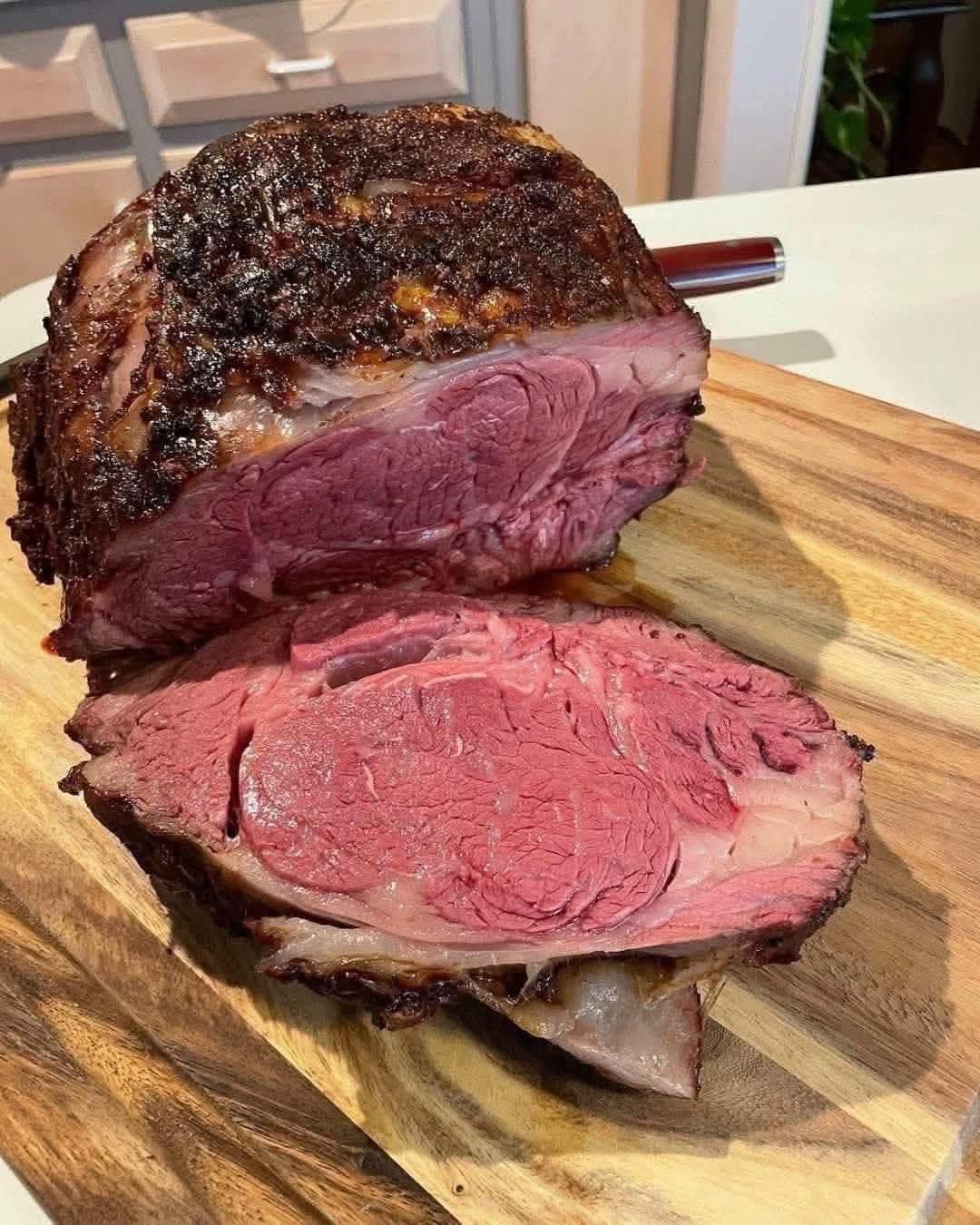
My very first thought when I see a beautifully cooked prime rib?
“This is not just dinner… this is an experience.” 🥩✨
Juicy, tender, perfectly marbled meat with a rich crust—it’s the kind of dish that turns an ordinary evening into something unforgettable.
Now let’s turn that feeling into a full, detailed recipe you can truly enjoy 👇
🥩 Ultimate Prime Rib Roast Recipe
🌟 Introduction
Prime rib, also known as a standing rib roast, is one of the most luxurious and flavorful cuts of beef. Known for its tenderness, rich marbling, and bold beefy taste, this dish is often the centerpiece of holiday feasts and special gatherings. Whether you’re cooking for family or impressing guests, prime rib delivers a restaurant-quality experience right at home.
🛒 Ingredients
For the Prime Rib:
- 1 (4–6 lb) prime rib roast (bone-in preferred)
- 2 tbsp olive oil or softened butter
- 4–5 cloves garlic, minced
- 2 tbsp fresh rosemary, chopped
- 2 tbsp fresh thyme, chopped
- 1 tbsp coarse salt
- 1 tbsp black pepper
- 1 tsp paprika (optional for color)
Optional Au Jus:
- 2 cups beef broth
- 1 cup red wine (optional)
- Pan drippings
- 1 tbsp flour (optional for thickening)
🔪 Preparation Method
- Bring to Room Temperature
Remove the prime rib from the fridge 2–3 hours before cooking. This ensures even roasting. - Season Generously
Mix olive oil, garlic, rosemary, thyme, salt, and pepper. Rub it all over the roast, coating every side. - Preheat Oven
Set your oven to 230°C (450°F) for the initial sear.
🍳 Cooking Instructions
Step 1: High-Heat Sear
- Place the roast in a roasting pan (fat side up).
- Roast at 230°C (450°F) for 20 minutes to create a crust.
Step 2: Slow Roast
- Reduce heat to 160°C (325°F).
- Continue roasting:
- Rare: 50–55°C (120–130°F) internal
- Medium-rare: 55–57°C (130–135°F)
- Medium: 60–63°C (140–145°F)
👉 Use a meat thermometer for accuracy—it’s the secret to perfection.
🧠 Cooking Methods Explained
- Reverse Sear Method: Slow cook first, then blast with high heat at the end for a crisp crust.
- Traditional Roast Method: Start hot, then lower temperature (as above).
- Sous Vide Method: Cook in a water bath, then sear—ultra precise and tender.
🕰️ History of Prime Rib
Prime rib comes from the primal rib section of the cow and has long been associated with luxury dining. It became especially popular in British and American cuisine, often served during holidays like Christmas and Sunday roasts. The term “prime” originally referred to the quality grade of the meat, though today it’s commonly used for the cut itself.
🧬 Formation (What Makes It Special)
- Marbling: Fine streaks of fat throughout the meat create juiciness and flavor.
- Bone-in Structure: Adds depth of flavor and helps retain moisture.
- Slow Cooking: Breaks down connective tissue for melt-in-your-mouth texture.
❤️ Why People Love It
Prime rib has a loyal fanbase because:
- It’s incredibly tender and juicy
- Rich, beefy flavor unmatched by other cuts
- Perfect for celebrations and gatherings
- Feels like a luxury without needing a restaurant
🍽️ Serving Suggestions
- Slice thick and serve with au jus or horseradish sauce
- Pair with mashed potatoes, roasted vegetables, or Yorkshire pudding
- Add a glass of red wine for the full experience 🍷
🏁 Conclusion
Prime rib isn’t just a recipe—it’s a moment. From the aroma filling your kitchen to that first juicy bite, it delivers comfort, richness, and celebration all in one dish. Once you make it, you’ll understand why it’s loved around the world.
If you want, I can also show you a or a 👀