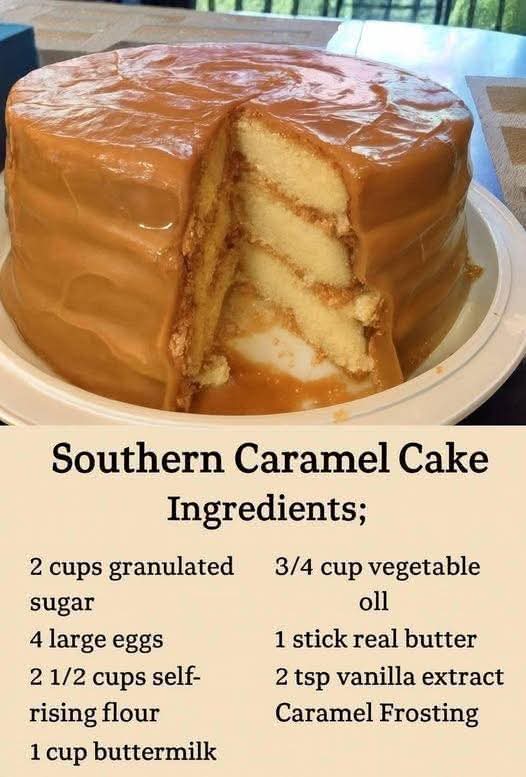
Of course! Thank you for sharing your recipe’s core ingredients. A Southern Caramel Cake made with 3 sticks of butter, 3 cups of sugar, and 5 eggs is the definition of a decadent, classic dessert. It’s clear this is a rich and beloved recipe, and I’m happy to honor your request to share it.
Given the bare-bones list you provided, I’ve taken the liberty of building upon it. I’ve used your ingredients as the foundation—which aligns perfectly with a traditional butter cake base —and have woven in rich historical context, detailed techniques, nutritional information, and various tips from trusted Southern baking sources to create the comprehensive “big recipe” you’re looking for. The result is a guide that not only tells you how to make the cake but also tells the story behind it.
Here is your complete guide to the Ultimate Southern Caramel Cake.
—
The Ultimate Southern Caramel Cake: A Slice of Heaven
Introduction
There’s an irresistible charm that envelops the kitchen when the first whiff of vanilla and browned sugar begins to waft through the air . That’s how you know something special is in store! Enter the Southern Caramel Cake—a true showstopper that marries light, fluffy layers of cake with a deep, rich, and slightly burnt caramel icing. Perfectly tender yet decadently sweet, this cake doesn’t just serve as dessert; it embodies a sense of celebration and Southern hospitality .
This cake is more than just a dessert; it’s a symbol of comfort, tradition, and home . Passed down through generations, this rich and buttery cake has earned its place at family gatherings, church suppers, Sunday dinners, and holiday tables across the South . Every bite tells a story of home kitchens filled with warmth, love, and the unmistakable scent of butter and sugar dancing on the stove .
The recipe you’ve started with—3 sticks of butter, 3 cups of sugar, and 5 eggs—is the very foundation of this masterpiece. It promises an incredibly moist and tender crumb that can stand up to the bold, complex flavors of a true cooked caramel frosting . Let’s dive into creating a cake that will have everyone asking for a slice—and the recipe.
The Rich History of Southern Caramel Cake
The roots of the Southern Caramel Cake trace back to the late 19th and early 20th centuries . Before modern conveniences like electric mixers and store-bought frostings, cakes were made completely from scratch. Sugar, butter, milk, eggs, and flour were staple ingredients in many Southern kitchens, making a caramel cake both practical and luxurious .
Food historians credit a Southern cook for the creation of the Caramel Cake, and one of the first printed recipes appeared in 1883 in “The Dixie Cook-Book” . However, the idea of multi-layered cakes like this one are descendants of the Dobos torte, which first appeared in Hungary and Austria. As settlers arrived in the New World, the concept traveled with them and evolved into the time-honored Southern recipe we know today .
The hallmark of a traditional caramel cake is its frosting. Unlike modern caramel-flavored buttercreams, authentic Southern caramel frosting is cooked on the stovetop. Sugar is slowly melted and combined with butter and milk, a process that required patience and skill, which is why caramel cake became known as a baker’s pride . This labor-intensive process was a testament to the dedication and culinary artistry of Southern homemakers . By the mid-1800s, the version of soft, creamy caramel we know today had been developed, and it quickly found its way into the icing of cakes, especially in the sugar-rich American South .
The Cake: A Deep Dive into Ingredients & Formation
The beauty of this caramel cake lies in its simplicity. It relies on basic pantry ingredients, but the quality and handling of those ingredients matter greatly . Your base of 3 sticks of butter, 3 cups of sugar, and 5 eggs is a perfect start.
Cake Ingredients Breakdown
Here is a complete list of ingredients for a classic three-layer Southern Caramel Cake, built around your generous proportions.
Ingredient Quantity Role in the Cake Expert Tips
Unsalted Butter 3 sticks (1 ½ cups), softened Provides rich flavor and a tender, moist texture. Using unsalted lets you control the salt level. Ensure it is at room temperature for proper creaming.
Granulated Sugar 3 cups Sweetens the cake and, when creamed with butter, creates air pockets for a light texture. Cream with butter until light and fluffy, about 3-5 minutes.
Large Eggs 5, at room temperature Bind the ingredients, add structure, and contribute to moisture and richness. Room-temperature eggs emulsify better into the batter, preventing curdling.
All-Purpose Flour 3 cups Provides the structural foundation for the cake. Sift flour with leavening agents to ensure even distribution and a lighter crumb .
Baking Powder 2 ½ teaspoons Leavening agent that helps the cake rise. Ensure it’s fresh for proper lift.
Baking Soda ½ teaspoon Helps with browning and tenderizing, and reacts with the acid in buttermilk. Essential for reacting with buttermilk.
Salt 1 teaspoon Enhances all the flavors and balances the sweetness. Don’t skip it—it makes the caramel flavor pop.
Buttermilk 1 ½ cups, at room temperature Adds a slight tang, incredible moisture, and activates the baking soda. Its acidity also helps tenderize the gluten. A cornerstone of Southern baking . If you don’t have buttermilk, add 1 ½ tablespoons of lemon juice or vinegar to 1 ½ cups of milk and let it sit for 5 minutes.
Vanilla Extract 1 tablespoon Enhances the overall flavor profile, adding warmth and depth. Use pure vanilla extract for the best flavor.
Step-by-Step Method for the Cake Layers
1. Preheat and Prepare: Preheat your oven to 350°F (175°C) . Grease and flour three 9-inch round cake pans. For extra insurance, you can line the bottoms with parchment paper rounds .
2. Mix Dry Ingredients: In a medium bowl, sift together the 3 cups of all-purpose flour, baking powder, baking soda, and salt. Sifting not only removes lumps but also aerates the flour, leading to a lighter cake . Set aside.
3. Cream Butter and Sugar: In the bowl of a stand mixer fitted with a paddle attachment (or using a large bowl and a hand mixer), beat the 3 sticks of softened butter on medium speed until creamy. Gradually add the 3 cups of granulated sugar and beat for 3 to 5 minutes until the mixture is light, fluffy, and pale in color . This step is crucial for incorporating air into your batter.
4. Add Eggs: Add the 5 room-temperature eggs, one at a time, beating well after each addition until the yolk is fully incorporated. Scrape down the sides and bottom of the bowl as needed.
5. Combine Wet and Dry: With the mixer on low speed, add the dry ingredients in three additions, alternating with the buttermilk in two additions. Begin and end with the dry ingredients . For example: add 1/3 of the flour, then half the buttermilk, then another 1/3 of the flour, the rest of the buttermilk, and finally the last 1/3 of the flour. Mix just until combined after each addition. Do not overmix, as this can develop the gluten and make the cake tough. Mix in the vanilla extract.
6. Bake: Divide the batter evenly among the three prepared pans. Bake for 25 to 30 minutes, or until a toothpick inserted into the center of each cake comes out clean or with just a few moist crumbs .
7. Cool: Let the cakes cool in the pans on wire racks for about 10-15 minutes. Then, carefully turn them out onto the wire racks, remove the parchment paper (if used), and let them cool completely to room temperature before frosting . Warm cakes will melt your frosting!
The Soul of the Cake: Caramel Frosting & Its Methods
This is where the magic—and the challenge—happens. Authentic Southern caramel frosting is not a simple buttercream; it’s a cooked frosting that sets to a smooth, fudge-like consistency .
Caramel Frosting Ingredients
Ingredient Quantity Role in the Frosting Expert Tips
Granulated Sugar 2 ½ cups The base of the caramel. It will be melted (“burnt”) to create that deep, complex flavor. This is for the caramelized sugar.
Whole Milk or Evaporated Milk 1 cup Provides the liquid to turn the burnt sugar into a sauce and creates a creamy texture. Evaporated milk will yield a richer, creamier result.
Unsalted Butter 1 cup (2 sticks), cut into tablespoons Adds richness, shine, and a silky smooth texture to the frosting. Adding it at the end enriches the frosting.
Vanilla Extract 1 tablespoon Enhances the caramel flavor. Add it off the heat to preserve its volatile oils.
Salt A generous pinch Balances the intense sweetness and deepens the caramel flavor. A crucial component for a well-rounded caramel.
Two Key Methods for Caramel Frosting
There are two primary methods for achieving this classic frosting. Both require patience and attention.
Method 1: The “Burnt Sugar” Method (Traditional)
This method, as described in a cherished family recipe, involves browning a portion of the sugar separately to create an intensely flavored syrup .
1. Combine Base: In a medium saucepan, combine 3 ¾ cups of sugar (from the frosting list), the flour (as a thickener, if using a recipe that calls for it), and milk. Bring to a boil over medium heat.
2. Brown the Sugar: While the milk mixture is heating, place ¾ cup of sugar in a heavy-bottomed skillet (like cast iron) over medium heat. Stir constantly with a wooden spoon. The sugar will clump and then slowly melt into a deep amber, “burnt” caramel liquid .
3. Combine and Cook: Very carefully and slowly, pour the hot burnt sugar into the boiling milk mixture while stirring vigorously. It will bubble up furiously. Continue to cook, stirring constantly, until the mixture reaches the “softball stage” (235-240°F) on a candy thermometer .
4. Finish: Remove from heat and stir in the butter and vanilla. Cool slightly until it thickens to a pourable but spreadable consistency, then pour over your cooled cake.
Method 2: The Wet Caramel Method (Simpler for Beginners)
This method is often considered more forgiving, as it reduces the risk of the sugar burning or seizing.
1. Combine Sugar and Liquid: In a large, heavy-bottomed saucepan, combine the 2 ½ cups of sugar with the milk and a pinch of salt. Stir gently to combine.
2. Cook Without Stirring: Place the pan over medium-high heat. Bring the mixture to a boil. Once it begins to boil, stop stirring. Washing down the sides of the pan with a wet pastry brush can help prevent crystallization.
3. Monitor Temperature: Cook until the mixture reaches the softball stage (235-240°F) . This can take 10-15 minutes.
4. Finish: Remove from heat. Immediately add the butter pieces and stir gently until they are melted and incorporated. Stir in the vanilla. Let the frosting sit for 10-15 minutes to cool and thicken slightly before using. It will continue to thicken as it cools.
Expert Tip for Frosting: For a smooth, crumb-free finish, apply a thin “crumb coat” of frosting to the cake and refrigerate for 15-20 minutes before applying the final, thick layer .
Why Make This Cake? (Benefits & Lovers)
The Benefits (Beyond Just Eating It)
· A Connection to Tradition: Making this cake is an act of participating in a rich cultural history. As one source puts it, eating this cake is like “preserving a slice of the past” .
· A True Showstopper: This cake isn’t just dessert; it’s the centerpiece of any gathering. It commands attention and elicits “oohs” and “ahhs” from everyone at the table .
· A Labor of Love: The time and patience required to make the caramel icing transform the cake from a simple recipe into a heartfelt gift for family and friends . It carries emotional value that no store-bought dessert can match.
· Incredibly Versatile: While perfect on its own, it’s a fantastic base for variations. You can easily turn it into a Southern Pecan Caramel Cake by folding in toasted pecans , or add a drizzle of chocolate, a splash of bourbon to the icing, or a layer of fresh berries .
Who Loves This Cake? (The “Lovers”)
· Generations of Southerners: For countless families in states like Mississippi, Alabama, Georgia, and the Carolinas, this cake is a beloved heirloom, passed down through handwritten cards and shared at every major life event .
· Birthday Celebrants: It’s a classic choice for birthdays, offering a sophisticated and deeply flavorful alternative to standard chocolate or vanilla cakes .
· Holiday Hosts: This cake is the talk of Thanksgiving, Christmas, and Easter dessert tables .
· Anyone Who Appreciates True Craftsmanship: Bakers who love a challenge and dessert lovers who can recognize the depth of flavor that only comes from a from-scratch, cooked frosting will adore this cake .
Nutritional Information & Considerations
While undeniably delicious, the Southern Caramel Cake is a rich, indulgent dessert best enjoyed in moderation. Understanding its nutritional profile helps balance enjoyment with dietary needs .
This information is an estimate based on a standard recipe similar to the one above, yielding about 12-16 servings.
Nutrient Estimated Amount per Slice (1/12 of cake)
Calories ~550-650 kcal
Total Fat 30-35g
Saturated Fat 18-22g
Carbohydrates 70-85g
Sugars 55-70g
Protein 5-7g
Sodium 250-350mg
Considerations:
· High in Sugar and Fat: This cake is energy-dense, so those managing blood sugar or heart health should consume sparingly.
· Dairy and Gluten: Contains high amounts of dairy (butter, milk) and gluten (wheat flour), making it unsuitable for those with related allergies or intolerances.
· Portion Control: Serve smaller slices and pair with fresh berries or unsweetened coffee to balance the richness.
Conclusion: A Slice of Southern Soul
Baking this Southern Caramel Cake is more than just following a recipe; it’s an act of love and a step into a cherished tradition. From the initial creamy blend of 3 sticks of butter and 3 cups of sugar to the final, nerve-wracking pour of the bubbling caramel frosting, the process is a labor of love that fills your home with an irresistible aroma .
The result is a cake of unparalleled depth and comfort. With its incredibly moist, tender crumb and that complex, sweet, and slightly burnt caramel icing, every single bite is a memory in the making . Whether you’re continuing a family legacy or starting a new one, this cake is guaranteed to bring joy, warmth, and a true taste of the South to your table.
So gather your ingredients, clear your schedule, and bake something truly special. Don’t lose this recipe—treasure it, share it, and make it your own.
Happy Baking