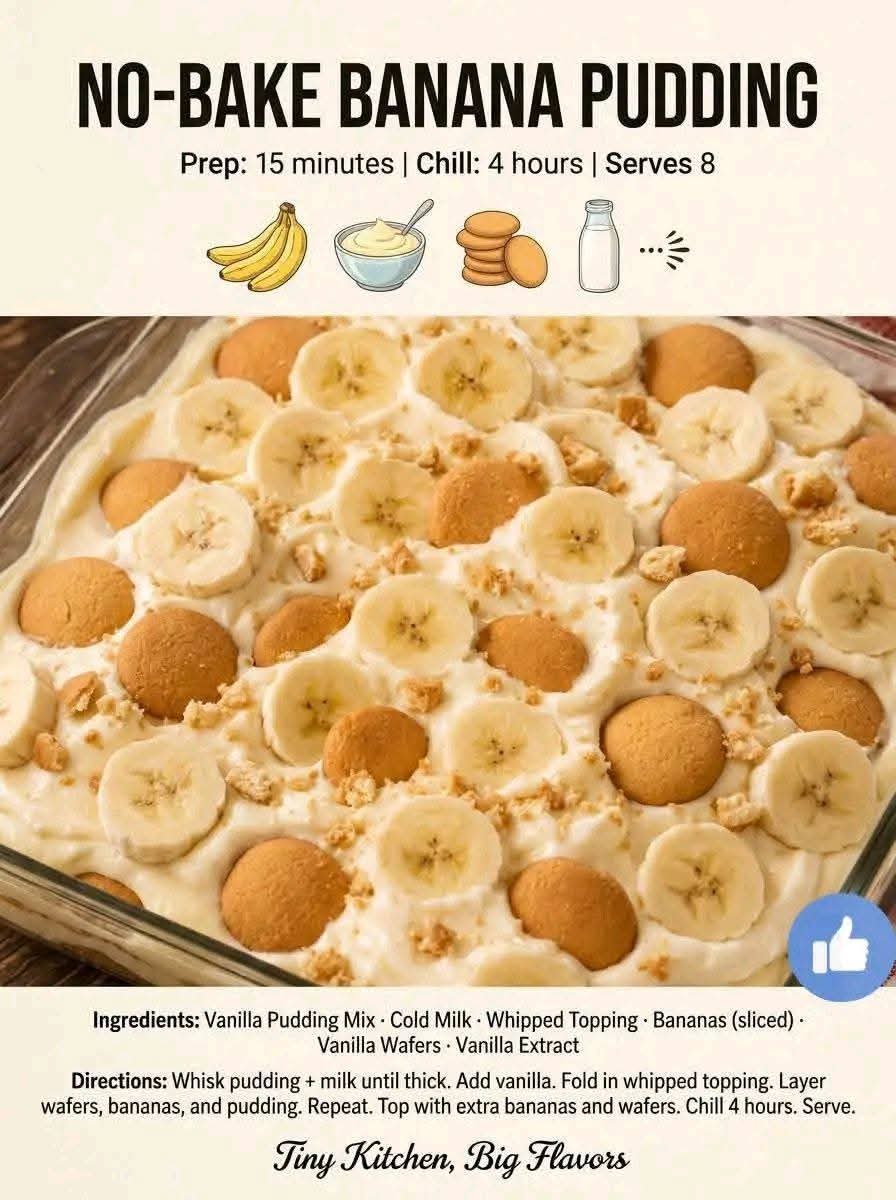
No-Bake Banana Pudding
Introduction
No-Bake Banana Pudding is a classic, comforting dessert made with layers of creamy vanilla pudding, sweet ripe bananas, and crisp vanilla wafers. It requires no oven and only a few simple ingredients, making it an excellent choice when you want an easy dessert that looks beautiful and tastes homemade.
The magic happens while the pudding rests in the refrigerator. During chilling, the vanilla wafers soften slightly as they absorb some of the creamy pudding, while the bananas add natural sweetness and a tender texture. The result is a cool, creamy, and satisfying dessert that is perfect for family dinners, potlucks, celebrations, and warm-weather gatherings.
Preparation Information
Preparation time: 15 minutes
Chilling time: At least 4 hours
Total time: About 4 hours and 15 minutes
Servings: 8
Difficulty: Easy
Method: No-bake, layered dessert
Ingredients
For the Pudding Mixture
- 1 box vanilla instant pudding mix
- 2 cups cold milk
- 1 tub whipped topping, thawed
- 1 teaspoon vanilla extract
For the Layers
- 4 ripe but firm bananas, sliced
- 1 box vanilla wafer cookies
- Additional vanilla wafers and banana slices for decorating, if desired
Instructions
Step 1: Prepare the Pudding
Pour the cold milk into a large mixing bowl. Add the vanilla pudding mix and whisk continuously until the mixture becomes smooth and noticeably thickened.
Allow the pudding to stand for a few minutes if necessary so it can reach a creamy, spoonable consistency.
Step 2: Add the Vanilla
Stir the vanilla extract into the prepared pudding. Mix thoroughly so the vanilla flavor is evenly distributed throughout the pudding.
The vanilla extract gives the dessert a deeper and more rounded flavor, complementing both the bananas and the vanilla wafers.
Step 3: Fold in the Whipped Topping
Add the thawed whipped topping to the pudding mixture.
Using a large spatula, gently fold the whipped topping into the pudding. Continue folding until the mixture is smooth, light, and fluffy.
Avoid stirring too aggressively because gentle folding helps maintain the airy texture.
Step 4: Prepare the Bananas
Peel the bananas and slice them into even rounds.
For the best texture, choose bananas that are ripe enough to be sweet but still firm. Very soft or overripe bananas can become mushy after several hours in the refrigerator.
Step 5: Begin Layering
Choose a large serving dish, trifle bowl, or deep glass baking dish.
Arrange a layer of vanilla wafers across the bottom of the dish. Try to cover as much of the surface as possible.
Place a layer of sliced bananas over the cookies.
Spoon or spread a layer of the creamy vanilla pudding mixture over the bananas.
Step 6: Repeat the Layers
Continue building the dessert in the same order:
- Vanilla wafers
- Sliced bananas
- Vanilla pudding mixture
Repeat until the ingredients have been used, finishing with a layer of pudding on top.
The number of layers will depend on the size and depth of your serving dish.
Step 7: Decorate
For a beautiful presentation, arrange additional vanilla wafers around the top or sides of the pudding.
Add a few banana slices immediately before serving if you want the banana slices to look especially fresh.
You can also crumble a few vanilla wafers over the top for additional texture.
Step 8: Chill
Cover the dish tightly with plastic wrap or an appropriate lid.
Refrigerate for at least 4 hours.
For an especially soft and flavorful dessert, you can allow the pudding to chill overnight. This gives the vanilla wafers more time to absorb the creamy pudding and creates the traditional soft, cake-like texture associated with banana pudding.
Step 9: Serve
Remove the banana pudding from the refrigerator just before serving.
Spoon generous portions into individual dessert bowls or glasses, making sure each serving contains pudding, bananas, and softened vanilla wafers.
Serve cold.
The Method
The preparation of this dessert is based on a simple layering method. First, the instant pudding is prepared with cold milk until thick and creamy. Vanilla extract is then added for flavor, followed by whipped topping to create a lighter and fluffier consistency.
The dessert is assembled by alternating cookies, bananas, and pudding. This arrangement allows every spoonful to contain a combination of creamy, fruity, and slightly softened cookie textures.
The refrigerator does most of the work. As the dessert chills, moisture from the pudding gradually softens the vanilla wafers. The bananas become surrounded by the creamy pudding, allowing the flavors to blend together.
History of Banana Pudding
Banana pudding is strongly associated with American home cooking and Southern dessert traditions. The dessert became particularly popular as bananas became more widely available in the United States and packaged pudding mixes and vanilla wafer cookies made preparation easier.
Traditional versions often feature homemade vanilla custard, bananas, and vanilla wafers, sometimes finished with meringue and baked briefly. The no-bake version developed as a convenient alternative, replacing homemade custard and baked toppings with instant pudding and whipped topping.
Vanilla wafer cookies became especially associated with banana pudding because their crisp texture works beautifully with the creamy pudding. After several hours of refrigeration, the cookies soften while still retaining enough structure to provide a pleasant texture.
Today, banana pudding appears at family gatherings, church suppers, holidays, potlucks, picnics, and celebrations throughout the United States.
Formation of the Dessert
The formation of No-Bake Banana Pudding is all about creating contrasting layers.
The first layer of vanilla wafers provides a delicate cookie foundation. The banana layer contributes natural sweetness and a soft fruit texture. The pudding layer surrounds the bananas with a rich, creamy vanilla flavor.
Repeating these layers creates a dessert that is visually attractive when served in a glass bowl while also ensuring that the flavors are evenly distributed.
The final pudding layer acts as a smooth topping. Extra wafers can be arranged around the edge, while fresh banana slices can be added shortly before serving.
Tips for the Best Banana Pudding
Choose the Right Bananas
Use bananas that are yellow and ripe but still firm. Bananas with a few small brown spots are usually sweet and flavorful without being excessively soft.
Use Cold Milk
Cold milk helps instant pudding thicken properly. Measure the milk carefully because adding too much can result in a pudding mixture that is too loose.
Fold Gently
When incorporating whipped topping, fold rather than vigorously stir. This helps preserve the light texture of the dessert.
Give It Enough Chilling Time
Four hours is the minimum recommended chilling time. An overnight rest can produce an even more traditional texture because the wafers have additional time to soften.
Add Fresh Banana Garnish at the End
If you want bright, fresh-looking banana slices on top, add them shortly before serving. Banana slices exposed to air for several hours can darken.
Make It Ahead
This dessert is particularly convenient for entertaining because it can be assembled several hours before serving. Keep it refrigerated until you are ready to serve.
Variations
Chocolate Banana Pudding
Add a layer of chocolate pudding or sprinkle chocolate shavings between the layers for a chocolate-and-banana combination.
Strawberry Banana Pudding
Add thinly sliced strawberries along with the bananas for a fresh fruit variation.
Peanut Butter Banana Pudding
Drizzle a small amount of creamy peanut butter between the layers or add finely chopped peanut butter cookies.
Caramel Banana Pudding
Add a light drizzle of caramel sauce between the layers for a richer dessert.
Homemade-Style Version
For a more traditional approach, replace the instant pudding with homemade vanilla custard. The preparation takes longer, but the resulting dessert has an especially rich and classic flavor.
Serving Suggestions
No-Bake Banana Pudding is delicious served directly from a large family-style dish. For parties, it can also be prepared in individual dessert cups or small glasses.
For an attractive presentation, finish each serving with a vanilla wafer and a few freshly sliced bananas. A small amount of whipped topping can also be added immediately before serving.
Serve the pudding cold for the best texture and flavor.
Why Dessert Lovers Enjoy It
Banana pudding appeals to dessert lovers because it combines several textures in one dish. The pudding is creamy and smooth, the bananas are naturally sweet and tender, and the vanilla wafers provide a delicate cookie flavor.
It is also an approachable dessert. There is no complicated pastry work, no oven, and no lengthy cooking process. The ingredients are simple, the assembly is easy, and the refrigerator transforms the layers into a cohesive dessert.
It is especially enjoyable for people who love classic comfort-food desserts with familiar flavors.
Storage
Keep the banana pudding covered and refrigerated.
For the best quality, enjoy it within about 1 to 2 days. The wafers will continue becoming softer as the dessert sits, and the bananas may gradually darken.
Always return leftovers to the refrigerator promptly and avoid leaving the pudding at room temperature for extended periods.
Conclusion
No-Bake Banana Pudding is a simple dessert that proves you do not need complicated techniques to create something special. Creamy vanilla pudding, ripe bananas, fluffy whipped topping, and vanilla wafers come together to create a cool and comforting treat with layers of flavor and texture.
Its quick preparation makes it ideal for busy days, while its classic appearance makes it worthy of family celebrations and special occasions. Whether served in a large trifle dish or prepared as individual portions, this banana pudding is an easy, crowd-pleasing dessert that can be prepared ahead of time and enjoyed straight from the refrigerator.
The most important part is giving the finished pudding enough time to chill. Once the layers have rested and the wafers have softened, every spoonful becomes creamy, fruity, tender, and wonderfully nostalgic.