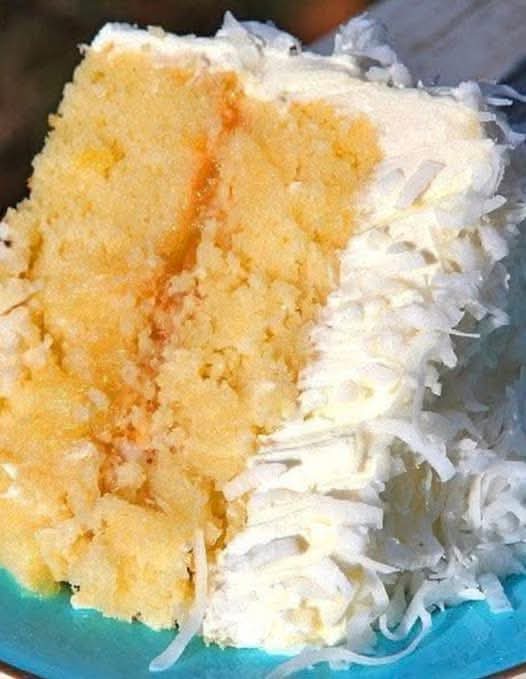
Coconut Pineapple Cake (Ultra-Moist)
Introduction
Coconut Pineapple Cake is a wonderfully soft, rich, and tropical dessert that brings together two classic flavors: sweet pineapple and fragrant coconut. This ultra-moist cake has a tender crumb, a buttery richness, and little pieces of pineapple and coconut throughout every slice.
The combination of crushed pineapple and coconut milk helps create a cake that stays moist for several days, while coconut extract intensifies the tropical flavor. It is a beautiful dessert for birthdays, family gatherings, afternoon tea, holidays, potlucks, bake sales, or simply whenever you want something comforting and homemade.
This recipe produces a generous cake with a soft texture and plenty of tropical character. It can be served simply with powdered sugar, topped with coconut frosting, or finished with a creamy pineapple-coconut glaze.
Ingredients
For the Cake
- 2 ½ cups all-purpose flour
- 2 teaspoons baking powder
- ½ teaspoon baking soda
- ½ teaspoon salt
- ¾ cup unsalted butter, softened
- 1 ½ cups granulated sugar
- 4 large eggs, room temperature
- 1 teaspoon vanilla extract
- 1 teaspoon coconut extract
- 1 cup crushed pineapple, very well drained
- 1 cup coconut milk, preferably full-fat
- 1 cup sweetened shredded coconut
Optional Coconut-Pineapple Frosting
- ½ cup unsalted butter, softened
- 4 ounces cream cheese, softened
- 3 cups powdered sugar
- 1 teaspoon vanilla extract
- ½ teaspoon coconut extract
- 2–3 tablespoons coconut milk
- ½ cup sweetened shredded coconut for decorating
Optional Pineapple Topping
- ½ cup crushed pineapple, very well drained
- ½ cup shredded coconut
- 2 tablespoons granulated sugar
- 1 tablespoon butter
Equipment
- 9 × 13-inch baking pan
- Mixing bowls
- Electric hand mixer or stand mixer
- Measuring cups and spoons
- Rubber spatula
- Whisk
- Cooling rack
- Parchment paper, optional
Preparation Before Baking
Begin by bringing the butter and eggs to room temperature. Room-temperature ingredients blend together more evenly and help produce a smoother, lighter cake.
Preheat the oven to 350°F (175°C).
Grease a 9 × 13-inch baking pan thoroughly. You can also line the bottom with parchment paper to make removing the cake easier.
The pineapple must be well drained. Excess pineapple juice can add too much liquid to the batter and make the cake heavy or gummy.
Method 1: Preparing the Dry Ingredients
In a medium bowl, combine:
- Flour
- Baking powder
- Baking soda
- Salt
Whisk everything together for about 30 seconds.
This distributes the leavening agents and salt evenly throughout the flour, helping the cake rise consistently.
Set the bowl aside.
Method 2: Creaming the Butter and Sugar
Place the softened butter into a large mixing bowl.
Beat the butter on medium speed for approximately 2 minutes, until smooth and creamy.
Gradually add the sugar.
Continue beating for another 3–4 minutes. The mixture should become noticeably lighter in color and fluffy in texture.
This creaming process is important because it incorporates tiny air bubbles into the butter. Those bubbles expand in the oven and contribute to the cake’s tender structure.
Do not rush this step.
Method 3: Adding the Eggs
Add the eggs one at a time.
Beat well after each addition before adding the next egg.
Scrape down the sides and bottom of the bowl as needed.
Add the vanilla extract and coconut extract and mix until combined.
The batter may look slightly curdled at this stage, especially if the ingredients were not perfectly the same temperature. This is generally fine.
Method 4: Combining the Coconut Milk and Flour
Add approximately one-third of the dry ingredients to the butter mixture.
Mix gently until just incorporated.
Add approximately half of the coconut milk.
Mix briefly.
Repeat with another third of the flour mixture, followed by the remaining coconut milk, and finally the remaining flour.
Mix only until the ingredients are incorporated.
Overmixing can develop too much gluten, which may make the finished cake dense rather than soft and tender.
Method 5: Adding the Pineapple and Coconut
Add the well-drained crushed pineapple.
Add the shredded coconut.
Using a rubber spatula, gently fold them into the batter.
Make sure the pineapple is distributed throughout the batter without aggressively mixing.
The finished batter should be thick, creamy, and filled with small pieces of pineapple and coconut.
Formation of the Cake
Pour the batter into the prepared 9 × 13-inch pan.
Use a spatula to spread the batter evenly from corner to corner.
Gently tap the pan against the counter once or twice to remove any large air pockets.
Do not overdo this because you want to preserve some of the air created during mixing.
Place the pan in the center of the preheated oven.
Baking Instructions
Bake at 350°F (175°C) for approximately 35–45 minutes.
The exact baking time can vary depending on your oven and the type of pan you use.
Begin checking around 35 minutes.
The cake is ready when:
- The top is lightly golden.
- The center looks set.
- The cake springs back gently when lightly touched.
- A toothpick inserted into the center comes out clean or with a few moist crumbs attached.
Avoid overbaking.
The secret to an ultra-moist coconut pineapple cake is taking it out of the oven when it is fully baked but not dried out.
Cooling the Cake
Remove the cake from the oven and place the pan on a cooling rack.
Allow it to cool in the pan for approximately 15–20 minutes.
Then allow it to cool completely before adding frosting.
If you frost the cake while it is very warm, the frosting can melt and become runny.
For an especially moist texture, cover the cooled cake loosely and allow it to rest for several hours before serving. The pineapple and coconut flavors become even more noticeable as the cake sits.
Method 6: Making the Coconut-Cream Cheese Frosting
For a rich and creamy topping, prepare the frosting while the cake cools.
Place the softened butter and cream cheese into a mixing bowl.
Beat until smooth and creamy.
Gradually add the powdered sugar, approximately ½ cup at a time.
Add the vanilla extract and coconut extract.
Beat until smooth.
Add the coconut milk, one tablespoon at a time, until the frosting reaches your preferred consistency.
The frosting should be creamy and spreadable but not runny.
Spread the frosting evenly over the completely cooled cake.
Finish with a generous sprinkling of shredded coconut.
Optional Pineapple-Coconut Topping
For an additional layer of tropical flavor, place the crushed pineapple, coconut, sugar, and butter into a small saucepan.
Cook over medium-low heat for approximately 5–8 minutes, stirring frequently.
The mixture should become slightly thicker and glossy.
Allow it to cool completely.
Spoon small amounts over the frosting or spread it gently across the top of the cake.
This creates an especially flavorful finish with soft pineapple pieces and toasted-style coconut flavor.
A Simple No-Frosting Version
This cake is delicious even without frosting.
Once completely cooled, dust the top lightly with powdered sugar.
You can also serve each slice with:
- Whipped cream
- Vanilla ice cream
- Fresh pineapple
- Toasted coconut
- A small spoonful of pineapple preserves
- Coconut whipped cream
The unfrosted version is particularly good for breakfast-style cake or afternoon tea.
How to Make the Cake Extra Moist
The first secret is properly draining the pineapple. You want the fruit itself but not excessive liquid.
The second secret is using full-fat coconut milk. The natural richness of coconut milk contributes to the cake’s tender texture and tropical flavor.
The third secret is avoiding overmixing after the flour is added.
The fourth secret is not overbaking. Start checking the cake early rather than automatically baking it for the maximum time.
Finally, allowing the finished cake to rest gives the moisture time to distribute throughout the crumb.
The History and Inspiration
Coconut and pineapple have long been associated with tropical cooking and celebratory desserts. Their combination became especially popular in American and Caribbean-inspired baking, where pineapple provided sweetness and acidity while coconut added richness and fragrance.
Pineapple cakes became particularly beloved because canned pineapple made the fruit available year-round. Home bakers could create moist cakes without needing fresh tropical fruit.
Coconut cakes, meanwhile, became popular as special-occasion desserts because shredded coconut could be incorporated into the cake as well as used as a decorative topping.
Combining the two created a naturally complementary dessert. Pineapple contributes fruity sweetness and moisture, while coconut provides a creamy, nutty character. The result is a cake that tastes festive without requiring complicated decoration.
Why the Formation Works
Every ingredient has an important purpose.
All-purpose flour provides the structure.
Baking powder and baking soda help the cake rise and create a lighter crumb.
Salt balances the sweetness and strengthens the overall flavor.
Butter provides richness and contributes to the tender texture.
Sugar sweetens the cake while helping retain moisture.
Eggs provide structure, richness, and emulsification.
Vanilla extract rounds out the flavors.
Coconut extract gives the cake a stronger coconut aroma.
Pineapple contributes fruit flavor, natural moisture, and a slight acidity.
Coconut milk provides richness and helps create the ultra-moist texture.
Shredded coconut adds texture and reinforces the tropical flavor.
Together, these ingredients create a cake that is soft without being fragile, moist without being soggy, and rich without becoming overwhelmingly heavy.
Tips for Perfect Results
Use room-temperature ingredients
Room-temperature butter and eggs combine more effectively and produce a smoother batter.
Drain the pineapple thoroughly
This is one of the most important steps. Too much pineapple juice can make the cake overly wet.
Do not overmix
Once the flour is incorporated, mix only until the batter comes together.
Do not overbake
A few moist crumbs on the toothpick are preferable to a completely dry toothpick.
Let it cool before frosting
A completely cooled cake gives you the best frosting consistency.
Toast the coconut
For a deeper flavor, lightly toast some of the shredded coconut in a dry skillet until golden. Allow it to cool before sprinkling it over the frosting.
Let the cake rest
Although you can eat it immediately after cooling, the flavor and moisture often improve after several hours.
Storage
Store the unfrosted cake tightly covered at room temperature for up to 2 days.
If the cake has cream cheese frosting, refrigerate it in a covered container.
For the best texture, allow refrigerated slices to sit at room temperature for approximately 15–20 minutes before serving.
The cake can also be frozen.
Cut it into individual portions, wrap each piece tightly, and place the wrapped pieces in a freezer-safe container.
Freeze for up to approximately 2–3 months for best quality.
Thaw overnight in the refrigerator or allow individual pieces to thaw at room temperature.
Serving Suggestions
For a simple presentation, cut the cake into neat squares and sprinkle each serving with toasted coconut.
For a special dessert, serve a warm or room-temperature slice with a scoop of vanilla ice cream.
For a celebration, cover the entire cake with coconut cream cheese frosting and decorate the top with toasted coconut and small pieces of pineapple.
For an elegant presentation, add a small amount of whipped cream and a thin pineapple slice to each serving.
Variations
Pineapple Coconut Bundt Cake
Pour the batter into a well-greased 10- to 12-cup Bundt pan.
Bake until a toothpick inserted into the thickest portion comes out with a few moist crumbs. Allow the cake to cool before turning it onto a serving plate.
Drizzle with coconut glaze and sprinkle with shredded coconut.
Coconut Pineapple Layer Cake
Divide the batter between two prepared round cake pans.
Bake until the centers are set.
Cool completely, then place one layer on a serving plate. Spread with coconut frosting, add the second layer, and frost the entire cake.
Finish with toasted coconut.
Pineapple Coconut Cupcakes
Divide the batter among lined cupcake cups, filling each approximately two-thirds full.
Bake until lightly golden and the centers spring back when touched.
Cool completely before decorating with coconut frosting.
Lovers of This Cake Will Enjoy
This cake is especially appealing to people who love:
- Coconut cream desserts
- Pineapple cakes
- Tropical fruit desserts
- Moist butter cakes
- Coconut cupcakes
- Pineapple upside-down cake
- Cream cheese frosting
- Old-fashioned homemade cakes
- Soft afternoon cakes
- Holiday desserts
It is also a wonderful recipe for people who enjoy desserts that taste homemade rather than overly complicated.
Make-Ahead Method
This cake is excellent for preparing ahead of time.
Bake the cake one day before serving.
Allow it to cool completely, then cover it tightly.
Prepare the frosting separately and refrigerate it.
The following day, bring the frosting to a workable consistency, frost the cake, decorate it with coconut, and serve.
Making it ahead allows the pineapple and coconut flavors to blend beautifully.
Final Method at a Glance
- Preheat the oven to 350°F (175°C).
- Grease a 9 × 13-inch baking pan.
- Whisk together flour, baking powder, baking soda, and salt.
- Cream the softened butter and sugar until light and fluffy.
- Beat in the eggs one at a time.
- Add vanilla and coconut extracts.
- Alternately add the dry ingredients and coconut milk.
- Fold in the well-drained pineapple.
- Fold in the shredded coconut.
- Spread the batter evenly in the prepared pan.
- Bake for approximately 35–45 minutes.
- Cool completely.
- Prepare the coconut cream cheese frosting if desired.
- Frost the cake and decorate with shredded or toasted coconut.
- Slice and serve.
Conclusion
Coconut Pineapple Cake is the kind of dessert that brings together everything people love about a comforting homemade cake: a buttery crumb, tropical coconut flavor, sweet pineapple, and plenty of moisture.
The pineapple keeps the cake wonderfully tender, while coconut milk and shredded coconut provide richness and texture. A creamy coconut cream cheese frosting takes it from a simple everyday cake to an impressive celebration dessert.
Whether served plain with a dusting of powdered sugar, covered in coconut frosting, or finished with pineapple and toasted coconut, this cake is a beautiful centerpiece for any dessert table.
For the best experience, serve it slightly chilled or at room temperature with a cup of coffee, tea, or a cold glass of milk. The combination of pineapple and coconut makes every bite taste like a little tropical escape.