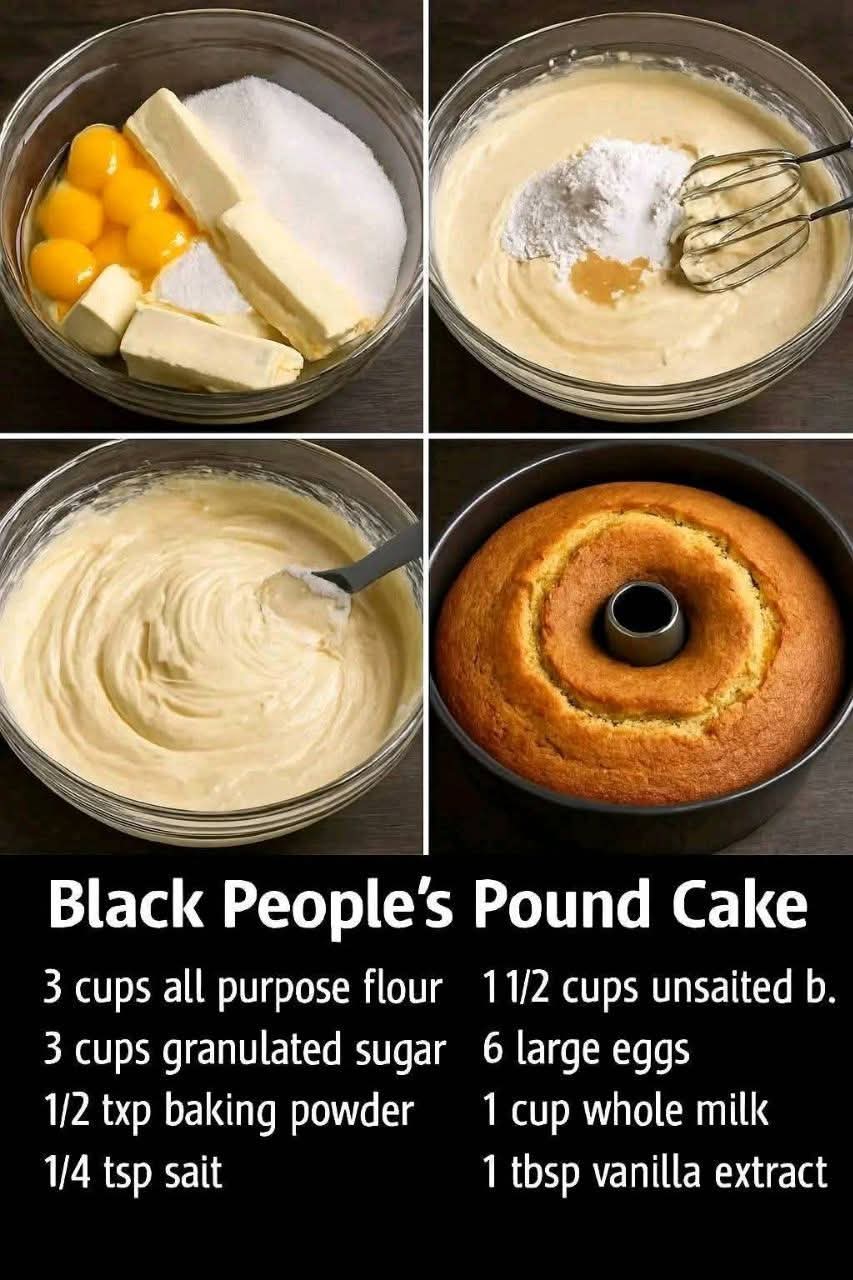
Black People’s Pound Cake
Introduction
Black People’s Pound Cake is a classic-style Southern pound cake known for its rich buttery flavor, tender crumb, golden crust, and wonderfully dense yet soft texture. The name is often used informally online to describe a traditional pound cake associated with Black Southern home cooking and family gatherings.
This is the kind of cake that feels familiar and comforting: simple ingredients transformed into something special through careful mixing, proper baking, and patience. It is delicious served plain, but it can also be paired with fresh berries, whipped cream, fruit sauce, or a scoop of vanilla ice cream.
The recipe below expands on the ingredient list into a complete pound cake preparation, including the quantities, method, baking instructions, useful techniques, and serving suggestions.
Ingredients
For the Cake
- 3 cups granulated sugar
- 1 cup unsalted butter, softened to room temperature
- 3 cups all-purpose flour
- 1 teaspoon baking powder
- 1/2 teaspoon salt
- 1 cup whole milk, room temperature
- 5 large eggs, room temperature
- 2 teaspoons vanilla extract
Optional Flavor Additions
For a slightly richer or more traditional Southern flavor, you may add:
- 1 teaspoon almond extract
- 1 teaspoon lemon extract
- 1 tablespoon fresh lemon zest
These additions are optional. Vanilla alone produces a beautifully classic pound cake.
Equipment
- 10-inch Bundt pan or tube pan
- Large mixing bowl
- Electric hand mixer or stand mixer
- Measuring cups and spoons
- Rubber spatula
- Wire cooling rack
Preparation
Begin by bringing the butter, eggs, and milk to room temperature. Room-temperature ingredients combine more easily and help produce a smoother batter.
Preheat the oven to 325°F (165°C).
Generously grease a 10-inch Bundt or tube pan with softened butter or shortening. Dust the pan lightly with flour, making sure to coat the bottom and sides. Shake out any excess flour.
Properly preparing the pan is particularly important with pound cake because its dense batter can cling to the sides during baking.
Method
Step 1: Cream the Butter and Sugar
Place the softened butter in a large mixing bowl.
Beat the butter on medium speed until smooth and creamy. Gradually add the granulated sugar and continue beating for approximately 5 to 7 minutes.
The mixture should become noticeably lighter in color and fluffy in texture.
This step is one of the most important parts of the recipe. Creaming incorporates air into the butter, helping create a tender cake.
Step 2: Add the Eggs
Add the eggs one at a time.
Beat well after each addition and scrape down the sides of the bowl as necessary.
Do not add all of the eggs at once. Adding them gradually helps maintain a smooth emulsion and prevents the batter from becoming excessively curdled.
Add the vanilla extract and any optional flavor extracts at this stage.
Step 3: Combine the Dry Ingredients
In a separate bowl, whisk together:
- All-purpose flour
- Baking powder
- Salt
Mixing the dry ingredients separately distributes the baking powder and salt throughout the flour.
Step 4: Add the Flour and Milk
With the mixer on low speed, gradually add the dry ingredients to the butter mixture.
Alternate between adding some flour mixture and some milk.
Begin with flour and finish with flour.
Mix only until the ingredients are incorporated. Avoid overmixing once the flour has been added.
Overmixing can develop too much gluten and make the finished cake heavier or tougher than desired.
Step 5: Fill the Pan
Pour the batter into the prepared Bundt or tube pan.
Use a rubber spatula to gently spread the batter evenly.
Tap the pan lightly on the countertop once or twice to help remove large air pockets.
Smooth the top of the batter before placing the pan in the oven.
Baking Method
Place the cake in the center of the preheated oven.
Bake at 325°F (165°C) for approximately 75 to 90 minutes.
Because ovens and pans vary, begin checking the cake around the 70-minute mark.
The cake is ready when:
- The top is golden brown.
- The cake has pulled slightly away from the sides of the pan.
- A wooden skewer or cake tester inserted into the thickest part comes out clean or with a few moist crumbs.
- The cake springs back gently when lightly touched.
Avoid opening the oven repeatedly during the first portion of baking because sudden temperature changes can affect the cake’s rise.
Cooling the Cake
Once the cake has finished baking, remove it from the oven and place it on a cooling rack.
Allow it to cool in the pan for approximately 10 to 15 minutes.
Carefully run a thin knife around any areas that appear stuck to the pan.
Place the cooling rack over the pan and carefully invert the cake.
Allow the cake to cool completely before slicing.
Although it may be tempting to cut into it immediately, allowing the cake to cool helps the crumb finish setting and makes cleaner slices.
Formation and Texture
A good pound cake should have a fine, even crumb with a slightly dense but tender texture.
The outside should develop a beautiful golden crust while the inside remains moist and buttery.
The characteristic texture comes from several factors:
- Properly creamed butter and sugar.
- Room-temperature eggs and milk.
- Accurate flour measurement.
- Gentle mixing after the flour is added.
- Moderate oven temperature.
- Proper cooling before slicing.
For especially tender results, spoon the flour into measuring cups and level the tops rather than packing flour directly into the cups.
Optional Glaze
The cake is excellent without a glaze, but a simple vanilla glaze can add sweetness.
Ingredients
- 1 1/2 cups powdered sugar
- 2 to 3 tablespoons milk
- 1 teaspoon vanilla extract
Method
Place the powdered sugar in a bowl.
Add the vanilla and 2 tablespoons of milk.
Whisk until smooth. Add additional milk a few drops at a time until the glaze reaches your preferred consistency.
Drizzle the glaze over the completely cooled cake.
Allow the glaze to set for approximately 15 to 20 minutes before serving.
Serving Suggestions
Slice the pound cake into generous pieces and serve at room temperature.
For a classic presentation, serve it with:
- Fresh strawberries
- Blueberries
- Peaches
- Whipped cream
- Vanilla ice cream
- Chocolate sauce
- Caramel sauce
- Fresh fruit compote
A warm slice with vanilla ice cream makes an especially comforting dessert.
The cake can also be served alongside coffee or tea for breakfast or an afternoon treat.
Storage
Store the completely cooled cake in an airtight container at room temperature for up to 3 days.
For longer storage, refrigerate it in a tightly covered container for approximately 5 to 7 days.
Allow refrigerated slices to come closer to room temperature before serving for the best texture.
The cake can also be frozen. Wrap individual slices or the whole cake tightly in plastic wrap, followed by aluminum foil. Freeze for up to 3 months.
Thaw overnight in the refrigerator or allow individual slices to thaw at room temperature.
History and Tradition
Pound cake has a long history in American baking and is particularly associated with Southern cooking. Traditional pound cakes were built around a simple formula involving equal weights of butter, sugar, eggs, and flour.
Over generations, home cooks adapted the basic formula by changing the quantities and adding ingredients such as milk, cream, vanilla, citrus, almond extract, and other flavorings.
In Black Southern households, cakes such as pound cake became closely connected with family celebrations, holidays, church gatherings, reunions, birthdays, and community events. Recipes were frequently passed from one generation to another, with each cook developing personal techniques and variations.
The modern versions found online under names such as “Black People’s Pound Cake” are generally contemporary names for a style of rich, homemade Southern pound cake rather than a single historically standardized recipe.
Secrets for the Best Pound Cake
Use Room-Temperature Ingredients
Cold eggs and milk can make it more difficult to achieve a smooth batter. Room-temperature ingredients blend more evenly with the creamed butter.
Do Not Rush the Creaming Process
Spend several minutes properly beating the butter and sugar. This contributes significantly to the final texture.
Measure Flour Carefully
Too much flour can make a pound cake dry and heavy. For the most accurate results, weigh the flour if a kitchen scale is available.
Avoid Overmixing
Once the flour has been incorporated, mix only as much as necessary.
Bake at a Moderate Temperature
A lower temperature allows the dense batter to bake evenly without the outside becoming overly dark before the center is finished.
Let It Cool
Allowing the cake to rest after baking makes it easier to remove from the pan and gives the crumb time to stabilize.
Common Problems and Solutions
The Cake Is Dry
The most common causes are too much flour, overbaking, or an oven temperature that is too high.
Measure the flour carefully and begin checking the cake before the maximum baking time.
The Cake Sticks to the Pan
Make sure the pan is thoroughly greased and lightly floured before adding the batter.
Pay particular attention to the grooves of a Bundt pan.
The Cake Falls
Opening the oven too early, underbaking, or adding too much liquid can contribute to a cake collapsing.
Make sure the center is fully baked before removing it from the oven.
The Cake Is Too Dense
A pound cake should be dense, but it should not be heavy or gummy.
Make sure the butter and sugar are properly creamed and avoid overmixing after adding the flour.
Conclusion
Black People’s Pound Cake represents the comforting simplicity of traditional homemade baking. With basic pantry ingredients, careful preparation, and a little patience, you can create a beautiful cake with a golden exterior, rich buttery flavor, and tender crumb.
It is a wonderful dessert for family dinners, celebrations, holidays, church gatherings, afternoon coffee, or simply enjoying a homemade slice with someone you love.
The greatest appeal of a traditional pound cake is its versatility. It can remain simple and elegant on its own or become the foundation for fresh fruit, whipped cream, ice cream, sauces, and other toppings.
Prepare it carefully, allow it to cool properly, slice it generously, and enjoy the timeless comfort of a homemade pound cake.