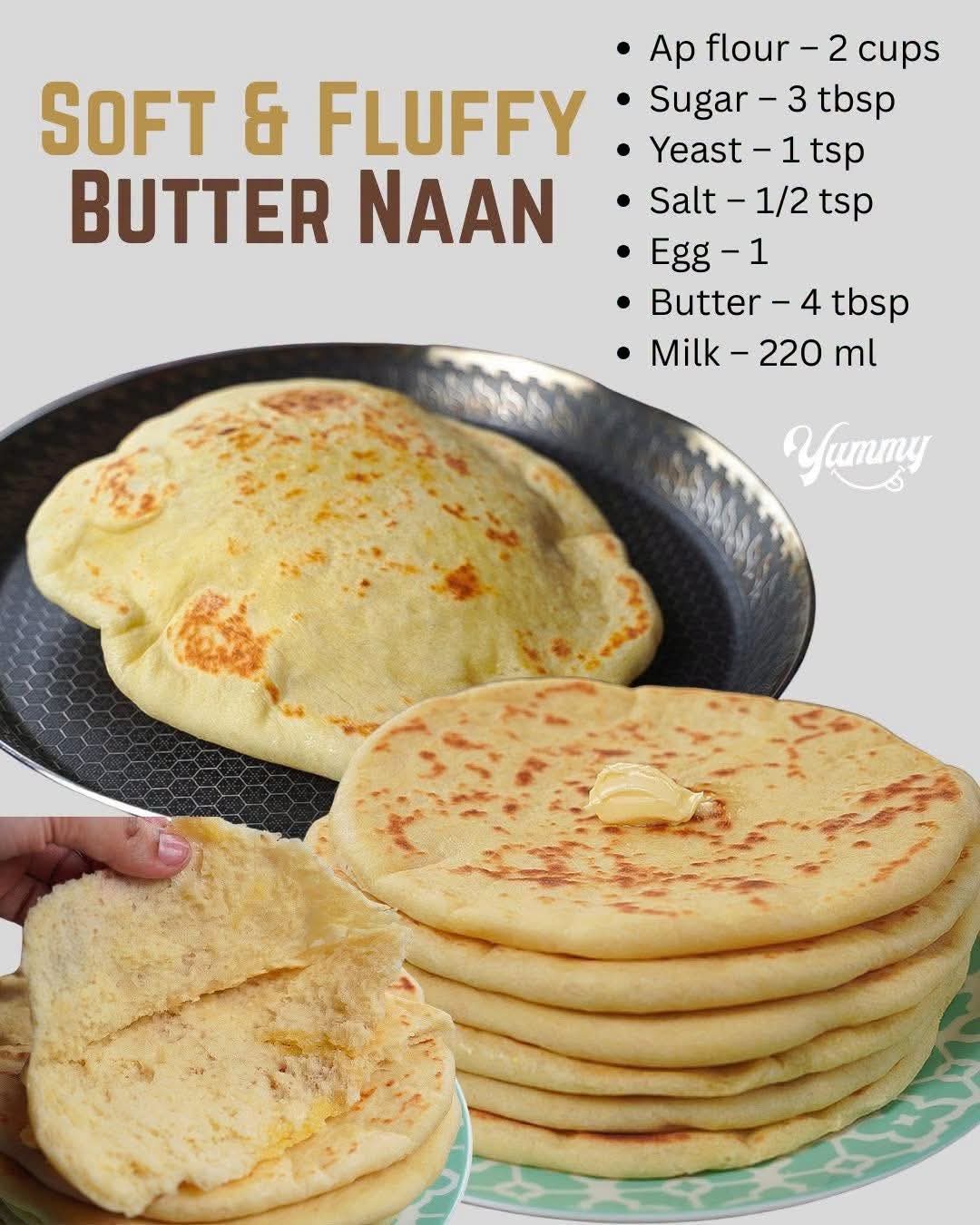
Easy Butter Naan Recipe
Soft, Fluffy, Buttery Homemade Naan
Introduction
Butter naan is one of those breads that can turn a simple meal into something special. Soft in the center, lightly crisp and golden on the outside, and finished with a generous layer of melted butter, naan is perfect for scooping up curries, grilled meats, creamy sauces, vegetables, and flavorful stews.
This easy homemade version uses an egg, yeast, milk, and butter to create a particularly tender dough. The egg contributes richness and softness, while the milk and butter help keep the naan moist. The result is a fluffy, satisfying flatbread that remains soft even after it cools.
You do not need a traditional tandoor to make delicious naan at home. A hot heavy skillet or frying pan works beautifully and gives the bread attractive golden spots and a slightly charred flavor.
History of Naan
Naan has a long history throughout South and Central Asian cuisine. The word “naan” comes from Persian and broadly means bread. Flatbreads have been prepared across the region for centuries, with different cultures developing their own versions according to local ingredients and cooking traditions.
Traditional naan is commonly associated with the Indian subcontinent and is often cooked against the hot walls of a clay tandoor. The intense heat causes the dough to puff rapidly, producing the characteristic bubbles and browned patches.
Over time, naan became a popular accompaniment to curries, kebabs, tandoori dishes, lentils, and rich sauces. Today, countless variations exist, including garlic naan, cheese naan, butter naan, stuffed naan, and herb naan.
This skillet version brings the spirit of traditional naan into the home kitchen without requiring a tandoor.
Ingredients
For the Naan Dough
- 2 cups all-purpose flour
- 3 tablespoons sugar
- 1 teaspoon instant or active dry yeast
- 1/2 teaspoon salt
- 1 large egg
- 3 to 4 tablespoons melted butter
- 220 to 250 ml lukewarm milk, added gradually
For Cooking and Finishing
- 2 to 3 tablespoons melted butter, for brushing
- A little neutral oil or butter for greasing your hands and work surface
- Optional: chopped fresh coriander or parsley
- Optional: minced garlic for garlic butter naan
- Optional: a small pinch of nigella seeds or sesame seeds
Preparation Time
- Preparation: about 15 minutes
- Kneading: 5 to 7 minutes
- Rising: 30 to 60 minutes
- Shaping: about 10 minutes
- Cooking: about 15 minutes
- Total time: approximately 1 to 1 1/2 hours
Yield
Makes approximately 6 medium-sized naan.
Method 1: Preparing the Dough
Begin by placing the all-purpose flour into a large mixing bowl.
Add the sugar, yeast, and salt. Mix the dry ingredients together so that the yeast and salt are evenly distributed throughout the flour.
Make a small well in the center and add the egg.
Pour in the melted butter and begin adding the lukewarm milk gradually. Do not add all of the milk at once because the exact amount required can vary depending on the flour and the size of the egg.
Mix everything together until a soft, slightly sticky dough begins to form.
If the dough feels extremely dry, add a little more milk. If it is excessively wet, sprinkle in a small amount of flour.
Method 2: Kneading the Dough
Transfer the dough to a lightly greased work surface or continue kneading it inside the bowl.
Knead for approximately 5 to 7 minutes.
The dough should gradually become smooth, soft, and elastic. It should feel moist and supple rather than stiff.
Avoid adding too much flour during kneading. A slightly soft dough is one of the secrets to tender naan.
Once kneaded, rub a small amount of butter over the surface of the dough.
Place it into a lightly greased bowl and cover it with plastic wrap, a lid, or a clean kitchen towel.
Allow the dough to rest in a warm place for approximately 30 to 60 minutes, or until it has noticeably expanded and preferably doubled in size.
Method 3: Forming the Naan
Once the dough has risen, gently press it down to release some of the trapped air.
Transfer it to a lightly greased surface.
Divide the dough into 6 approximately equal portions.
Roll each portion gently between your hands to create a smooth ball.
Cover the dough balls and allow them to rest for another 5 to 10 minutes. This short rest relaxes the gluten and makes the dough easier to stretch.
Take one dough ball and gently flatten it with your fingers.
Using your hands or a rolling pin, stretch it into an oval or round shape. Aim for approximately 3 to 5 mm thickness.
Do not roll the naan excessively thin because you want it to remain soft and fluffy after cooking.
Repeat with the remaining dough portions.
Method 4: Cooking the Naan
Place a heavy skillet, cast-iron pan, or nonstick frying pan over medium to medium-high heat.
Allow the pan to become properly hot before adding the naan. A hot cooking surface is important because it helps the dough puff and creates the characteristic browned spots.
Place one shaped naan onto the hot pan.
Cook for approximately 1 to 2 minutes, or until bubbles begin appearing across the surface and the underside develops golden-brown patches.
Carefully flip the naan.
Cook the second side for another 1 to 2 minutes, until it is cooked through and develops attractive golden-brown spots.
Remove the naan from the pan.
Immediately brush the hot naan generously with melted butter.
Repeat the process with the remaining dough.
Method 5: Making Garlic Butter Naan
For an extra flavorful variation, combine melted butter with finely minced garlic.
Brush the mixture over each freshly cooked naan while it is still hot.
You can also sprinkle the naan with chopped fresh coriander or parsley.
The warm bread absorbs the garlic butter, creating a fragrant and rich topping.
How to Get Soft and Fluffy Naan
The dough consistency is extremely important.
Do not make the dough too firm. A soft dough produces a softer finished naan.
Use lukewarm milk rather than very cold milk. If using active dry yeast, excessively hot liquid should also be avoided because high temperatures can damage the yeast.
Give the dough enough time to rise. The exact rising time depends on the temperature of your kitchen. A warm environment will usually allow the dough to rise faster.
Do not use excessive flour when shaping the naan. Too much additional flour can make the finished bread dry.
Make sure your pan is hot before cooking. A properly heated pan helps the naan cook quickly and develop the desired bubbles and brown spots.
Finally, brush the naan with butter immediately after cooking. The butter helps maintain moisture and adds richness.
Troubleshooting
If the naan is hard
The dough may have been too dry, or too much flour may have been added during kneading and shaping.
Next time, keep the dough softer and avoid adding unnecessary flour.
If the naan does not puff
The pan may not have been hot enough, or the naan may have been rolled too thick or too thin.
Preheat the pan thoroughly and try to maintain consistent thickness.
If the naan burns outside but remains raw inside
The cooking temperature is probably too high.
Reduce the heat slightly and cook the naan until it develops golden spots while the center becomes fully cooked.
If the dough does not rise
Check that the yeast is still active and that the dough is resting somewhere warm enough.
If using active dry yeast, you can test it by mixing it with some of the lukewarm milk and a little sugar and allowing it to stand for several minutes. It should become foamy.
Serving Suggestions
Butter naan is incredibly versatile.
Serve it alongside:
- Butter chicken
- Chicken tikka masala
- Lamb or beef curry
- Chickpea curry
- Lentil dal
- Vegetable curry
- Palak paneer
- Paneer tikka
- Tandoori chicken
- Grilled meats
- Creamy tomato-based sauces
- Spiced potatoes
- Roasted vegetables
Naan is especially delicious when served warm and used to scoop up thick, flavorful sauces.
Formation and Texture
The combination of flour, yeast, egg, milk, and butter creates a rich dough with excellent tenderness.
Flour provides the gluten structure necessary to hold the gases produced during fermentation. Yeast helps the dough rise and contributes flavor. The egg adds richness and tenderness, while milk gives the dough a soft texture. Butter contributes both flavor and moisture.
During cooking, the water contained in the dough turns into steam. The steam expands inside the dough, helping create bubbles and pockets. The hot pan then browns the surface, producing the characteristic toasted spots.
The final result should be flexible enough to fold without breaking, soft enough to tear easily by hand, and flavorful enough to enjoy even without a main dish.
Storage
Fresh naan is best eaten immediately while warm.
If you have leftovers, allow them to cool completely before placing them in an airtight container or sealed bag.
They can generally be kept at room temperature for a short period or refrigerated for several days.
For longer storage, wrap individual naan in parchment or plastic wrap and place them in a freezer-safe bag.
Reheating
To reheat refrigerated naan, warm it briefly in a dry skillet over medium heat.
You can also microwave it for a short period, preferably covered with a slightly damp paper towel to help prevent it from drying out.
For frozen naan, allow it to thaw slightly and then reheat it in a hot skillet or oven.
Brush with a little melted butter after reheating for the best texture.
Variations
Garlic Butter Naan
Add minced garlic and chopped coriander to melted butter and brush it over the cooked naan.
Herb Naan
Mix finely chopped coriander, parsley, or other fresh herbs into the topping.
Cheese Naan
Place grated cheese in the center of a flattened dough portion, seal the dough around the filling, and gently roll it out before cooking.
Chili Butter Naan
Add finely chopped fresh chili or a pinch of chili flakes to the melted butter.
Sesame Naan
Sprinkle sesame seeds over the shaped dough before cooking.
A Few Important Tips
- Add the milk gradually rather than all at once.
- Keep the dough soft and supple.
- Knead thoroughly for 5 to 7 minutes.
- Give the yeast enough time to work.
- Let the dough rest before shaping.
- Do not add excessive flour while rolling.
- Preheat the skillet properly.
- Cook each naan until golden-brown spots appear.
- Brush with butter immediately after cooking.
- Serve warm for the softest and most enjoyable texture.
Conclusion
Homemade butter naan is much easier to prepare than it may seem. With simple pantry ingredients, a little kneading, a short rise, and a hot skillet, you can make soft, fluffy bread in your own kitchen.
The egg, milk, yeast, and butter work together to produce a rich and tender texture, while the hot pan creates the beautiful golden-brown patches that make naan so appealing.
Whether served beside a rich curry, used to scoop up a creamy sauce, or enjoyed warm with garlic butter on its own, this homemade naan is a comforting bread that deserves a regular place at the table.
For naan lovers, the best moment is when the bread comes directly from the hot pan, receives its generous coating of melted butter, and is served immediately. Tear off a warm piece, fold it slightly, and enjoy its soft center and buttery surface.