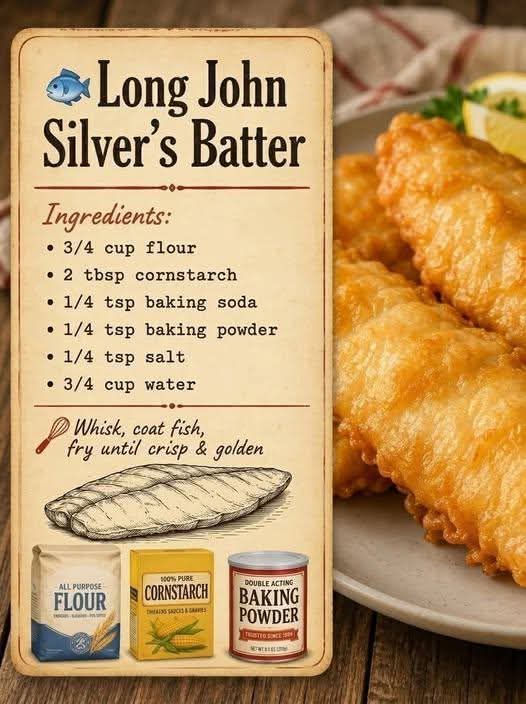
Long John Silver’s–Style Crispy Fish Batter
Introduction
Long John Silver’s–style crispy batter is known for its light, airy, golden coating and delicate crunch. The batter is simple, but the combination of flour, cornstarch, baking powder, and baking soda creates a remarkably crisp exterior when it meets hot oil.
This homemade version is designed to recreate that classic fast-food-style fried fish texture in your own kitchen. It works especially well with mild white fish such as cod, pollock, haddock, tilapia, or other firm fillets.
The secret is not simply the ingredients. Proper batter consistency, cold water, correct oil temperature, and avoiding overcrowding the pan all contribute to a crisp coating rather than a heavy or greasy one.
Preparation Information
Prep Time: 15 minutes
Resting Time: 5–10 minutes
Cooking Time: 3–6 minutes per batch
Total Time: Approximately 30 minutes
Servings: 4
Best For: Fish fillets, shrimp, or vegetables
Ingredients
For the Crispy Batter
- 3/4 cup all-purpose flour
- 2 tablespoons cornstarch
- 1/4 teaspoon baking soda
- 1/4 teaspoon baking powder
- 1/4 teaspoon salt
- 3/4 cup cold water
For the Fish
- 1 to 1 1/2 pounds white fish fillets
- 1/2 teaspoon salt, or to taste
- 1/4 teaspoon black pepper
- 1/2 cup all-purpose flour, for dusting
- Vegetable, canola, or peanut oil, for frying
Optional Seasoning
For a slightly more seasoned batter, you may add:
- 1/4 teaspoon garlic powder
- 1/4 teaspoon onion powder
- 1/4 teaspoon paprika
- A small pinch of black pepper
These additions are optional and can be adjusted according to taste.
Method
Step 1: Prepare the Fish
Pat the fish fillets thoroughly dry with paper towels.
Removing excess moisture is important because wet fish can prevent the batter from adhering properly.
If the fillets are very thick, cut them into smaller portions. Smaller pieces are easier to coat and cook more evenly.
Season the fish lightly with salt and black pepper.
Allow the seasoned fish to sit for approximately 5 minutes while you prepare the batter.
Step 2: Prepare the Dry Batter Ingredients
In a medium mixing bowl, combine the flour, cornstarch, baking soda, baking powder, and salt.
If using the optional seasonings, add them at this stage.
Whisk thoroughly to distribute all the ingredients evenly.
The cornstarch is particularly important because it helps reduce the amount of gluten that develops in the coating and contributes to a lighter, crispier crust.
Step 3: Add the Water
Slowly pour the cold water into the dry ingredients while whisking gently.
Continue mixing until the batter becomes smooth.
The finished batter should be similar to a thin pancake batter. It should coat the fish but still flow easily from a spoon.
Avoid making the batter excessively thick.
If it appears too thick, add a teaspoon or two of cold water at a time until the correct consistency is reached.
If it becomes too thin, add a small amount of flour.
Step 4: Do Not Overmix
Once the ingredients are combined, stop mixing.
A few tiny lumps are acceptable.
Overmixing can develop gluten in the flour and make the finished coating heavier and less delicate.
For the lightest texture, mix the batter shortly before frying.
Step 5: Prepare the Oil
Pour enough cooking oil into a heavy-bottomed pot or deep fryer to completely submerge the fish.
Heat the oil to approximately 350°F (175°C).
A kitchen thermometer is strongly recommended because oil temperature has a major effect on the finished texture.
If the oil is too cool, the batter can absorb excessive oil and become greasy.
If the oil is too hot, the outside may brown before the fish is properly cooked.
Step 6: Dust the Fish
Before dipping the fish into the batter, lightly coat each piece with flour.
Shake off the excess.
This thin flour coating gives the wet batter something to grip and helps prevent the batter from sliding off during frying.
Step 7: Dip Into the Batter
Place one floured piece of fish into the prepared batter.
Turn it gently so that every surface is covered.
Lift the fish and allow excess batter to drip back into the bowl for a few seconds.
Do not leave the fish sitting in the batter for a long time before frying.
Step 8: Fry the Fish
Carefully lower the battered fish into the hot oil.
Do not drop the fish from a height because hot oil can splash.
Fry in small batches.
Overcrowding the pan causes the oil temperature to fall and can result in a soft, greasy coating.
Depending on the thickness of the fish, cook for approximately 3–6 minutes, turning once if necessary.
The batter should become crisp and golden brown.
The fish should be opaque and cooked through in the center.
For food safety, fish should reach an internal temperature of 145°F (63°C).
Step 9: Drain
Remove the cooked fish carefully with tongs or a slotted spoon.
Place it on a wire rack positioned over a baking sheet.
This is preferable to placing the fish directly on paper towels because air can circulate underneath the fish, helping preserve the crisp coating.
Allow the excess oil to drain for a minute or two.
The Double-Crisp Method
For an especially crunchy coating, you can use a two-stage frying method.
First, fry the battered fish at approximately 350°F (175°C) until the coating is pale golden and the fish is nearly cooked.
Remove it and allow it to rest for several minutes.
Increase the oil temperature slightly, then return the fish to the oil for a brief second fry until deeply golden and crisp.
The second fry drives off additional surface moisture and can produce a noticeably crunchier crust.
Be careful not to overcook the fish.
Formation and Texture
The characteristic texture of this batter comes from several components working together.
All-Purpose Flour
Flour provides the main structure of the coating.
Cornstarch
Cornstarch helps create a lighter and crisper exterior. It reduces the overall gluten-forming flour content and contributes to a delicate crunch.
Baking Powder
Baking powder releases gas when heated, helping the batter puff slightly during frying.
Baking Soda
A small quantity of baking soda contributes to browning and helps create a lighter texture.
Cold Water
Cold water helps keep the batter from becoming overly elastic and can contribute to a lighter fried coating.
Hot Oil
The hot oil rapidly sets the outer surface of the batter, creating the crisp shell surrounding the tender fish.
History and Inspiration
Long John Silver’s became known in the United States for its seafood-focused fast-food menu, particularly battered and fried fish.
The restaurant style draws from a much broader tradition of fried seafood. Fish and chips, American fried fish, and other regional fried seafood traditions all helped establish the popularity of crisp battered fish.
Commercial restaurants generally rely on carefully controlled batter formulas and frying temperatures to produce consistent results.
A homemade version does not need to duplicate a commercial recipe exactly to capture the same style. The essential characteristics are a light batter, a crisp exterior, a tender fish interior, and properly controlled frying.
This recipe is therefore best thought of as a homemade Long John Silver’s–style copycat rather than an official restaurant recipe.
Best Fish to Use
Cod
Cod is one of the best choices because it is mild, flaky, and firm enough to withstand frying.
Pollock
Pollock has a mild flavor and works particularly well for economical fried fish.
Haddock
Haddock has a slightly more pronounced seafood flavor and produces excellent fried fillets.
Tilapia
Tilapia is inexpensive and widely available. Because the fillets can be thin, monitor the cooking time carefully.
Catfish
Catfish provides a richer flavor and works beautifully with crispy batter.
Serving Suggestions
Serve the crispy fish immediately while the coating is still hot and crunchy.
Classic accompaniments include:
- French fries
- Coleslaw
- Tartar sauce
- Malt vinegar
- Lemon wedges
- Pickles
- Hush puppies
- Corn on the cob
For a homemade seafood platter, combine crispy fish with fried shrimp, fries, coleslaw, and a creamy dipping sauce.
Homemade Tartar Sauce
For a quick tartar sauce, combine:
- 1/2 cup mayonnaise
- 2 tablespoons finely chopped pickles
- 1 tablespoon finely chopped onion
- 1 teaspoon lemon juice
- 1/2 teaspoon mustard
- A pinch of black pepper
Mix everything together and refrigerate for at least 15 minutes before serving.
The cool, creamy sauce provides a pleasant contrast to the hot, crispy fish.
Troubleshooting
Why is my batter falling off?
The fish may have been too wet. Pat the fish completely dry and lightly dust it with flour before dipping it into the batter.
Why is the coating greasy?
The oil was probably not hot enough, or the pan was overcrowded.
Maintain the oil around 350°F (175°C) and fry in small batches.
Why did my batter become too thick?
Add cold water a teaspoon at a time until it reaches a thin, pourable consistency.
Why isn’t my fish crispy?
Check the oil temperature and avoid overcrowding.
Also allow excess batter to drip off before placing the fish into the oil.
Why did the outside brown too quickly?
The oil may be too hot. Reduce the temperature slightly and allow the fish to cook more gradually.
Why is the batter soft after frying?
Moisture and steam can soften the coating. Place cooked fish on a wire rack rather than directly on a plate or paper towel, and serve immediately.
Important Frying Safety
Deep frying requires care.
Keep the cooking area dry and avoid getting water near hot oil.
Never leave hot oil unattended.
Lower food into the oil carefully to prevent splashing.
Do not fill the pot excessively with oil, because bubbling can cause the oil to overflow.
If a grease fire occurs, never use water. Turn off the heat if it is safe to do so and cover the fire with an appropriate lid or use a suitable fire extinguisher.
Storage and Reheating
Fried fish is best eaten immediately because the coating gradually loses its crispness.
If you have leftovers, refrigerate them in a covered container within 2 hours.
To reheat, use an oven or air fryer rather than a microwave when possible.
Reheat at approximately 375°F (190°C) until the fish is hot and the coating has regained some crispness.
Avoid repeatedly reheating the fish because this can dry out the interior.
For Lovers of Crispy Fried Fish
This recipe is especially appealing to anyone who loves the combination of delicate white fish and a light, crunchy coating.
The batter is intentionally simple. Flour provides structure, cornstarch creates crispness, and the leavening ingredients help give the coating a slightly airy texture.
The most important part of the recipe is technique. Keep the batter relatively thin, use cold water, maintain the oil at the correct temperature, fry in small batches, and drain the fish properly.
These small details make a major difference.
Final Method Summary
- Pat the fish completely dry.
- Season lightly.
- Mix flour, cornstarch, baking soda, baking powder, and salt.
- Whisk in cold water to create a thin batter.
- Lightly flour each piece of fish.
- Dip the fish into the batter.
- Heat oil to approximately 350°F (175°C).
- Fry in small batches for about 3–6 minutes, depending on thickness.
- Cook until crisp and golden and the fish reaches 145°F (63°C).
- Drain on a wire rack.
- Serve immediately with tartar sauce, lemon, fries, or coleslaw.
Conclusion
Long John Silver’s–style crispy fish is a perfect example of how straightforward ingredients can produce an impressive result when the cooking technique is right.
The combination of flour and cornstarch creates a delicate foundation, while baking powder and baking soda help produce a light, crisp coating. Cold water keeps the batter manageable, and properly heated oil transforms it into the golden crust that makes fried fish so satisfying.
Whether served as a complete seafood dinner, tucked into sandwiches, or enjoyed with homemade tartar sauce and fries, this crispy batter recipe is an easy way to bring classic fast-food-style fried fish into your home kitchen.
For lovers of crunchy, golden seafood, this recipe is a simple and reliable starting point that can easily become a family favorite.