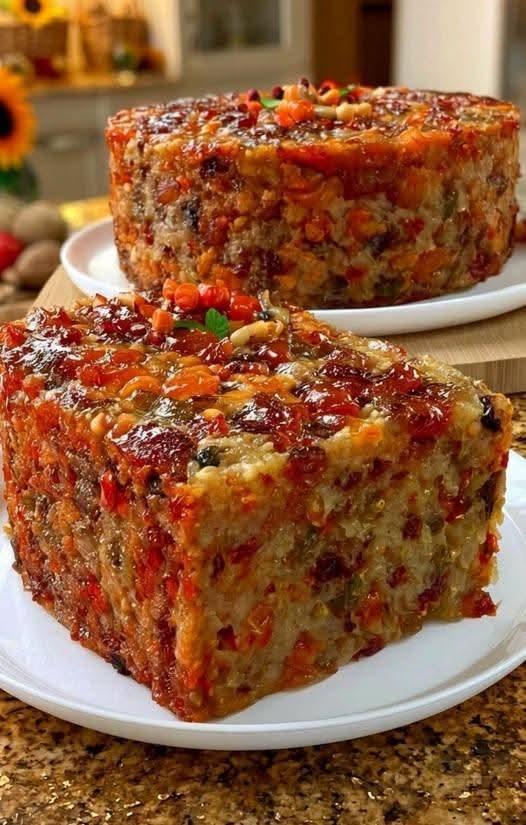
Great Aunt’s Tennessee Christmas Fruit Cake
Introduction
Every Christmas in Tennessee, the kitchen seemed to come alive with the warmest smells of the season. Long before the cake was ready to slice, the fragrance of butter, spices, brown sugar, toasted nuts, and dried fruit would fill the house.
This traditional-style Christmas fruit cake is rich, moist, fragrant, and generously packed with fruit and nuts. It is the kind of cake that takes time, but every step is worthwhile. The finished cake has a deep, buttery flavor, a tender crumb, and plenty of chewy fruit and crunchy pecans in every slice.
Fruit cake is especially wonderful during the holidays because it can be prepared ahead of time. In fact, resting the cake for several days allows the flavors to develop and become even richer.
Ingredients
For the Fruit Mixture
- 2 cups raisins
- 1 1/2 cups chopped dates
- 1 1/2 cups candied cherries
- 1 1/2 cups candied pineapple
- 1 cup chopped dried apricots
- 1 cup chopped dried cranberries
- 1 cup orange juice
- 1/2 cup apple juice
- 2 tablespoons orange zest
- 1 teaspoon vanilla extract
For the Cake
- 2 1/2 cups all-purpose flour
- 1 teaspoon baking powder
- 1/2 teaspoon baking soda
- 1 teaspoon salt
- 2 teaspoons ground cinnamon
- 1 teaspoon ground nutmeg
- 1/2 teaspoon ground allspice
- 1/4 teaspoon ground cloves
- 1/2 teaspoon ground ginger
- 1 cup unsalted butter, softened
- 1 1/2 cups packed light brown sugar
- 1/2 cup granulated sugar
- 4 large eggs, room temperature
- 1 tablespoon molasses
- 2 teaspoons vanilla extract
- 1/2 cup buttermilk
- 2 cups chopped pecans
For Finishing
- 1/2 cup orange juice
- 2 tablespoons honey or maple syrup
- 1 teaspoon vanilla extract
Optional Glaze
- 1 cup powdered sugar
- 2 to 3 tablespoons orange juice
- 1/2 teaspoon vanilla extract
Equipment
- 10-inch tube pan or large Bundt pan
- Large mixing bowls
- Electric mixer
- Wooden spoon or sturdy spatula
- Parchment paper
- Pastry brush
- Wire cooling rack
History of Christmas Fruit Cake
Fruit cake has a long history in holiday baking. Cakes made with preserved fruits, nuts, spices, and sweeteners were particularly practical in earlier times because dried and candied ingredients could be stored for long periods.
Over generations, fruit cake became associated with Christmas celebrations in many American households. Southern versions often developed their own character through generous quantities of pecans, warm spices, brown sugar, molasses, and dried or candied fruit.
In Tennessee and throughout the American South, pecans became a particularly beloved addition. Family recipes were often passed from one generation to another, with each baker adjusting the fruit, nuts, spices, or finishing method according to family tradition.
The beauty of this style of fruit cake is not that there is only one correct recipe. The beauty is in the memories connected to it.
Preparing the Fruit
Begin by placing the raisins, dates, cherries, pineapple, apricots, and cranberries in a large saucepan.
Pour in the orange juice and apple juice.
Warm the mixture over low heat for approximately 5 to 7 minutes, stirring occasionally. The fruit should become soft and plump, but the mixture should not be allowed to boil vigorously.
Remove the saucepan from the heat.
Stir in the orange zest and vanilla extract.
Allow the fruit mixture to cool completely.
For an even deeper flavor, the fruit can be prepared several hours ahead of baking and refrigerated overnight.
Preparing the Pan
Preheat the oven to 325°F (165°C).
Generously grease a 10-inch tube or Bundt pan.
Line the bottom with parchment paper if using a tube pan. Grease the parchment as well.
Dust the pan lightly with flour and shake out the excess.
Because fruit cake is dense and takes a long time to bake, preparing the pan carefully helps prevent sticking.
Preparing the Dry Ingredients
In a large bowl, whisk together the flour, baking powder, baking soda, salt, cinnamon, nutmeg, allspice, cloves, and ginger.
Set aside.
The combination of spices is important because it gives the cake its characteristic Christmas aroma without overpowering the fruit.
Preparing the Cake Batter
Place the softened butter in a large mixing bowl.
Beat the butter until smooth and creamy.
Gradually add the brown sugar and granulated sugar.
Continue beating for approximately 3 to 4 minutes, until the mixture becomes lighter and fluffy.
Add the eggs one at a time, beating well after each addition.
Scrape down the sides of the bowl as needed.
Add the molasses and vanilla extract.
Mix until everything is evenly incorporated.
Combining the Batter
Add approximately one-third of the dry ingredients to the butter mixture.
Mix gently.
Add half of the buttermilk and mix again.
Continue alternating the dry ingredients and buttermilk, ending with the dry ingredients.
Do not overmix.
The batter should be thick and rich.
Fold in the cooled fruit mixture using a sturdy wooden spoon or spatula.
Add the chopped pecans.
Fold carefully until the fruit and nuts are distributed throughout the batter.
Forming the Cake
Transfer the batter into the prepared pan.
Use the back of a spoon or spatula to spread the batter evenly.
Gently tap the pan against the counter a few times to remove large air pockets.
Smooth the top.
The batter will be considerably thicker than a typical cake batter. This is completely normal because the finished cake is packed with fruit and nuts.
Baking Method
Place the pan on the center rack of the preheated oven.
Bake for approximately 75 to 95 minutes.
Because ovens and pans vary, begin checking the cake around 75 minutes.
Insert a long wooden skewer or cake tester into the center. It should come out mostly clean, although a few moist crumbs are perfectly acceptable.
The cake should feel firm in the center and should have a deep golden-brown appearance.
If the top begins browning too quickly, loosely cover it with aluminum foil during the final portion of baking.
Avoid opening the oven repeatedly because this can cause unnecessary heat loss.
Cooling the Cake
Remove the cake from the oven and place it on a cooling rack.
Allow it to cool in the pan for approximately 20 to 30 minutes.
Carefully loosen the edges with a thin knife.
Turn the cake out onto the rack and allow it to cool completely.
Do not rush this step. A dense fruit cake needs time to settle before being wrapped or sliced.
Creating the Holiday Finish
Combine the orange juice, honey or maple syrup, and vanilla extract.
While the cake is still slightly warm, gently brush the mixture over the entire surface.
Allow the cake to absorb the liquid.
Brush it again if desired.
This finishing step adds moisture and gives the cake a beautiful citrus aroma.
Optional Orange Glaze
For a sweeter finish, whisk together the powdered sugar, orange juice, and vanilla.
The glaze should be thick enough to coat the cake but thin enough to slowly drizzle.
Once the cake is completely cool, drizzle the glaze over the top.
Allow the glaze to set before slicing.
The Resting Method
One of the best secrets to a flavorful fruit cake is allowing it to rest.
Once completely cool, wrap the cake tightly in parchment paper and then in aluminum foil.
Place it in an airtight container.
Allow it to rest at room temperature for one to three days.
During this time, the spices, fruit, nuts, and buttery cake become more harmonious.
For longer storage, refrigerate the well-wrapped cake.
Bring it to room temperature before serving.
Traditional Serving Method
Use a sharp serrated knife to cut the cake into thin slices.
Because the cake is rich and dense, small portions are usually satisfying.
Serve it plain with coffee or tea, or add a spoonful of softly whipped cream.
It is also wonderful alongside vanilla ice cream.
For a Christmas breakfast or afternoon gathering, slightly warm individual slices and serve them with butter.
How to Keep the Cake Moist
The most important factors are not overbaking the cake and storing it properly.
Do not wait until the cake is completely dry in the oven before removing it. The center should be set but still moist.
The fruit mixture should also be softened before being added to the batter.
Once cooled, keep the cake tightly wrapped so that it does not lose moisture.
The resting period is another important part of the process because the cake’s flavors become deeper and more developed with time.
Variations
Extra-Pecan Fruit Cake
Increase the pecans to 2 1/2 cups for a cake with even more Southern character.
Citrus Fruit Cake
Add finely grated lemon zest along with the orange zest.
Cherry-Pecan Fruit Cake
Increase the candied cherries and reduce the amount of dried cranberries.
Chocolate Fruit Cake
Add 1/2 cup miniature chocolate chips to the batter for a modern variation.
Bourbon-Style Southern Version
For an adult holiday variation, some traditional Southern fruit cakes are brushed during storage with a small amount of bourbon. This is entirely optional. For a non-alcoholic cake, continue using orange juice as described above.
Common Mistakes to Avoid
Do not use fruit that is excessively wet when adding it to the batter.
Do not overmix once the flour has been added.
Do not pack flour directly into the measuring cup. Spoon it into the cup and level it.
Do not bake at an excessively high temperature. Fruit cake is dense and benefits from slower, gentler baking.
Do not slice the cake while it is piping hot. Allowing it to cool completely gives you cleaner slices.
Do not leave the finished cake uncovered for extended periods because it can dry out.
Formation of the Perfect Fruit Cake
A beautiful fruit cake depends on balance.
The butter provides richness.
The brown sugar provides moisture and a deep caramel-like sweetness.
The molasses adds color and complexity.
The dried and candied fruits provide sweetness and chewiness.
The pecans provide texture and a classic Southern flavor.
The buttermilk helps create tenderness.
The warm spices bring everything together and create the unmistakable aroma of Christmas.
When these components are carefully combined, the result is a cake that is dense without being dry, rich without being heavy, and sweet without allowing any single ingredient to dominate.
Why Fruit Cake Lovers Keep Coming Back
Fruit cake has a special following because it is more than a dessert.
For many families, it represents Christmas mornings, old family kitchens, handwritten recipe cards, holiday gatherings, and recipes prepared by someone who is no longer standing in the kitchen.
Some people love the chewy fruit.
Others love the toasted pecans.
Some prefer the warm spices and brown-sugar flavor.
And many people simply love the memories attached to the first bite.
That is what makes a family fruit cake so special: everyone remembers it a little differently, but the smell and flavor can bring those memories back instantly.
Storage
Wrap the completely cooled cake tightly in parchment paper and aluminum foil.
Store at room temperature for up to several days in a cool environment.
For longer storage, refrigerate it in an airtight container.
Before serving refrigerated cake, allow it to sit at room temperature for approximately 30 to 60 minutes.
Individual slices can also be wrapped and frozen for longer storage.
Conclusion
This Tennessee-style Christmas fruit cake is the kind of dessert that deserves a place in the holiday tradition.
It takes patience to prepare, but the reward is a beautifully moist, richly spiced cake filled with colorful fruit and buttery pecans.
Most importantly, it is the kind of recipe that can become part of a family’s story.
Years from now, someone may walk into the kitchen while this cake is baking and recognize the smell immediately. They may remember Christmases past, family gatherings, old traditions, and the person who first made it for them.
That is the true magic of a great Christmas fruit cake.
It is not simply baked.
It is remembered, shared, and passed from one generation to the next.