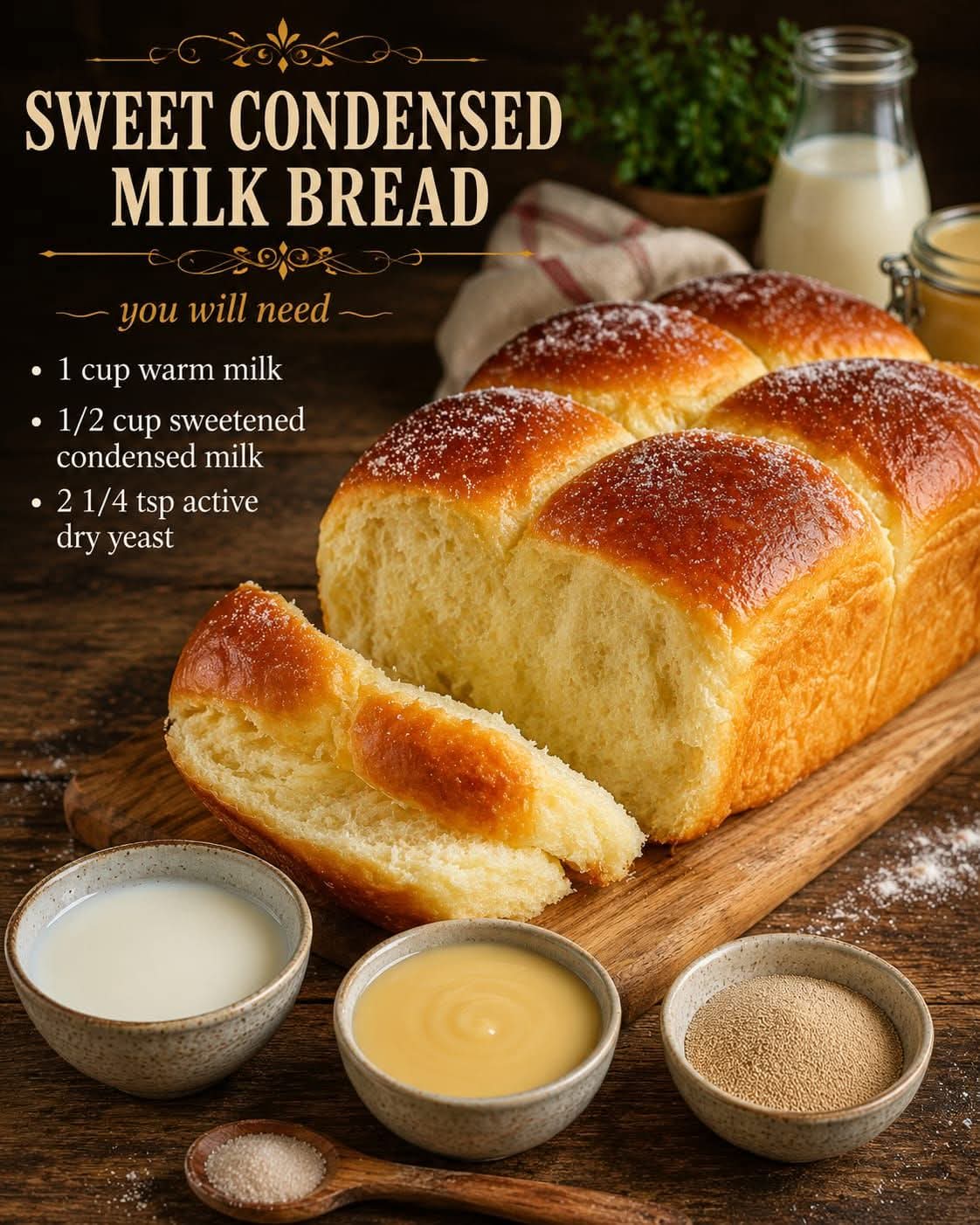
Sweetened Condensed Milk Bread
Introduction
Sweetened Condensed Milk Bread is a soft, tender, lightly sweet homemade bread with a rich milky flavor and a beautiful golden crust. The sweetened condensed milk adds sweetness, richness, and tenderness to the dough, creating bread that is wonderful for breakfast, afternoon tea, sandwiches, or simply spreading with butter while it is still warm.
This recipe produces a pillowy loaf with a delicate crumb. It is especially delicious fresh from the oven, when the aroma of warm milk, butter, and freshly baked bread fills the kitchen.
Ingredients
For the Bread Dough
- 1 cup warm whole milk
- 1/2 cup sweetened condensed milk
- 2 1/4 teaspoons active dry yeast
- 1 large egg
- 1/4 cup granulated sugar
- 4 tablespoons unsalted butter, softened
- 3 1/2 to 4 cups all-purpose flour
- 1 teaspoon salt
For the Egg Wash
- 1 egg
- 1 tablespoon milk
Optional Finish
- 1 tablespoon melted butter for brushing the warm bread
Instructions
1. Activate the Yeast
Pour the warm whole milk into a large mixing bowl. The milk should be warm but not hot.
Add the active dry yeast and a small portion of the sugar. Stir gently and allow the mixture to stand for approximately 5 to 10 minutes.
The yeast should become foamy. This is a good indication that the yeast is active.
2. Build the Dough
Add the sweetened condensed milk, remaining sugar, egg, softened butter, and salt.
Mix until the ingredients are well combined.
Gradually add 3 1/2 cups of flour, mixing as you go. Add additional flour a little at a time only if the dough is excessively sticky.
The finished dough should be soft and slightly tacky but should not cling heavily to your hands.
3. Knead the Dough
Transfer the dough to a lightly floured work surface and knead for approximately 8 to 10 minutes.
You can also use a stand mixer fitted with a dough hook and knead on low to medium speed until the dough becomes smooth and elastic.
Proper kneading develops the gluten, which gives the bread its structure and allows it to rise beautifully.
4. First Rise
Place the dough in a lightly greased bowl and turn it once so the surface is lightly coated.
Cover the bowl with a clean kitchen towel or plastic wrap.
Allow the dough to rise in a warm, draft-free place for approximately 1 to 1 1/2 hours, or until it has roughly doubled in size.
The exact rising time will depend on the temperature of your kitchen.
5. Shape the Bread
Once the dough has doubled, gently press it down to release excess air.
Transfer it to a lightly floured surface.
For one large loaf, shape the dough into a smooth loaf and place it into a greased 9-by-5-inch loaf pan.
For smaller individual rolls, divide the dough into equal portions, shape each portion into a smooth ball, and arrange them in a greased baking dish.
6. Second Rise
Cover the shaped dough again and let it rise for approximately 45 to 60 minutes.
The dough should become noticeably puffy and should rise close to the top of the loaf pan.
Avoid allowing it to overproof, as an excessively risen dough may collapse during baking.
7. Prepare the Egg Wash
Whisk together one egg and one tablespoon of milk.
Brush the mixture gently over the surface of the risen dough.
The egg wash will help create a beautiful golden-brown crust.
8. Bake
Preheat the oven to 350°F (175°C).
Bake the loaf for approximately 30 to 35 minutes, or until the top is beautifully golden brown and the bread sounds hollow when gently tapped.
If the top begins browning too quickly, loosely cover it with aluminum foil during the final portion of baking.
9. Finish the Bread
Remove the bread from the oven and allow it to cool in the pan for approximately 10 minutes.
Transfer it to a wire rack.
For an especially soft and buttery crust, brush the warm loaf with melted butter.
Allow the bread to cool before slicing, although serving it slightly warm is one of the best ways to enjoy it.
The Method Behind the Bread
The success of this bread comes from balancing moisture, fat, sweetness, and gluten development.
The warm milk creates a rich liquid base for the dough. Sweetened condensed milk contributes both sugar and milk solids, giving the finished bread a tender crumb and subtle caramel-like richness.
The egg contributes structure and richness, while butter helps create a soft, delicate texture.
The yeast provides the leavening. During fermentation, the yeast consumes available sugars and produces carbon dioxide, which becomes trapped within the developing gluten network. This is what gives the bread its light, airy structure.
Kneading is equally important. It develops the gluten proteins so the dough can stretch and hold the gases produced during fermentation.
Formation and Texture
When properly prepared, the dough should feel soft, smooth, and elastic.
After the first rise, it should look noticeably larger and feel airy when gently pressed.
After shaping and the second rise, the loaf should become beautifully puffy.
The finished bread should have a golden exterior, a tender crumb, and a soft texture that pulls apart easily.
If your bread turns out dense, the yeast may not have been active, the dough may not have been kneaded sufficiently, or the dough may not have been given enough time to rise.
If the bread becomes dry, too much flour may have been added or the loaf may have been baked too long.
A Little History
Sweetened condensed milk became an important preserved dairy product because it allowed milk to be stored for considerably longer without refrigeration. Over time, it became popular not only as a beverage ingredient but also as a baking ingredient.
Milk-enriched breads have long been enjoyed in many baking traditions because milk, butter, eggs, and sugar create a softer and richer loaf than basic lean bread dough.
Sweetened condensed milk bread builds on this tradition by incorporating condensed milk directly into the dough. The result is a particularly tender loaf with a gentle sweetness that has made this style of bread popular among home bakers.
Serving Ideas for Bread Lovers
Serve thick slices warm with butter and jam.
For breakfast, toast the bread lightly and top it with honey, fruit preserves, peanut butter, or cream cheese.
It also makes an excellent base for French toast because its rich, tender crumb absorbs the egg mixture beautifully.
For dessert, serve warm slices with fresh berries and whipped cream.
The bread is also delicious simply eaten by itself. Because it is naturally rich and lightly sweet, it does not need much added to make it enjoyable.
Helpful Baking Tips
Use milk that is warm rather than hot. Excessively hot milk can damage the yeast.
Do not add all the flour at once. Different flours absorb different amounts of liquid, so add it gradually.
Keep the dough soft. A very stiff dough can produce dense bread.
Give the dough enough time to rise. Yeast needs time to develop the structure and flavor of the bread.
Allow the finished loaf to cool before slicing if you want clean, even slices.
For an extra-soft crust, brush the loaf with melted butter immediately after baking.
Storage
Once completely cooled, store the bread in an airtight container or tightly wrapped at room temperature for approximately 2 to 3 days.
For longer storage, wrap the loaf well and freeze it for up to 2 to 3 months.
Individual slices can also be frozen so you can remove only what you need. Thaw at room temperature and warm gently before serving.
Conclusion
Sweetened Condensed Milk Bread is a comforting homemade loaf that combines the richness of milk and butter with the gentle sweetness of condensed milk. The result is soft, tender, fragrant bread that can become a favorite for breakfast, snacks, gatherings, or homemade gifts.
It is a wonderful recipe for bread lovers because the dough is rich without being complicated, and the finished loaf is versatile enough to enjoy in countless ways.