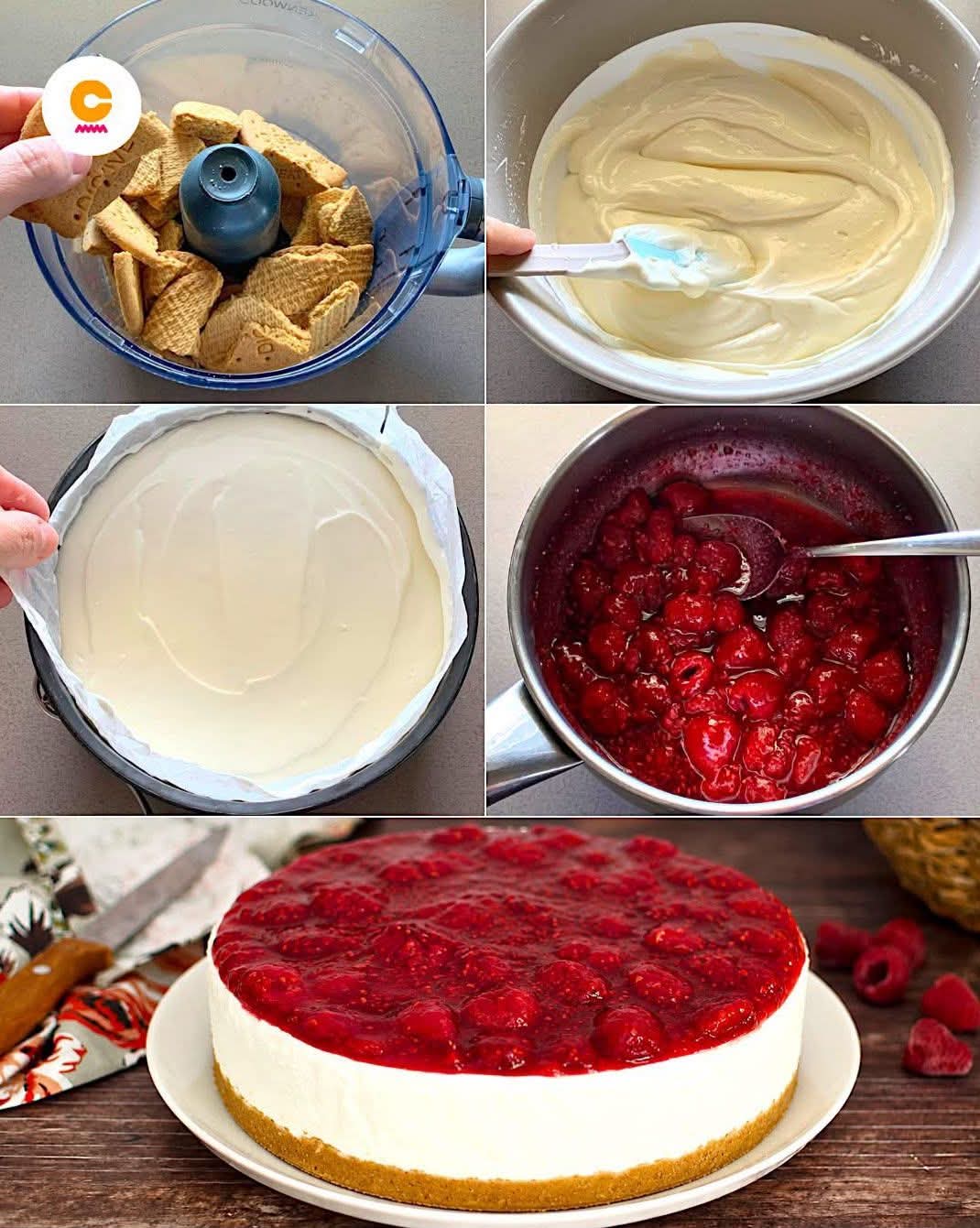
The Best Creamy Classic Cheesecake
Introduction
A truly great cheesecake should be rich without being heavy, creamy without being runny, and perfectly balanced between a buttery crust and a smooth, velvety filling. This classic baked cheesecake delivers exactly that. The filling is made with full-fat cream cheese, sugar, eggs, sour cream, and vanilla, creating a luxurious texture that melts in your mouth.
This is the kind of dessert that looks impressive on the table but is surprisingly straightforward to prepare. The secret is taking your time, using room-temperature ingredients, baking gently, and allowing the cheesecake to cool completely before slicing.
Ingredients
For the Crust
- 2 cups graham cracker crumbs
- 5 tablespoons unsalted butter, melted
- 1/4 cup granulated sugar
- 1/4 teaspoon salt
For the Cheesecake Filling
- 4 packages cream cheese, 8 ounces each, softened to room temperature
- 1 1/4 cups granulated sugar
- 1 cup sour cream, room temperature
- 1 tablespoon vanilla extract
- 4 large eggs, room temperature
- 2 tablespoons all-purpose flour or cornstarch
- 1/4 teaspoon salt
- 1 tablespoon fresh lemon juice
Optional Topping
- 1 cup sour cream
- 2 tablespoons powdered sugar
- 1 teaspoon vanilla extract
- Fresh berries or strawberry sauce, for serving
Equipment
- 9-inch springform pan
- Large mixing bowl
- Electric mixer
- Measuring cups and spoons
- Rubber spatula
- Roasting pan or large baking pan
- Aluminum foil
- Wire rack
Instructions
1. Prepare the Pan
Preheat the oven to 325°F (165°C).
Lightly grease the bottom and sides of a 9-inch springform pan. Wrap the outside bottom and sides of the pan tightly with two layers of aluminum foil if you plan to use a water bath. Make sure the foil has no holes, because it will help prevent water from entering the pan.
2. Make the Crust
Place the graham cracker crumbs, melted butter, sugar, and salt in a bowl.
Mix until all the crumbs are evenly coated and the mixture resembles damp sand.
Pour the mixture into the prepared springform pan. Press it firmly and evenly over the bottom of the pan. Use the bottom of a measuring cup or glass to compact the crust.
Bake for approximately 10 minutes.
Remove the crust from the oven and allow it to cool while preparing the filling.
3. Prepare the Cream Cheese Filling
Place the softened cream cheese in a large mixing bowl.
Beat on medium-low speed until smooth and creamy. Avoid whipping the cream cheese at high speed because incorporating too much air can contribute to cracks during baking.
Add the sugar and beat until just combined.
Add the sour cream, vanilla extract, lemon juice, flour or cornstarch, and salt. Mix gently until smooth.
4. Add the Eggs
Add the eggs one at a time.
Mix on low speed after each addition, stopping as soon as the egg disappears into the batter.
Scrape down the sides and bottom of the bowl with a rubber spatula to make sure everything is evenly incorporated.
The finished batter should be smooth, thick, and completely free of large lumps.
5. Fill the Pan
Pour the cheesecake mixture over the cooled crust.
Gently smooth the top with a spatula.
Tap the pan very lightly against the counter once or twice to release any large air bubbles.
6. Prepare the Water Bath
Place the foil-wrapped springform pan inside a larger roasting pan.
Pour hot water into the roasting pan until it reaches approximately halfway up the sides of the cheesecake pan.
The water bath creates a gentle, humid baking environment that helps the cheesecake bake evenly and reduces the chance of cracking.
7. Bake the Cheesecake
Carefully place the pans in the oven.
Bake for approximately 65 to 80 minutes.
The cheesecake is ready when the edges look set but the center still has a gentle wobble when the pan is carefully moved.
Do not wait until the entire cheesecake is completely firm. It will continue to set as it cools.
8. Cool Slowly
Turn off the oven and leave the cheesecake inside with the oven door slightly open for approximately 30 to 60 minutes.
This gradual temperature change helps prevent the cheesecake from suddenly shrinking and cracking.
Remove the cheesecake from the oven and allow it to cool completely at room temperature.
9. Chill
Once completely cool, cover the cheesecake and refrigerate for at least 6 hours.
For the best texture and flavor, refrigerate it overnight.
This resting time allows the filling to become firm, creamy, and easy to slice.
Optional Sour Cream Topping
For an elegant finishing layer, combine the sour cream, powdered sugar, and vanilla extract in a bowl.
Spread the mixture over the cooled cheesecake before serving.
You can also top the cheesecake with fresh strawberries, blueberries, raspberries, cherries, caramel sauce, chocolate sauce, or your favorite fruit topping.
Methods and Important Techniques
Use Room-Temperature Ingredients
Cold cream cheese can leave lumps in the filling. Allow the cream cheese, eggs, and sour cream to come to room temperature before mixing.
Do Not Overmix
Once the eggs are added, mix only until everything is combined. Excessive mixing introduces air into the batter, which can cause the cheesecake to puff during baking and then collapse or crack.
Bake Gently
A cheesecake should be baked slowly and gently. The goal is a creamy center rather than a dry, firm texture.
Do Not Overbake
The center should still have a slight wobble when the cheesecake comes out of the oven. If it looks completely firm, it may become too dense or dry after cooling.
Allow Plenty of Chilling Time
Cheesecake improves considerably after several hours in the refrigerator. Overnight chilling produces the best texture and makes cutting much easier.
The History of Cheesecake
Cheesecake has a long history that reaches back thousands of years. Ancient versions of cheesecake were prepared in different forms using fresh cheese, honey, and other simple ingredients.
Over time, cheese-based cakes evolved throughout Europe. The modern cheesecake became particularly associated with American baking, where cream cheese eventually became one of the defining ingredients.
New York-style cheesecake became famous for its exceptionally rich, dense, and creamy filling. Modern versions vary considerably, with some using sour cream, heavy cream, fruit, chocolate, caramel, or other flavorings.
The basic principle, however, remains the same: a creamy cheese filling baked over a buttery crust.
Formation of the Cheesecake
The cheesecake is built in three important stages.
First comes the firm graham cracker crust, which provides a buttery, slightly crisp foundation.
The second layer is the creamy cream cheese filling. The combination of cream cheese, sugar, sour cream, eggs, and vanilla produces the characteristic rich texture.
Finally, the cheesecake is slowly baked and gradually cooled. This process allows the eggs to set the filling while keeping the interior soft and creamy.
The result is a beautifully balanced dessert with a crisp base and a smooth, luxurious center.
Serving Suggestions
Allow the cheesecake to sit at room temperature for approximately 15 to 20 minutes before serving.
Use a sharp knife to cut clean slices. For especially neat slices, dip the knife in hot water, wipe it dry, and then make each cut.
Serve the cheesecake plain for a classic presentation, or add:
- Fresh strawberries
- Blueberries
- Raspberries
- Strawberry sauce
- Caramel sauce
- Chocolate ganache
- Whipped cream
- Lemon curd
- Cherry topping
Storage
Store the cheesecake covered in the refrigerator for up to 5 days.
Individual slices can also be frozen. Wrap each slice tightly in plastic wrap and place it in an airtight freezer-safe container. Freeze for up to 2 months for the best quality.
Thaw frozen cheesecake overnight in the refrigerator.
Conclusion
This classic cheesecake is all about patience and simplicity. A buttery graham cracker crust, rich cream cheese filling, gentle baking, and a long cooling period come together to create a dessert that is smooth, creamy, and wonderfully indulgent.
Whether served plain or finished with fresh fruit, caramel, chocolate, or berries, this cheesecake is the kind of dessert that quickly becomes a family favorite.
For Cheesecake Lovers
For anyone who loves cheesecake, this recipe is an excellent foundation for countless variations. Once you master the basic method, you can transform it into strawberry cheesecake, blueberry cheesecake, chocolate cheesecake, caramel cheesecake, lemon cheesecake, or even a decadent chocolate-and-peanut-butter version.
The most important lesson is simple: use quality ingredients, avoid rushing the process, and give the cheesecake enough time to cool and chill. That is how you get the creamy, luxurious texture that makes everyone want a second slice.