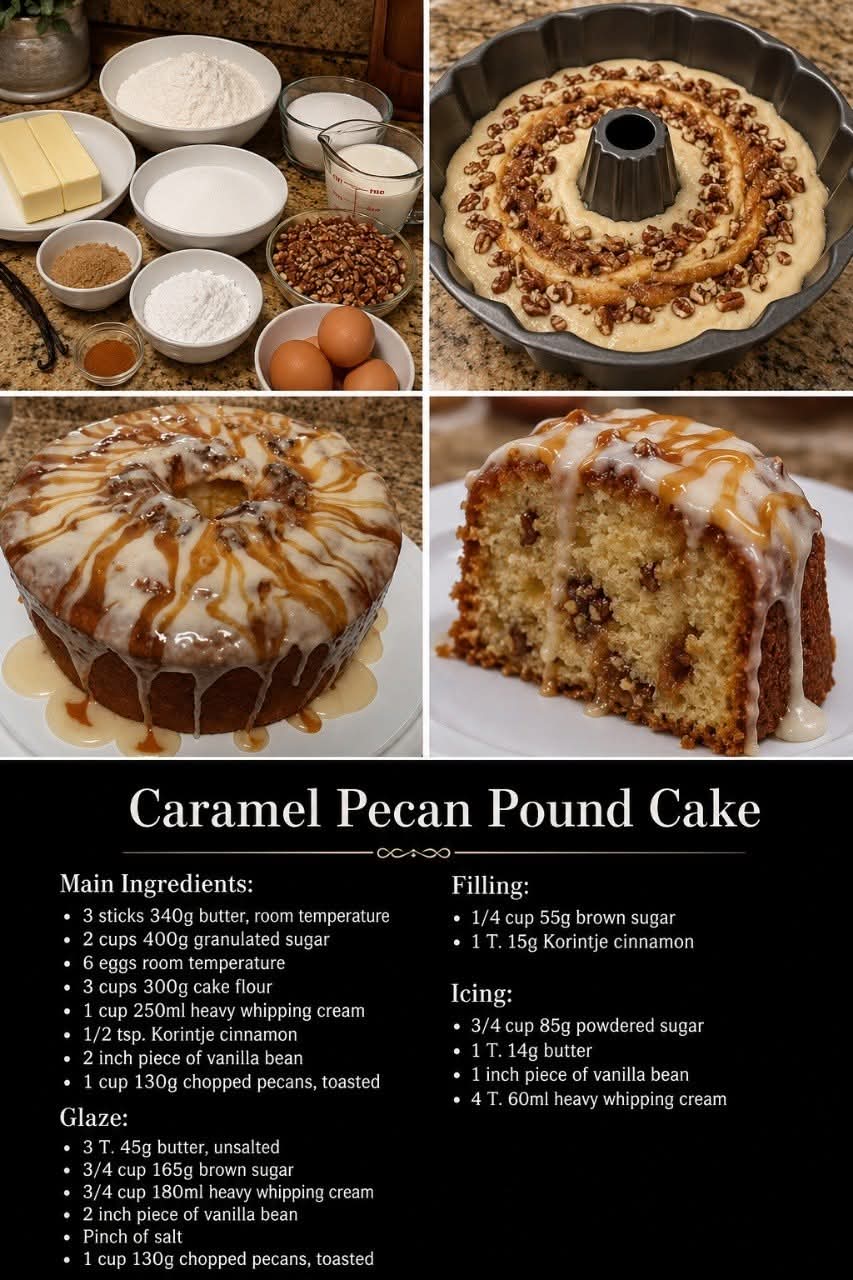
Caramel Pecan Pound Cake
Introduction
Caramel Pecan Pound Cake is a rich, buttery Southern-style dessert made for anyone who loves classic pound cake, toasted pecans, and luscious caramel. The cake has a fine, tender crumb with a deep buttery flavor, while the pecans add a satisfying crunch throughout. A generous caramel topping brings everything together and makes this cake especially beautiful for holidays, family gatherings, Sunday dinners, bake sales, or an afternoon coffee.
The secret to a beautiful pound cake is patience. Room-temperature ingredients, thorough creaming of the butter and sugar, and careful mixing help create a cake that is tall, tender, and evenly baked.
Ingredients
For the Pound Cake
- 3 sticks, or 340 grams, unsalted butter, softened
- 2 cups, or 400 grams, granulated sugar
- 6 large eggs, room temperature
- 3 cups, or approximately 300 grams, cake flour
- 1 cup, or 250 ml, heavy whipping cream
- 2 teaspoons vanilla extract
- 1/2 teaspoon salt
- 1 cup chopped pecans, preferably toasted
For the Caramel Topping
- 1 cup packed light brown sugar
- 1/2 cup unsalted butter
- 1/3 cup heavy cream
- 1 teaspoon vanilla extract
- 1/4 teaspoon salt
- 1/2 cup chopped toasted pecans
Instructions
Preparing the Pecans
Begin by preparing the pecans. Place the chopped pecans in a dry skillet over medium-low heat and toast them for approximately 3 to 5 minutes, stirring frequently. They should become fragrant and lightly golden.
Remove them from the heat and allow them to cool completely. Toasting the pecans first gives the finished cake a deeper, richer nutty flavor.
Preparing the Cake Pan
Preheat the oven to 325°F, or 165°C.
Generously grease a 10-inch Bundt pan or tube pan with butter or shortening. Dust it thoroughly with flour, making sure to coat all the grooves and corners. Shake out any excess flour.
This step is important because pound cakes are dense and can be difficult to remove from the pan if the pan is not prepared properly.
Creaming the Butter and Sugar
Place the softened butter in a large mixing bowl.
Beat the butter for approximately 2 to 3 minutes until smooth and creamy. Gradually add the granulated sugar and continue beating for another 5 to 7 minutes.
The mixture should become noticeably lighter, fluffy, and creamy.
This is one of the most important stages of the recipe because properly creamed butter and sugar help give the pound cake its characteristic texture.
Adding the Eggs
Add the eggs one at a time.
Beat well after each addition, scraping down the sides of the bowl as necessary. Do not rush this step.
Once all six eggs have been incorporated, add the vanilla extract and mix briefly.
Adding the Flour and Cream
In a separate bowl, combine the cake flour and salt.
Add the flour mixture to the butter mixture gradually, alternating it with the heavy cream.
Begin with a portion of the flour, followed by some cream, then another portion of flour. Continue alternating until everything has been incorporated.
Mix only until the batter is smooth and combined. Overmixing after the flour is added can make the finished cake heavier than necessary.
Adding the Pecans
Fold the cooled toasted pecans gently into the batter using a spatula.
Reserve a small handful of pecans for decorating the finished cake if desired.
Forming the Cake
Pour the batter evenly into the prepared Bundt pan.
Gently tap the pan against the counter once or twice to remove large air pockets. Smooth the surface with a spatula.
Place the cake in the center of the preheated oven.
Baking
Bake for approximately 75 to 90 minutes, depending on your oven and the size and shape of your pan.
Begin checking the cake around the 75-minute mark. Insert a long wooden skewer or cake tester into the thickest part of the cake. It should come out clean or with a few moist crumbs attached.
If the top begins browning too quickly, loosely cover it with aluminum foil during the final portion of baking.
Cooling
Remove the cake from the oven and allow it to rest in the pan for approximately 15 to 20 minutes.
Carefully run a thin knife around any areas that appear stuck, then invert the cake onto a serving plate.
Allow it to cool completely before adding the caramel topping.
Preparing the Caramel
Place the brown sugar, butter, heavy cream, and salt in a small saucepan over medium heat.
Stir continuously until the butter melts and the mixture begins to bubble gently.
Continue cooking for approximately 2 to 4 minutes, stirring constantly. Do not allow the caramel to boil aggressively.
Remove the saucepan from the heat and stir in the vanilla extract.
Allow the caramel to cool for several minutes. It should thicken slightly while remaining pourable.
Forming the Finished Cake
Slowly drizzle the warm caramel over the cooled pound cake, allowing it to run naturally down the sides.
Sprinkle the remaining toasted pecans over the caramel while it is still slightly warm and sticky.
Allow the topping to set for approximately 15 to 30 minutes before slicing.
For an especially indulgent presentation, reserve a little caramel sauce and serve it alongside individual slices.
Method for the Best Texture
The most important method is controlling the temperature of the ingredients.
The butter should be soft enough to cream easily but should not be melted. The eggs and heavy cream should ideally be at room temperature. Cold ingredients can cause the batter to separate and may prevent the cake from developing its best texture.
The second important method is proper creaming. Beat the butter and sugar until genuinely light and fluffy rather than stopping as soon as they are combined.
Finally, once the flour is added, mix gently and only until incorporated. This helps preserve the tender texture that makes pound cake so enjoyable.
History and Formation
Pound cake has a long history in European and American baking traditions. Traditional pound cakes were famously built around equal weights of butter, sugar, eggs, and flour, making the recipe easy to remember before standardized measuring tools became common.
Over generations, bakers developed many variations by introducing ingredients such as cream, vanilla, citrus, nuts, spices, and flavorful glazes.
The caramel pecan combination is particularly associated with Southern-style baking, where buttery cakes, toasted pecans, brown sugar, and caramel have long been popular flavors.
This version brings those classic elements together in one substantial cake. The cake itself provides the buttery foundation, toasted pecans contribute texture and flavor, and the caramel topping provides a rich finishing layer.
Serving Suggestions
Serve the cake at room temperature in thick slices.
It pairs beautifully with:
- Freshly brewed coffee
- Black tea
- Whipped cream
- Vanilla ice cream
- A spoonful of warm caramel sauce
- Additional toasted pecans
- Fresh berries for a lighter contrast
For a special dessert, gently warm an individual slice and serve it with a scoop of vanilla ice cream.
Storage
Store the cooled cake in an airtight container at room temperature for up to 3 days.
For longer storage, refrigerate it for up to 5 days. Bring slices to room temperature before serving for the best texture.
The cake can also be frozen without the caramel topping. Wrap it tightly in plastic wrap and then aluminum foil and freeze for up to 3 months. Thaw completely before adding freshly prepared caramel.
Conclusion
Caramel Pecan Pound Cake is the kind of dessert that combines everything people love about traditional homemade baking: rich butter, tender cake, toasted pecans, brown sugar, and silky caramel.
It is substantial enough for a celebration yet comforting enough to serve with a cup of coffee at home. The finished cake has a beautiful presentation, a tender crumb, crunchy pecans, and a generous caramel finish.
For the best result, take your time with the butter and sugar, use room-temperature ingredients, avoid overmixing, and allow the cake to cool before adding the caramel. Those simple steps will give you a beautifully formed pound cake that is rich, moist, flavorful, and worthy of sharing with the people you love.