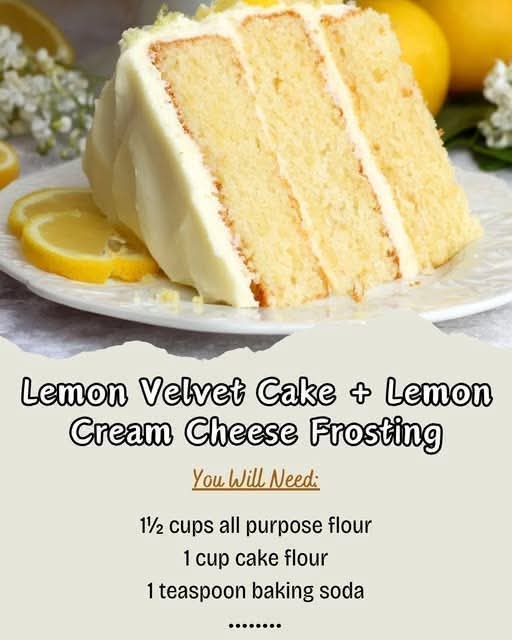
Lemon Velvet Cake with Lemon Cream Cheese Frosting
Introduction
Lemon Velvet Cake is a soft, tender, beautifully moist cake with a delicate lemon flavor and a luxurious cream cheese frosting. The combination of cake flour, all-purpose flour, buttermilk, butter-flavored shortening, and vegetable oil creates a fine, velvety crumb that stays moist without becoming heavy.
The bright citrus flavor makes this cake especially refreshing. The lemon cream cheese frosting adds a smooth, tangy sweetness that complements the cake perfectly. It is wonderful for birthdays, afternoon gatherings, holidays, family celebrations, or simply when you want a homemade dessert that feels special.
This recipe makes a generous layer cake and can easily become a beautiful centerpiece for a dessert table.
Ingredients
For the Lemon Velvet Cake
- 1½ cups all-purpose flour
- 1 cup cake flour
- 1 teaspoon baking soda
- 1 teaspoon baking powder
- 1 teaspoon salt
- 1¾ cups granulated sugar
- ¾ cup vegetable oil
- ¼ cup butter-flavored shortening, softened
- 2 large eggs, preferably at room temperature
- 1 cup buttermilk
- 2 teaspoons pure vanilla extract
- 2 tablespoons fresh lemon juice
- 1 tablespoon finely grated lemon zest
- ½ cup whole milk, as needed for the batter
For the Lemon Cream Cheese Frosting
- 8 ounces cream cheese, softened
- ½ cup unsalted butter, softened
- 4 cups powdered sugar, sifted
- 2 tablespoons fresh lemon juice
- 1 tablespoon finely grated lemon zest
- 1 teaspoon vanilla extract
- Pinch of salt
- 1–2 tablespoons heavy cream or milk, if needed
Optional Lemon Garnish
- Thin lemon slices
- Freshly grated lemon zest
- Small pieces of candied lemon peel
- Powdered sugar
Preparation
Before beginning, bring the eggs, buttermilk, butter, shortening, and cream cheese to room temperature. Room-temperature ingredients blend more evenly and help produce a smoother, more consistent cake batter.
Preheat the oven to 350°F (175°C).
Grease three 8-inch round cake pans or two 9-inch round cake pans. Line the bottoms with parchment paper and lightly flour the sides.
If using three 8-inch pans, you will have a taller, more elegant layer cake. If using two 9-inch pans, the layers will be slightly thinner and may require a little less baking time.
Method for Making the Cake
Step 1: Prepare the Dry Ingredients
In a large bowl, whisk together the all-purpose flour, cake flour, baking soda, baking powder, and salt.
Mixing the dry ingredients thoroughly ensures that the leavening agents are distributed evenly throughout the flour.
Set the bowl aside.
Step 2: Cream the Shortening and Sugar
In a large mixing bowl, beat the softened butter-flavored shortening and granulated sugar together for approximately 3–4 minutes.
The mixture should become lighter and somewhat fluffy.
This step is important because incorporating air into the shortening and sugar helps contribute to the cake’s tender texture.
Step 3: Add the Oil
Slowly pour the vegetable oil into the sugar and shortening mixture while continuing to mix.
Beat until everything is smooth and well incorporated.
The combination of shortening and oil is particularly helpful for this cake. The shortening contributes structure and a soft crumb, while the oil helps keep the cake moist.
Step 4: Add the Eggs
Add the eggs one at a time.
Beat well after each addition, scraping down the sides of the bowl when necessary.
Do not rush this stage. A properly blended batter will produce a more uniform cake.
Step 5: Add the Lemon Flavor
Add the vanilla extract, fresh lemon juice, and finely grated lemon zest.
Mix until incorporated.
For the best flavor, use freshly squeezed lemon juice and finely grated zest from fresh lemons. The zest contains concentrated citrus oils and gives the cake a much more pronounced lemon aroma.
Step 6: Combine the Wet and Dry Ingredients
Add approximately one-third of the dry ingredients to the batter.
Mix on low speed until just combined.
Add half of the buttermilk and mix gently.
Continue alternating the dry ingredients and buttermilk, beginning and ending with the dry ingredients.
Add the milk gradually only if the batter seems unusually thick.
Do not overmix the batter. Once the flour has disappeared, stop mixing.
Overmixing can develop too much gluten and make the finished cake less tender.
Step 7: Fill the Cake Pans
Divide the batter evenly between the prepared pans.
Smooth the tops gently with a spatula.
Tap each pan lightly against the counter once or twice to remove large air pockets.
Step 8: Bake
Place the pans in the preheated oven.
For three 8-inch cakes, begin checking after approximately 22–28 minutes.
For two 9-inch cakes, begin checking after approximately 25–32 minutes.
The exact baking time depends on your oven and the size and depth of your pans.
The cakes are finished when:
- The tops spring back lightly when touched.
- A toothpick inserted into the center comes out clean or with a few moist crumbs.
- The edges begin to pull slightly away from the sides of the pans.
Avoid overbaking. A velvet cake should remain soft and moist.
Step 9: Cool the Cakes
Allow the cakes to cool in their pans for about 10 minutes.
Run a thin knife carefully around the edges, then turn the cakes onto cooling racks.
Remove the parchment paper.
Allow the layers to cool completely before frosting.
Never frost a warm cake because the cream cheese frosting can become soft and slide between the layers.
Lemon Cream Cheese Frosting
Step 1: Beat the Cream Cheese and Butter
Place the softened cream cheese and butter in a large mixing bowl.
Beat for approximately 2–3 minutes until smooth, creamy, and completely blended.
There should be no visible lumps.
Step 2: Add the Lemon
Add the lemon juice, lemon zest, vanilla extract, and pinch of salt.
Beat until incorporated.
The fresh lemon zest gives the frosting a beautiful citrus fragrance, while the lemon juice provides the pleasant tang that balances the sweetness.
Step 3: Add the Powdered Sugar
Gradually add the sifted powdered sugar, about ½ cup at a time.
Mix on low speed initially to prevent powdered sugar from flying out of the bowl.
Once all the sugar has been incorporated, increase the speed and beat until the frosting is smooth and fluffy.
If the frosting is too thick, add a small amount of heavy cream or milk.
If it is too soft, add a little more powdered sugar.
Forming and Assembling the Cake
Place the first completely cooled cake layer on a serving plate or cake board.
Spread an even layer of lemon cream cheese frosting over the top.
Place the second cake layer on top and gently press it into position.
Add another layer of frosting.
If using three layers, place the final cake layer on top and spread frosting over the top and sides.
For a rustic appearance, use the back of a spoon or an offset spatula to create gentle swirls in the frosting.
For a more polished cake, apply a thin crumb coat first. Refrigerate the cake for approximately 20–30 minutes, then apply the final layer of frosting.
Finish with fresh lemon zest or thin lemon slices.
Important Baking Methods
The Creaming Method
The sugar and shortening are beaten together to incorporate air into the mixture. This contributes to the cake’s structure and delicate texture.
The Blending Method
The vegetable oil is incorporated after the shortening and sugar. Oil helps retain moisture, giving the cake its soft quality even after it has cooled.
The Alternating Method
The dry ingredients and buttermilk are added alternately. This helps create a smooth batter without requiring excessive mixing.
The Gentle Mixing Method
Once the flour is added, mixing should be kept to a minimum. This protects the tender crumb and prevents the cake from becoming tough.
The Cooling Method
The cake layers must cool completely before frosting. This allows the cake to set properly and prevents the frosting from melting or becoming unstable.
History and Formation
Velvet-style cakes became popular because bakers wanted cakes with a particularly fine, tender crumb rather than the heavier texture associated with some traditional cakes. The term “velvet” refers primarily to the delicate texture of the finished cake.
The development of cakes using ingredients such as buttermilk, shortening, and chemical leaveners helped home bakers create softer and more consistent cakes. Buttermilk also became an especially useful ingredient because its acidity works with baking soda while contributing tenderness and a subtle tang.
Lemon cakes have a much older culinary tradition, particularly in European and American baking, where citrus zest and juice were used to brighten rich cakes and pastries. Over time, lemon became a popular flavor for layer cakes, pound cakes, cupcakes, puddings, and frostings.
The modern Lemon Velvet Cake brings these traditions together: a soft velvet-style crumb, bright lemon flavor, and rich cream cheese frosting.
Secrets to a Soft and Moist Lemon Cake
Use room-temperature ingredients whenever possible.
Measure flour carefully. Too much flour can make the cake dense and dry.
Do not overmix after adding the flour.
Use fresh lemon zest rather than relying only on lemon juice.
Do not overbake the layers.
Allow the cake to cool completely before frosting.
For an especially moist cake, wrap the cooled layers tightly in plastic wrap and refrigerate them for several hours before assembling. This also makes them easier to frost.
Make-Ahead Method
The cake layers can be baked a day ahead.
Once completely cool, wrap each layer tightly and refrigerate.
The frosting can also be prepared ahead and stored in the refrigerator in an airtight container.
Before assembling the cake, allow the frosting to soften slightly at room temperature and beat it briefly until creamy again.
The fully assembled cake should be refrigerated because of the cream cheese frosting.
For the best texture and flavor, allow the finished cake to sit at room temperature for approximately 20–30 minutes before serving.
Serving Suggestions
Serve generous slices with a cup of coffee or tea.
For a special presentation, add a little extra lemon zest immediately before serving.
Fresh berries such as strawberries, raspberries, blueberries, or blackberries make wonderful accompaniments.
A small spoonful of whipped cream can also be served alongside each slice.
The contrast between the bright lemon cake, creamy frosting, and fresh fruit creates a beautiful dessert.
.Conclusion
Lemon Velvet Cake with Lemon Cream Cheese Frosting is a classic-style homemade cake designed around tenderness, moisture, and fresh citrus flavor. The combination of vegetable oil and shortening gives the cake a soft and delicate crumb, while buttermilk adds richness and tenderness.
The lemon cream cheese frosting completes the dessert with its creamy texture, gentle tang, and refreshing citrus character.
It is the kind of cake that works equally well for a celebration or a quiet family dessert. Every slice offers a soft lemon-scented crumb surrounded by smooth, rich frosting, making it a wonderful recipe for anyone who loves homemade cakes and bright citrus flavors.