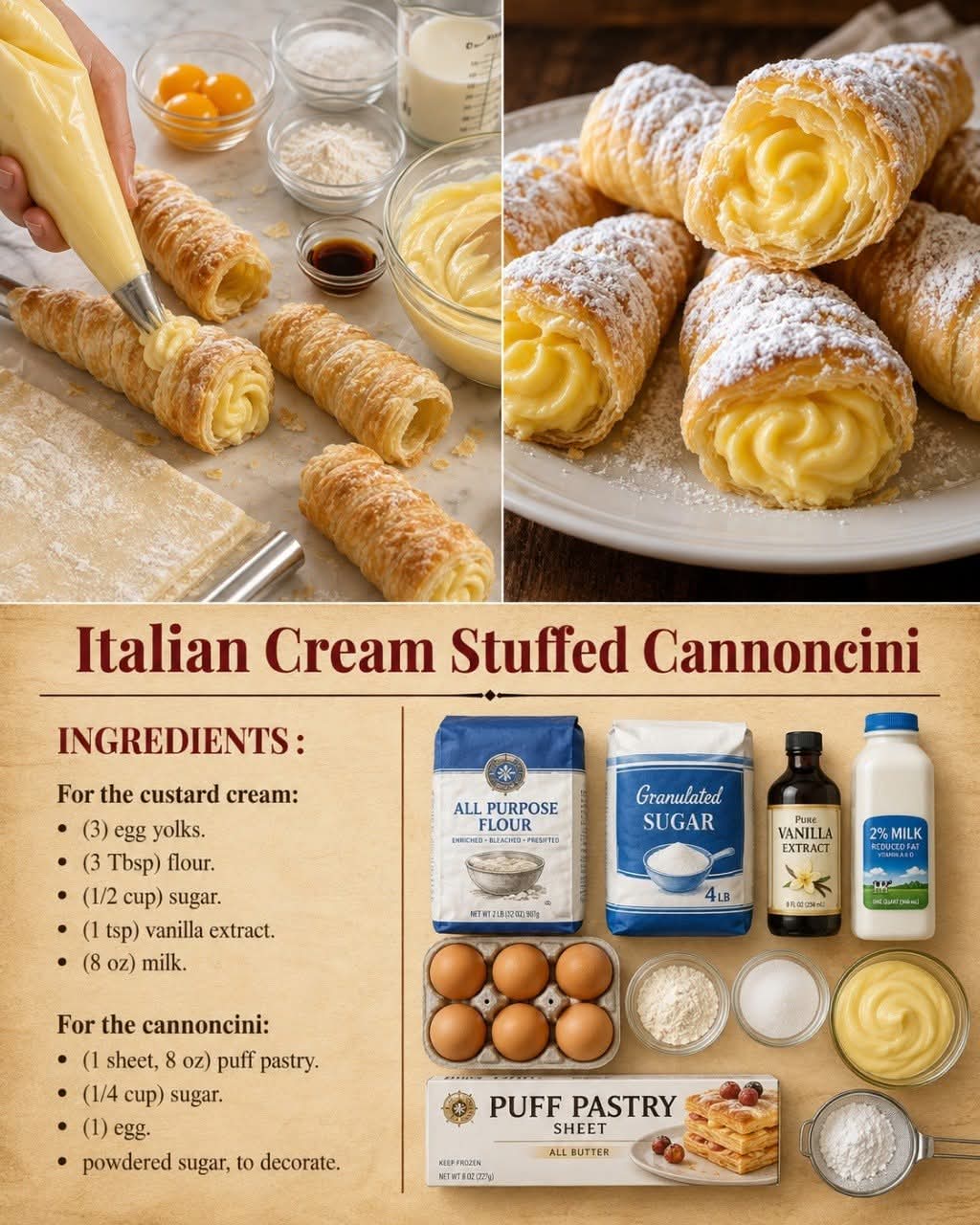
Cannoncini Stuffed with Italian Pastry Cream
.
Introduction
Cannoncini, also known as Italian cream horns, are elegant Italian pastries made by wrapping thin strips of puff pastry around metal molds, baking them until beautifully crisp and golden, and then filling them with a smooth, rich Italian pastry cream. They have a wonderful contrast of textures: the outside is flaky and delicate, while the filling is creamy, silky, and fragrant with vanilla.
They are especially lovely when served freshly filled, when the pastry is still crisp and the cream is perfectly smooth. These pastries look impressive enough for celebrations but can be prepared at home with a few simple techniques.
Ingredients
For the Italian Pastry Cream
- 3 large egg yolks
- 3 tablespoons all-purpose flour, about 30 g
- 1/2 cup granulated sugar, about 100 g
- 1 teaspoon pure vanilla extract
- 8 ounces whole milk, about 240 ml
For the Cannoncini
- 1 sheet puff pastry, thawed but still cold, about 225–250 g
- 2–3 tablespoons granulated sugar, for coating
- 1 egg, beaten, for brushing
- 1 tablespoon water, mixed with the egg
- Powdered sugar, for finishing
Optional Additions
- 1 teaspoon finely grated lemon zest for the pastry cream
- 1/2 teaspoon almond extract
- Finely chopped pistachios for decoration
- Fresh berries for serving
Equipment
- Cannoncini or cream-horn metal molds
- Baking sheet
- Parchment paper
- Medium saucepan
- Mixing bowl
- Whisk
- Pastry bag fitted with a small or medium round tip
Method for Preparing the Italian Pastry Cream
Begin by preparing the pastry cream because it needs enough time to cool completely before it is used.
Place the egg yolks and sugar in a medium mixing bowl. Whisk them together until the mixture becomes smooth, pale, and slightly thickened.
Add the flour gradually and whisk until there are no dry patches or lumps. The mixture should resemble a smooth, thick custard base.
Meanwhile, pour the milk into a saucepan and warm it over medium heat. Heat it until it is steaming and very hot, but do not allow it to boil vigorously.
Slowly pour approximately one-third of the hot milk into the egg mixture while whisking continuously. This gradual addition is important because it gently raises the temperature of the eggs and helps prevent them from scrambling.
Pour the warmed egg mixture back into the saucepan with the remaining milk.
Place the saucepan over medium-low to medium heat. Whisk continuously, paying particular attention to the bottom and corners of the pan.
As the mixture heats, it will gradually thicken. Continue cooking until the pastry cream becomes smooth and thick enough to hold its shape.
Remove the saucepan from the heat and immediately stir in the vanilla extract.
Transfer the pastry cream to a clean bowl. Press plastic wrap directly against the surface of the cream to prevent a skin from forming.
Allow it to cool at room temperature for a short time, then refrigerate until completely chilled.
Before filling the pastries, whisk the chilled pastry cream briefly until it becomes smooth and creamy again.
Method for Preparing the Cannoncini
Preheat the oven to 400°F (200°C). Line a baking sheet with parchment paper.
Place the cold puff pastry on a lightly floured work surface. If necessary, gently roll it into a rectangle approximately 10–11 inches long and 8–9 inches wide.
Using a sharp knife or pizza cutter, cut the pastry into long strips approximately 1/2 inch wide.
Take one strip of pastry and wrap it around a metal cannoncini mold, beginning at the narrow end and working toward the wider end.
Overlap each turn slightly so that there are no large gaps between the layers.
Do not wrap the pastry all the way over the end of the mold. Leaving a little space makes it easier to remove the baked pastry later.
Repeat with the remaining strips.
Place the wrapped molds on the prepared baking sheet, making sure the pastry seam is positioned underneath.
Beat the egg with one tablespoon of water. Lightly brush the exposed pastry with the egg wash.
Roll or sprinkle the pastry lightly with granulated sugar. The sugar will caramelize during baking and give the cannoncini a delicate, crisp exterior.
Place the tray in the preheated oven.
Bake for approximately 15–20 minutes, or until the puff pastry has risen, become crisp, and developed a deep golden-brown color.
The exact baking time can vary depending on the puff pastry and the oven, so watch the pastries carefully during the final minutes.
Remove the baking sheet from the oven and allow the pastries to cool for several minutes.
When the cannoncini are cool enough to handle, carefully twist each pastry shell away from the metal mold.
Allow the shells to cool completely before filling them.
Filling the Cannoncini
Transfer the chilled pastry cream into a piping bag.
Insert the tip into one end of a completely cooled cannoncini shell and gently pipe the cream inside.
Fill the pastry from both ends if necessary so that the entire center is filled with smooth pastry cream.
Do not fill the pastries too far in advance because the moisture from the cream can gradually soften the crisp puff pastry.
For the best texture, fill them shortly before serving.
Dust the finished cannoncini lightly with powdered sugar.
For an elegant presentation, you can also dip the ends of the cream into finely chopped pistachios or decorate them with a few fresh berries.
Formation and Texture
The characteristic shape of cannoncini comes from wrapping puff pastry around a tapered metal mold. As the pastry bakes, the butter within the layers melts and creates steam. That steam helps separate the pastry layers, producing the characteristic flaky and airy texture.
The sugar coating adds another layer of texture. As it heats, it melts and caramelizes slightly, giving the outside a delicate sweetness and a lightly crisp finish.
The pastry cream provides the contrast. It should be thick enough to remain inside the pastry but soft and silky enough to pipe easily.
The ideal finished cannoncini should have a crisp exterior, distinct flaky layers, and a smooth vanilla cream center.
History and Italian Tradition
Cannoncini are part of the long European tradition of filled pastries and are particularly associated with Italian pastry making. The name comes from the Italian word “cannoncino,” referring to the small cannon-like shape created by the pastry mold.
Italian pastry shops commonly prepare these pastries with a variety of fillings, including classic pastry cream, chocolate cream, whipped cream, and other custard-based fillings.
Their appeal comes from the combination of simple ingredients and careful pastry technique. Puff pastry, sugar, eggs, milk, flour, and vanilla are transformed into something that looks refined and celebratory.
Cannoncini are often enjoyed with coffee or espresso and can be served at family gatherings, holidays, afternoon celebrations, and special occasions.
Important Tips for Perfect Cannoncini
Keep the puff pastry cold
Cold puff pastry gives you better layers and makes the strips easier to wrap around the molds. If the pastry becomes soft while working, place it in the refrigerator for several minutes.
Do not stretch the pastry
Stretching the strips too much can cause them to shrink during baking. Handle the dough gently and wrap it around the mold without pulling it tightly.
Overlap the pastry
Each strip should overlap the previous turn slightly. This prevents the cream from escaping through gaps.
Do not overfill the molds
Leave a little space at the ends. This makes removing the baked pastry much easier.
Bake until properly golden
Puff pastry should be thoroughly baked and crisp. Pale pastry can remain soft and may lose its structure after filling.
Cool completely before filling
Warm pastry cream or warm pastry shells can create condensation and make the cannoncini soggy.
Fill just before serving
For the crispiest result, pipe the pastry cream into the shells shortly before serving.
Make-Ahead Method
The pastry cream can be prepared one day ahead and kept refrigerated in an airtight container with plastic wrap pressed directly against its surface.
The unfilled cannoncini shells can also be baked ahead of time. Store them at room temperature in an airtight container once completely cool.
For the best results, do not refrigerate the empty pastry shells because moisture can make them lose their crisp texture.
Fill them shortly before serving.
Serving Suggestions
Cannoncini are delicious on their own with a light dusting of powdered sugar.
They can also be served with:
- Fresh strawberries
- Raspberries
- Blueberries
- Chopped pistachios
- Toasted almonds
- Chocolate shavings
- A light dusting of cocoa powder
- Fresh whipped cream
- Espresso or strong Italian coffee
For a beautiful dessert platter, arrange several cannoncini on a serving plate and decorate the surrounding plate with fresh berries and a small amount of powdered sugar.
Variations
Chocolate Cannoncini
Add a few tablespoons of melted chocolate to the cooled pastry cream for a richer filling.
Lemon Vanilla Cannoncini
Add finely grated lemon zest to the milk while heating it, then strain the milk before preparing the pastry cream.
Pistachio Cannoncini
Prepare the classic pastry cream and mix in a small amount of pistachio paste after cooking. Finish the filled pastries with chopped pistachios.
Almond Cannoncini
Add a small amount of almond extract to the pastry cream and decorate the ends with toasted sliced almonds.
Chocolate-Dipped Cannoncini
Dip the cooled pastry shells in melted chocolate and allow the chocolate to set before piping in the pastry cream.
Conclusion
Homemade cannoncini are a beautiful example of how classic Italian pastry techniques can turn a handful of everyday ingredients into an elegant dessert. The crisp, caramelized puff pastry shell combined with silky vanilla pastry cream creates a balance of texture and flavor that makes these pastries especially memorable.
For the best results, focus on three things: keep the puff pastry cold, cook the pastry cream slowly while whisking constantly, and fill the completely cooled shells shortly before serving.
Once you master the basic version, cannoncini become an excellent foundation for experimenting with chocolate, pistachio, lemon, almond, or other favorite fillings.
These Italian cream horns are perfect for anyone who loves delicate pastries, rich custard, and traditional European desserts. They are simple enough for a weekend baking project yet elegant enough to serve at a special celebration.