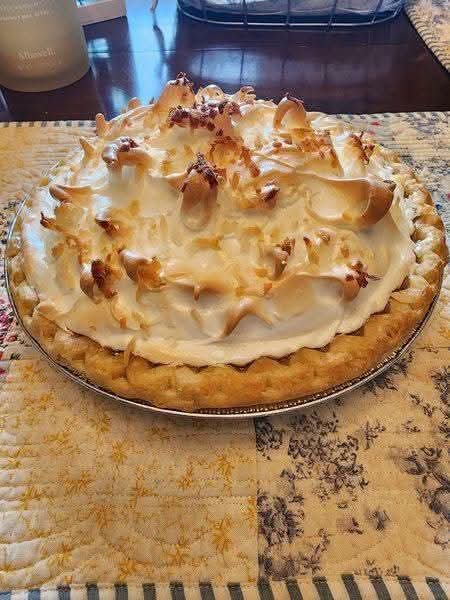
Old-Fashioned Coconut Cream Pie
There is nothing quite like an old-fashioned coconut cream pie: a crisp, buttery pastry crust filled with silky coconut custard, finished with clouds of whipped cream and a generous sprinkling of toasted coconut. This is the kind of dessert that feels nostalgic from the very first bite.
The secret to an exceptional coconut cream pie is the filling. It should be rich and velvety rather than stiff or gelatinous, with plenty of real coconut flavor. Traditional versions of coconut pie have appeared in American cookbooks for well over a century, including recipes from the late 1800s and early 1900s that combined coconut, milk, eggs, sugar, and pastry.
Recipe at a Glance
Yield: 8–10 generous slices
Pie: One 9-inch deep-dish pie
Preparation: About 45 minutes
Chilling: At least 4 hours
Difficulty: Moderate
Ingredients
For the Pie Crust
- 1 1/4 cups all-purpose flour
- 1/2 teaspoon salt
- 1 tablespoon granulated sugar
- 1/2 cup cold unsalted butter, cut into small cubes
- 3–4 tablespoons ice water
You may also use one prepared 9-inch pie crust if preferred.
For the Coconut Cream Filling
- 1 can (13.5 ounces/400 ml) full-fat coconut milk
- 1 1/2 cups whole milk
- 3/4 cup granulated sugar
- 1/4 cup cornstarch
- 4 large egg yolks
- 1/4 teaspoon salt
- 1 1/2 cups sweetened or unsweetened shredded coconut
- 3 tablespoons unsalted butter
- 2 teaspoons pure vanilla extract
- 1/2 teaspoon coconut extract, optional
For a less-sweet pie, use unsweetened coconut.
For the Whipped Cream
- 1 1/2 cups cold heavy whipping cream
- 3 tablespoons powdered sugar
- 1 teaspoon vanilla extract
For the Coconut Topping
- 1/2 cup shredded coconut
Instructions
1. Prepare the Pie Crust
In a large bowl, whisk together the flour, salt, and sugar.
Add the cold butter and work it into the flour using a pastry cutter or your fingertips until the mixture resembles coarse crumbs with some small pieces of butter remaining.
Gradually add the ice water, one tablespoon at a time, mixing just until the dough comes together.
Do not overwork the dough. Form it into a disk, wrap it, and refrigerate for at least 30 minutes.
2. Roll and Blind-Bake the Crust
Preheat the oven to 375°F (190°C).
Roll the chilled dough into a circle slightly larger than your pie dish. Carefully transfer it to a 9-inch pie plate and gently press it into the bottom and sides.
Trim the edges and crimp them decoratively.
Prick the bottom lightly with a fork. Line the crust with parchment paper and fill with pie weights, dried beans, or uncooked rice.
Bake for about 20 minutes.
Remove the parchment and weights, then return the crust to the oven for another 15–20 minutes, or until golden brown.
Allow the crust to cool completely.
A fully baked crust is important because the coconut filling is cooked separately on the stovetop rather than baked inside the pastry.
Method for the Coconut Custard
3. Toast the Coconut
Place the shredded coconut in a dry skillet over medium-low heat.
Stir frequently until lightly golden and fragrant.
Immediately transfer it to a plate so it stops cooking.
Reserve about 1/2 cup for decorating the finished pie.
4. Make the Custard
In a medium saucepan, combine the coconut milk, 1 cup of the whole milk, sugar, and salt.
Heat over medium heat until steaming and beginning to simmer. Do not let it boil aggressively.
In a separate bowl, whisk together the remaining 1/2 cup milk, cornstarch, and egg yolks until completely smooth.
Slowly pour some of the hot coconut-milk mixture into the egg mixture while whisking constantly. This tempers the eggs and prevents them from scrambling.
Pour the tempered mixture back into the saucepan.
Cook over medium heat, whisking constantly, until the custard becomes thick and creamy. This generally takes several minutes.
When the mixture reaches a pudding-like consistency, remove it from the heat.
5. Add the Coconut and Flavorings
Immediately stir in:
- Butter
- Vanilla
- Coconut extract, if using
- About 1 cup of the toasted coconut
Mix until the butter melts completely and the filling becomes smooth and glossy.
For an especially silky filling, strain the custard through a fine-mesh sieve before adding the coconut.
The traditional character of coconut cream pie comes from this cooked custard method: the filling is thickened on the stovetop, then chilled inside the baked crust.
6. Fill the Pie
Pour the warm coconut custard into the completely cooled pie crust.
Smooth the surface with a spatula.
Press a piece of plastic wrap directly against the surface of the filling to prevent a skin from forming.
Refrigerate for at least 4 hours, preferably overnight.
The filling needs to become thoroughly chilled before slicing.
Method for the Whipped Cream
7. Make the Topping
Pour the cold heavy cream into a large mixing bowl.
Add the powdered sugar and vanilla.
Beat with an electric mixer until medium-stiff peaks form.
Do not overbeat or the cream can become grainy.
8. Finish the Pie
Remove the chilled pie from the refrigerator.
Spread the whipped cream generously over the top, or pipe it decoratively around the surface.
Finish with the remaining toasted coconut.
For an even more dramatic presentation, cover the entire pie with generous swirls of whipped cream and scatter toasted coconut over every slice.
Formation and Presentation
For the best appearance, allow the pie to remain refrigerated until shortly before serving.
Run a sharp knife under hot water, wipe it dry, and then slice the pie. Repeat this process between cuts for clean, beautiful slices.
Each piece should show three distinct layers:
- A crisp, golden pastry crust.
- A thick but silky coconut custard.
- A generous crown of vanilla whipped cream and toasted coconut.
The contrast between the flaky crust, creamy filling, airy topping, and slightly crisp coconut makes this pie especially satisfying.
History of Coconut Cream Pie
Coconut has appeared in pie recipes for generations. Historical American cookbooks from the 1800s and early 1900s contain coconut pie recipes using combinations of grated coconut, milk, eggs, sugar, butter, and pastry. One recipe from the Dominion Home Cook-Book of 1868, for example, used grated coconut, milk, eggs, sugar, butter, and spices in a pastry shell.
A 1913 edition of The White House Cook Book also included a coconut cream pie filling made with coconut, milk, eggs, sugar, and butter. By the early twentieth century, coconut cream pie had firmly established itself as a classic homemade dessert.
The modern version generally follows the same basic philosophy: a baked pastry shell, a stovetop coconut custard, and either whipped cream or an old-fashioned meringue topping.
Why Coconut Lovers Will Love This Pie
This is a pie for serious coconut lovers.
The coconut milk gives the custard a deep, creamy coconut foundation. Shredded coconut provides texture, while toasted coconut adds a nutty, aromatic finish. Vanilla rounds everything out without overpowering the coconut.
If you want an even stronger coconut flavor, add the optional coconut extract and use toasted unsweetened coconut throughout the filling and topping.
Baker’s Secrets for the Perfect Pie
Keep the butter cold in the crust. Cold butter creates pockets of fat that help produce a flaky pastry.
Do not rush the custard. Cook it over moderate heat while whisking constantly. Properly cooked custard should become thick and glossy.
Temper the egg yolks. Adding hot liquid gradually prevents the yolks from cooking too quickly.
Use full-fat coconut milk. It provides much more richness and coconut flavor than a light version.
Toast the coconut carefully. Coconut can go from golden to burnt very quickly, so keep the heat moderate and stir often.
Chill completely. A minimum of four hours gives the custard time to firm enough for clean slices.
Add whipped cream shortly before serving. This keeps the topping fresh and fluffy.
Variations
Old-Fashioned Meringue Coconut Pie
For a more traditional presentation, replace the whipped cream with a meringue made from the leftover egg whites, sugar, and vanilla. Historical coconut cream pie recipes commonly used meringue as the topping.
Extra-Toasted Coconut Pie
Toast 1 cup of coconut and divide it between the custard and topping for an especially intense roasted-coconut flavor.
Chocolate Coconut Cream Pie
Add 3 tablespoons unsweetened cocoa powder to the custard mixture and reduce the cornstarch slightly. Finish with toasted coconut and whipped cream.
Coconut-Banana Cream Pie
Add thinly sliced ripe bananas between the crust and coconut custard for a tropical variation.
Storage
Keep the finished pie refrigerated and covered.
For the best texture and presentation, enjoy it within 2–3 days. Properly refrigerated cream pies can generally be kept for several days, but the crust gradually softens as it absorbs moisture from the filling.
Conclusion
This old-fashioned coconut cream pie is everything a classic cream pie should be: buttery, creamy, fragrant, comforting, and generously filled with real coconut flavor.
It is not a shortcut dessert, and that is exactly what makes it special. The homemade pastry, slowly cooked custard, freshly whipped cream, and toasted coconut come together to create the kind of pie that belongs at family gatherings, Sunday dinners, holiday tables, and celebrations.
For anyone who loves coconut, this is the pie worth making from scratch. One chilled slice with its flaky crust, velvety coconut center, and cloud of whipped cream is enough to understand why this classic has remained a favorite for generations.