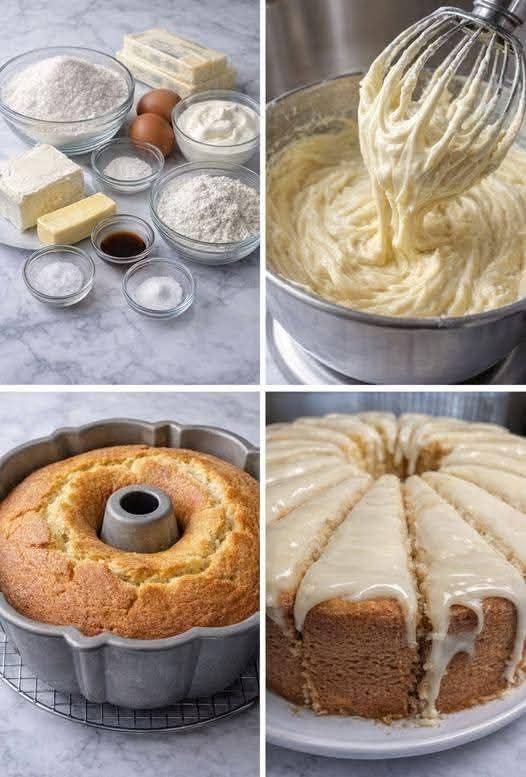
Cream Cheese Pound Cake
.
Introduction
Cream Cheese Pound Cake is a classic, rich, and beautifully tender dessert made with simple ingredients and an old-fashioned baking method. The combination of butter and cream cheese gives this cake its signature richness, while the generous amount of eggs creates a smooth, fine crumb.
This is the kind of pound cake that is delicious on its own but can also be served with fresh berries, whipped cream, fruit sauce, or a simple dusting of powdered sugar. It is wonderful for family gatherings, holidays, afternoon coffee, bake sales, and special occasions.
The secret to a successful cream cheese pound cake is patience. The butter and cream cheese should be properly softened, the sugar should be thoroughly creamed into the fat, and the flour should be mixed gently enough to avoid developing too much gluten.
Ingredients
For the Cake
- 1 cup (227 g) unsalted butter, softened
- 8 oz (226 g) cream cheese, softened
- 3 cups (600 g) granulated sugar
- 6 large eggs, preferably room temperature
- 3 cups (375 g) all-purpose flour
- 1/2 teaspoon baking powder
- 1/2 teaspoon salt
- 2 teaspoons vanilla extract
Optional Flavor Additions
You can add one of the following if desired:
- 1 tablespoon fresh lemon zest
- 1 teaspoon almond extract
- 1 tablespoon fresh lemon juice
- 1 teaspoon orange zest
For the classic version, vanilla alone is enough.
For Preparing the Pan
- 1 tablespoon softened butter
- 1 to 2 tablespoons all-purpose flour
Instructions
1. Prepare the Oven
Preheat your oven to 325°F (165°C).
Grease a 10-inch tube pan or Bundt pan generously with butter. Dust the pan lightly with flour, turning it so the flour coats the greased surface. Tap out any excess flour.
Properly preparing the pan is especially important with pound cake because the dense batter can stick if the pan is not well coated.
2. Prepare the Ingredients
Allow the butter, cream cheese, and eggs to come to room temperature before beginning.
Room-temperature ingredients blend together much more easily and help create a smooth, uniform batter.
Do not melt the butter or cream cheese. They should be soft enough to press easily with a finger but should still hold their shape.
3. Combine the Dry Ingredients
In a medium bowl, whisk together the all-purpose flour, baking powder, and salt.
Set the mixture aside.
Although this cake does not rely heavily on chemical leavening, the small amount of baking powder helps provide a little lift.
4. Cream the Butter and Cream Cheese
Place the softened butter and cream cheese in a large mixing bowl.
Beat them together on medium speed for approximately 2 to 3 minutes, until completely smooth and creamy.
Scrape down the sides of the bowl as needed.
This step is important because any lumps of cream cheese can remain visible in the finished batter.
5. Add the Sugar
Gradually add the granulated sugar to the butter and cream cheese mixture.
Continue beating for approximately 4 to 5 minutes, until the mixture becomes noticeably lighter, smoother, and somewhat fluffy.
Do not rush this step. Properly creaming the butter, cream cheese, and sugar contributes significantly to the cake’s texture.
6. Add the Eggs
Add the eggs one at a time.
Beat well after each addition, scraping the sides of the bowl when necessary.
Wait until each egg is incorporated before adding the next.
If the mixture looks slightly separated after adding the eggs, continue mixing briefly. It should come together when the flour is incorporated.
7. Add the Flour Mixture
Reduce the mixer speed to low.
Gradually add the flour mixture to the wet ingredients.
Mix only until the flour disappears.
Do not overmix the batter. Once flour is hydrated and mixed excessively, gluten develops and can make the pound cake heavier and tougher.
8. Add the Vanilla
Add the vanilla extract and mix just until incorporated.
If you are using lemon zest, almond extract, or another flavoring, add it at this stage.
Scrape the bottom and sides of the bowl with a spatula to make sure everything is evenly combined.
9. Fill the Pan
Spoon the batter evenly into the prepared Bundt or tube pan.
Smooth the top with a spatula.
Gently tap the pan against the countertop once or twice to help eliminate large air pockets.
Do not vigorously shake or bang the pan, because you want to preserve some of the air incorporated during mixing.
10. Bake
Place the cake in the center of the preheated oven.
Bake for approximately 1 hour 20 minutes to 1 hour 35 minutes, depending on the pan and your oven.
Begin checking around the 75-minute mark.
Insert a long wooden skewer or cake tester into the thickest part of the cake. It should come out clean or with a few moist crumbs attached.
The cake should be golden brown and firm to the touch.
If the top becomes dark before the center is completely baked, loosely cover the cake with aluminum foil for the final portion of baking.
11. Cool the Cake
Remove the cake from the oven and place it on a wire rack.
Let it cool in the pan for approximately 15 to 20 minutes.
Carefully run a thin knife around any areas that appear stuck to the sides of the pan.
Place a serving plate over the pan and carefully invert the cake.
Allow the cake to cool completely before slicing.
Cooling the cake properly allows the crumb to set and makes cleaner slices possible.
Method
The traditional pound cake method depends heavily on creaming butter with sugar. During this process, the sugar crystals help create tiny air pockets within the softened butter.
When the cake enters the oven, those air pockets expand along with the moisture and leavening agents, contributing to the cake’s characteristic fine texture.
Cream cheese adds another important element. It provides richness, moisture, and a subtle tang that balances the sweetness of the sugar.
The eggs act as a binder and also contribute structure and richness. Because there are six eggs in this recipe, adding them gradually is important for maintaining a smooth emulsion.
The final flour addition should be handled gently. Overmixing can make the cake unnecessarily dense or chewy.
History of Pound Cake
Traditional pound cake is one of the oldest styles of butter cake. Early versions were famously based on a simple proportion of approximately one pound each of flour, butter, sugar, and eggs.
That straightforward formula made the cake easy to remember and reproduce, especially before standardized measuring equipment was common.
Over generations, bakers began adapting the basic pound cake formula. Cream cheese became a popular addition in American baking because it brought richness and a pleasant tang while producing an exceptionally tender crumb.
Cream cheese pound cake eventually became a beloved Southern-style dessert and a staple at family gatherings, celebrations, church events, and holiday tables.
Formation and Texture
A properly baked cream cheese pound cake should have a beautiful golden exterior and a dense but tender interior.
The crumb should be fine and moist rather than dry or crumbly. Each slice should hold together neatly while remaining soft enough to melt pleasantly in the mouth.
The butter provides richness, cream cheese contributes moisture and tang, eggs provide structure, and sugar contributes sweetness while helping maintain tenderness.
The cake should not be rushed in the oven. Pound cakes are dense, so they need sufficient time for the center to bake completely.
Tips for the Best Cream Cheese Pound Cake
Use Room-Temperature Ingredients
Cold butter and cream cheese do not cream properly. Softened ingredients create a much smoother batter.
Cream Thoroughly
Do not stop mixing the butter, cream cheese, and sugar as soon as they look combined. Give them several minutes to become lighter and creamy.
Add Eggs Slowly
Adding eggs one at a time helps maintain a stable batter and prevents excessive curdling.
Measure Flour Carefully
Too much flour can make the cake dry and heavy. If using cups, spoon the flour into the measuring cup and level it rather than packing it down.
Do Not Overmix
Once the flour is added, mix only until incorporated.
Do Not Open the Oven Too Early
Opening the oven repeatedly can cause the cake to lose heat and may affect its rise and structure.
Let It Cool
A pound cake continues to settle as it cools. Cutting it immediately can result in slices that seem gummy or fragile.
Serving Ideas
Cream Cheese Pound Cake is excellent served plain, but there are many ways to dress it up.
Serve slices with fresh strawberries, blueberries, raspberries, or peaches.
For a classic presentation, dust the cooled cake lightly with powdered sugar.
For a richer dessert, add a spoonful of whipped cream and fresh berries.
You can also drizzle the cake with a simple glaze made from powdered sugar, vanilla, and a small amount of milk.
Another delicious option is to toast slices lightly in a skillet and serve them warm with butter and fruit.
Storage
Once completely cooled, store the cake in an airtight container at room temperature for up to 3 days.
Because this cake contains cream cheese but is baked thoroughly, it can generally be kept refrigerated for longer storage. Wrap it well and refrigerate for up to 5 days.
Allow refrigerated slices to sit at room temperature for a short time before serving for the best texture.
The cake can also be frozen. Wrap individual slices or the whole cake tightly in plastic wrap and then place it in a freezer-safe container or bag. Freeze for up to 3 months.
Thaw the cake in the refrigerator or at room temperature while still wrapped to help prevent excessive moisture loss.
Conclusion
Cream Cheese Pound Cake is a timeless dessert that proves how a handful of simple ingredients can create something extraordinary. Butter provides richness, cream cheese adds tenderness and a gentle tang, eggs create structure, and sugar gives the cake its classic sweetness.
The result is a beautifully golden cake with a dense, velvety crumb that becomes even more flavorful as it rests.
Whether served plain with coffee, topped with berries and whipped cream, or finished with a delicate glaze, this cream cheese pound cake is the kind of recipe worth keeping and making again and again.
For Pound Cake Lovers
For anyone who loves traditional homemade cakes, this recipe is especially rewarding because it is both simple and versatile. Once you master the basic technique, you can create many variations by adding citrus zest, extracts, chopped nuts, or a simple glaze.
The most important thing is to respect the method: soften the ingredients, cream the butter and cream cheese thoroughly, incorporate the eggs carefully, add the flour gently, and bake the cake slowly until the center is completely set.
That careful method is what turns these everyday ingredients into a rich, tender, classic cream cheese pound cake.