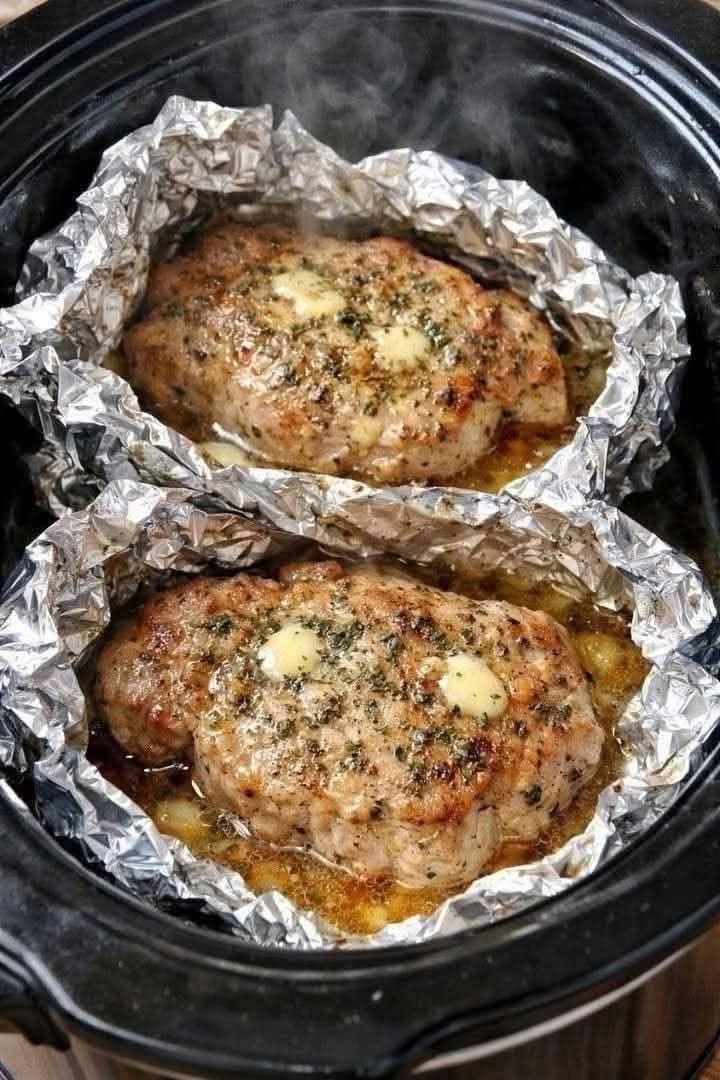
Tender Foil-Baked Beef Roast
Introduction
There is something wonderfully comforting about a dinner that requires very little preparation but rewards you with incredibly tender, flavorful meat. This foil-sealed roast is based on an old-fashioned slow-cooking technique: tightly wrapping the meat with a few simple ingredients allows the natural juices and seasonings to remain trapped inside as the roast cooks slowly.
The result is a deeply savory, juicy roast that becomes so tender it can be pulled apart easily with a fork. The beauty of this method is its simplicity. You do not need a complicated sauce, a long list of spices, or constant attention. Four basic ingredients are enough to create a satisfying family dinner.
Recipe Overview
Preparation time: 15 minutes
Cooking time: 6 to 8 hours
Servings: 6 to 8
Cooking method: Slow roasting in tightly sealed foil
Difficulty: Easy
Ingredients
- 1 beef chuck roast, approximately 1.5 to 2 kg
- 1 packet dry onion soup mix
- 1 can cream of mushroom soup, approximately 300 g
- 1 packet dry brown gravy mix
- Heavy-duty aluminum foil, for sealing
For serving, you may also prepare:
- Mashed potatoes
- Cooked carrots
- Green beans
- Dinner rolls
- Fresh parsley, optional
Why These Ingredients Work
The beef chuck roast is particularly suitable because it contains connective tissue and marbling that transform during long, slow cooking. As the roast cooks gently, the connective tissue gradually breaks down, producing exceptionally tender meat.
The onion soup mix provides concentrated onion flavor along with seasoning.
The cream of mushroom soup contributes moisture and richness while helping create a creamy, savory cooking liquid.
The brown gravy mix adds additional seasoning and helps turn the juices released during cooking into a flavorful gravy.
The tightly sealed foil is the important part of the method. Instead of allowing moisture to escape freely, the foil creates a contained cooking environment where the roast remains surrounded by its own juices and the seasoning mixture.
Instructions
1. Prepare the Oven
Preheat your oven to 150°C (300°F).
Place a large sheet of heavy-duty aluminum foil on a baking tray or roasting pan. For extra security against leaking, use two overlapping layers of foil.
2. Prepare the Roast
Remove the beef roast from its packaging and pat it dry with paper towels.
Place the roast in the center of the foil.
You generally do not need additional salt because the soup mix and gravy mix already contain seasoning.
3. Add the Seasonings
Sprinkle the dry onion soup mix evenly over the roast.
Next, spread the cream of mushroom soup over the top and sides of the beef as evenly as possible.
Finally, sprinkle the dry brown gravy mix over the roast.
There is no need to mix everything separately. The ingredients will combine naturally as the roast cooks.
4. Seal the Foil
Bring the foil tightly around the roast.
Fold the edges over several times to create a secure packet. Make sure there are no obvious openings where the cooking juices can escape.
For the best results, create a sealed packet without pressing the foil directly against every part of the meat.
Place the sealed packet on the baking tray.
5. Slow Cook the Roast
Place the tray in the preheated oven.
Cook for approximately 6 to 8 hours, depending on the size and thickness of the roast.
Avoid opening the foil repeatedly during cooking. Every time the packet is opened, heat and moisture escape.
The roast is ready when it is extremely tender and can be easily separated with a fork. For food safety, use a meat thermometer as appropriate for your cut and preparation, while recognizing that a chuck roast intended to become pull-apart tender will generally be cooked well beyond the minimum safe temperature.
6. Rest the Meat
Carefully remove the packet from the oven.
Be extremely cautious when opening the foil because hot steam can escape.
Allow the roast to rest for approximately 10 to 15 minutes before serving.
This gives the juices time to redistribute and makes the meat easier to handle.
7. Make the Gravy
Pour the cooking juices into a saucepan if you would like a thicker gravy.
Bring the juices to a gentle simmer.
If necessary, combine 1 tablespoon of cornstarch with 2 tablespoons of cold water to make a smooth slurry. Whisk it into the simmering juices gradually until the gravy reaches your preferred consistency.
Taste before adding additional salt.
The Slow-Cooking Method
The secret to this recipe is not complicated seasoning. It is the combination of low heat, time, moisture, and a tightly sealed cooking environment.
Chuck roast contains collagen, which can make the meat tough when cooked quickly. During prolonged cooking, collagen gradually converts into gelatin. This transformation is one of the main reasons a properly slow-cooked chuck roast becomes soft and succulent.
The foil also helps retain moisture. Instead of allowing the cooking liquid to evaporate rapidly, the sealed packet keeps much of that moisture around the meat.
The result is a roast that cooks slowly in a concentrated mixture of beef juices, onion seasoning, mushroom soup, and gravy seasoning.
Optional Vegetable Version
If you want to turn this into a complete one-pan dinner, add vegetables inside the foil packet.
Suitable choices include:
- Carrots
- Small potatoes
- Celery
- Onions
- Mushrooms
Cut larger vegetables into evenly sized pieces so they cook at approximately the same rate.
Place the vegetables around the roast before sealing the foil. The vegetables will absorb some of the savory cooking juices as they soften.
Serving Suggestions
This roast is especially delicious served over creamy mashed potatoes. Spoon the rich gravy over both the potatoes and the beef.
For a traditional family dinner, serve it alongside:
- Mashed potatoes
- Roasted carrots
- Green beans
- Buttered dinner rolls
- Steamed peas
- Simple garden salad
The combination of tender beef, rich gravy, and soft vegetables makes this an excellent Sunday dinner or comforting meal for a family gathering.
Leftovers
Leftover roast can be transformed into several different meals.
Shred the beef and use it for sandwiches with gravy or barbecue sauce. You can also combine the meat with leftover vegetables and gravy to make a quick cottage pie.
Another option is to warm the shredded beef and serve it over rice, mashed potatoes, noodles, or toasted bread.
Store leftovers promptly in the refrigerator in a covered container and use them within a few days, or freeze them for longer storage.
History and Tradition
Slow-cooked beef has a long history in home cooking because inexpensive, tougher cuts of meat can become remarkably tender when given enough time.
Before modern pressure cookers, slow cookers, and other specialized appliances became common, families frequently relied on covered pots, ovens, and tightly wrapped cooking methods to retain moisture while meat cooked slowly.
Foil roasting became particularly popular in twentieth-century home kitchens because aluminum foil made it easy to create a sealed cooking packet without requiring a specialized covered pot.
Recipes like this became treasured family traditions because they were economical, dependable, and easy to prepare ahead of time. The exact ingredients often changed from household to household, but the underlying technique remained the same: inexpensive beef, flavorful seasonings, moisture, and plenty of slow cooking.
Formation and Presentation
For an attractive presentation, transfer the finished roast to a large serving platter.
Allow the meat to remain in larger pieces rather than shredding every portion. Arrange carrots and potatoes around it if you cooked vegetables with the roast.
Pour a small amount of gravy over the meat and place the remaining gravy in a serving bowl.
If desired, sprinkle a little freshly chopped parsley over the top for freshness and contrast.
Serve immediately while the beef and gravy are hot.
Tips for the Most Tender Roast
Choose chuck roast. Its marbling and connective tissue make it particularly suitable for long cooking.
Do not rush the cooking process. Low and slow is the key to tenderness.
Seal the foil carefully. A well-sealed packet helps retain the moisture needed for the cooking process.
Avoid opening the packet unnecessarily. Keep the heat and steam inside.
Let the roast rest. A short resting period makes serving easier and helps preserve the juices.
Do not add excessive salt. The packaged soup and gravy mixes can already be quite salty.
Use a thermometer when needed. Tenderness comes from the long cooking process, while a thermometer provides an additional food-safety check.
Conclusion
This four-ingredient foil roast is a wonderful example of how simple cooking can produce an impressive meal. The combination of beef, onion seasoning, mushroom soup, and brown gravy creates a rich and comforting flavor while the tightly sealed foil helps keep the roast moist throughout the long cooking process.
After several hours in the oven, the transformation is remarkable. What begins as a simple cut of beef becomes tender, juicy, and richly flavored enough to fall apart with a fork.
It is the kind of recipe that fits perfectly into family cooking: inexpensive ingredients, minimal preparation, little hands-on work, and a hearty dinner waiting at the end.
For the Lovers of Classic Comfort Food
If you love old-fashioned comfort food, this is the kind of recipe worth keeping in your collection. It is especially suited to Sundays, family gatherings, cold evenings, and occasions when you want dinner to feel homemade without spending hours standing over the stove.
The greatest appeal is its simplicity. Four main ingredients, a sheet of foil, a little patience, and a low oven are all you need to create a tender roast with rich, savory juices.
And if this recipe reminds you of a family favorite, then it has already done what the best recipes are meant to do: bring people together around the table.