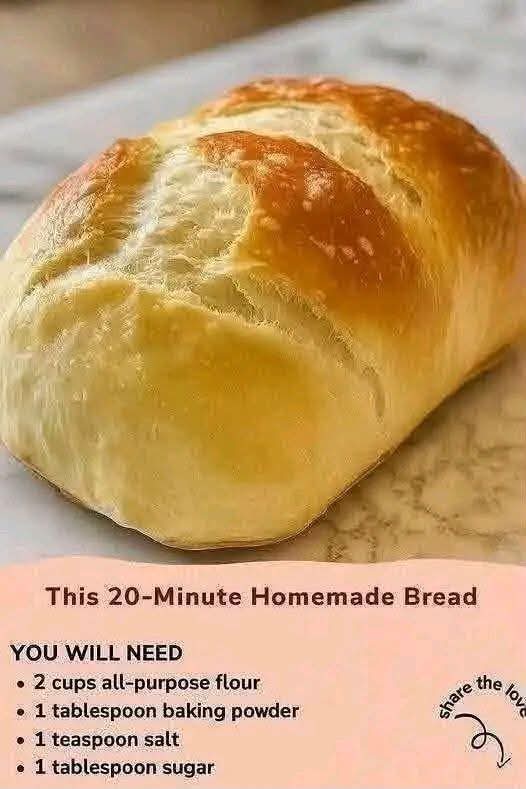
20-Minute Homemade Bread
Introduction
When you need fresh homemade bread but do not have hours to wait for yeast to rise, this 20-Minute Homemade Bread is a wonderful solution. It is simple, inexpensive, and made with everyday pantry ingredients. Because it uses baking powder instead of yeast, there is no lengthy proofing or rising period.
The finished bread has a lightly crisp exterior and a soft, tender interior. It is delicious served warm with butter, alongside soups and stews, or sliced and used for sandwiches.
Ingredients
Main Ingredients
- 3 cups all-purpose flour
- 2 teaspoons baking powder
- 1 teaspoon salt
- 1 tablespoon granulated sugar
- 1 cup warm water
- 2 tablespoons olive oil
Optional Additions
For additional flavor, you can add:
- 1 teaspoon garlic powder
- 1 teaspoon dried Italian herbs
- 1 tablespoon grated Parmesan cheese
- 1 tablespoon sesame seeds
- 1 teaspoon dried rosemary
- A little melted butter for brushing after baking
.Preparation
Preheat your oven to 425°F (220°C). Lightly grease a baking sheet or line it with parchment paper.
In a large mixing bowl, combine the flour, baking powder, salt, and sugar. Whisk the dry ingredients together thoroughly so that the baking powder and salt are evenly distributed throughout the flour.
Make a well in the center of the dry mixture.
Add the warm water and olive oil. Using a wooden spoon or your hands, mix everything together until a soft dough begins to form.
If the dough seems excessively sticky, add flour one tablespoon at a time. If it feels very dry or crumbly, add a small splash of warm water.
Method
Turn the dough onto a lightly floured work surface. Knead it gently for approximately 1 to 2 minutes. There is no need for extensive kneading because this is a quick bread rather than a traditional yeast bread.
Shape the dough into a round loaf or divide it into smaller portions to make individual rolls.
Place the dough onto the prepared baking sheet. If making a single loaf, gently flatten it slightly so that it is approximately 1 to 1½ inches thick. Use a sharp knife to make a shallow cross on the top. This allows the bread to expand while baking.
For an attractive finish, brush the surface lightly with olive oil or melted butter.
Place the bread in the preheated oven and bake for approximately 15 to 18 minutes, or until the surface is lightly golden and the bread is cooked through.
For smaller rolls, begin checking them after about 12 minutes because they may bake more quickly.
Remove the bread from the oven and allow it to cool for several minutes before slicing.
How the Bread Forms
Traditional bread generally relies on yeast to produce carbon dioxide, which causes the dough to rise over time. This recipe takes a different approach.
Baking powder contains ingredients that react when combined with moisture and heat. The resulting carbon dioxide bubbles expand in the oven, helping the dough become lighter and softer.
The olive oil contributes moisture and tenderness, while the small amount of sugar provides subtle sweetness and assists with browning. The warm water brings the dough together without requiring a long resting period.
Because there is no yeast fermentation, this bread has a different texture from traditional yeast bread. It is more similar to a quick bread: tender, simple, and ready in a fraction of the time.
History of Quick Breads
Quick breads became especially popular because they offered an alternative to traditional yeast breads, which require time for fermentation and rising. Baking powder and baking soda made it possible to prepare breads quickly, making them particularly useful for busy households.
The basic idea behind quick bread has been adapted into countless recipes around the world, from biscuits and soda breads to muffins, scones, and savory skillet breads.
This homemade version follows that same practical tradition: simple ingredients, minimal preparation, and fresh bread without waiting for yeast to rise.
Tips for the Best Results
Do not over-knead the dough. A few minutes of gentle mixing is enough. Excessive kneading can make the finished bread tougher.
Use warm rather than hot water. Very hot water is unnecessary for this recipe.
Measure the flour carefully. Too much flour can produce a dense, dry loaf.
For a softer crust, brush the freshly baked bread with melted butter as soon as it comes out of the oven.
For a crispier crust, place the shaped dough directly on a preheated baking sheet.
You can also divide the dough into 6 to 8 pieces and make individual rolls instead of one large loaf.
Serving Ideas
Serve the bread warm with butter, honey, jam, or your favorite spread.
It is also excellent alongside:
- Tomato soup
- Vegetable soup
- Chicken soup
- Beef stew
- Chili
- Pasta dishes
- Roasted vegetables
- Grilled meats
- Eggs and breakfast dishes
For a savory variation, mix garlic powder and dried herbs into the dough before baking.
For a cheesy version, add grated Parmesan or cheddar cheese and sprinkle a little extra cheese over the top.
Storage
This bread is best enjoyed fresh on the day it is prepared.
If you have leftovers, allow them to cool completely before storing them in an airtight container or bread bag. Keep at room temperature for up to 2 days.
For longer storage, wrap the bread tightly and freeze it for up to 2 months. Thaw at room temperature and warm briefly in the oven before serving.
Conclusion
This 20-Minute Homemade Bread is proof that homemade bread does not always require yeast, complicated techniques, or hours of preparation. With just a handful of basic ingredients and a short baking time, you can have warm bread on the table surprisingly quickly.
It is an excellent recipe for beginners, busy families, weekend breakfasts, or anyone who suddenly wants fresh bread without making a trip to the bakery.
For the Love of Homemade Bread
There is something special about serving bread that comes straight from your own oven. The aroma, warm texture, and simple homemade flavor make even an ordinary meal feel more comforting.
Whether you enjoy it with butter, use it for sandwiches, serve it beside a hearty soup, or simply eat a warm slice straight from the loaf, this quick bread is an easy recipe worth keeping.
If you love simple homemade recipes like this, please leave a kind comment or simply say “Thank you” so I can continue sharing more recipes with you.