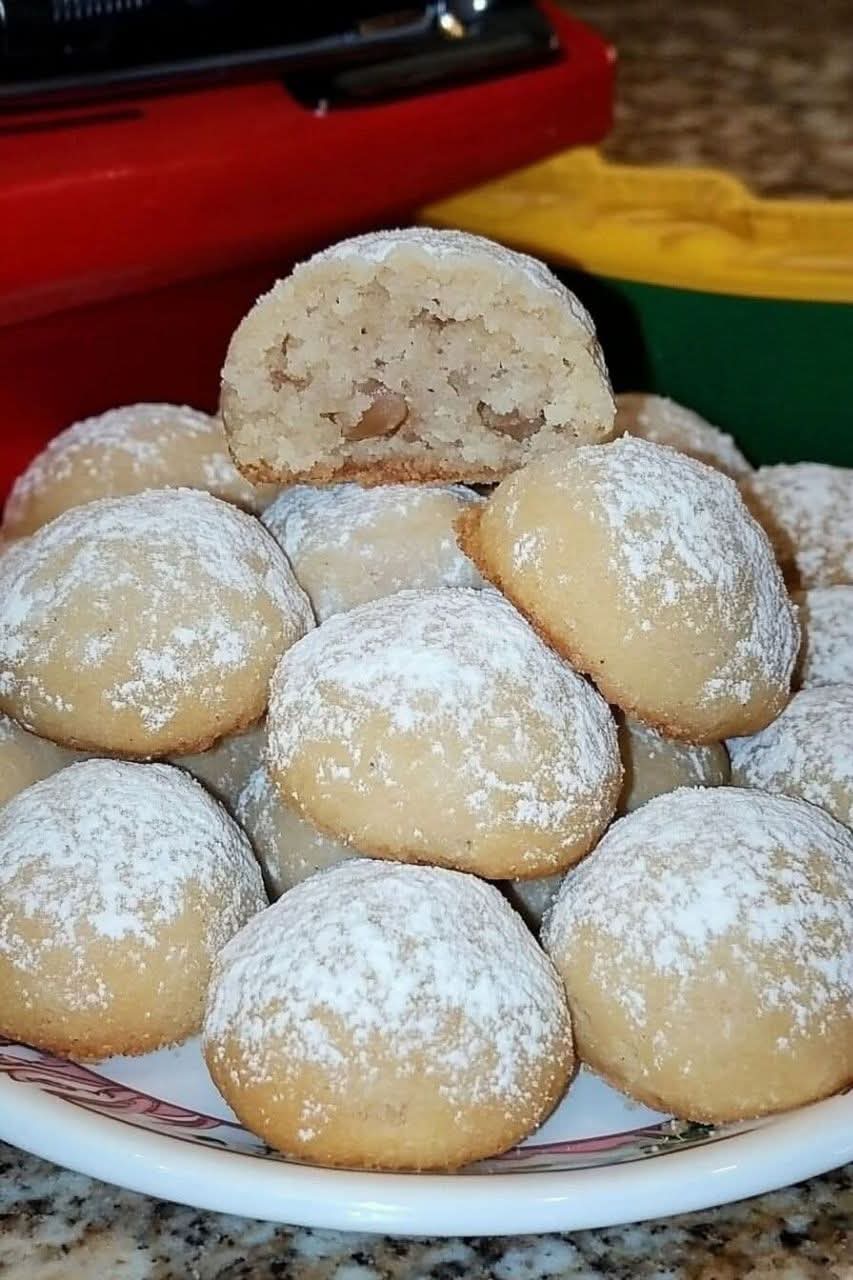
Grandma’s Secret Melt-in-Your-Mouth Cookies
Introduction
There are some recipes that seem to carry a little piece of childhood with them. Grandma’s cookies were often simple, homemade, and irresistibly delicious. These buttery cookies are the kind that disappear from the cooling rack before anyone has a chance to put them away.
They have crisp, lightly golden edges, a tender center, and a rich buttery flavor with just enough sweetness. The dough comes together easily, making this an excellent recipe for holidays, family gatherings, bake sales, or simply keeping a jar of homemade treats on the kitchen counter.
The real danger is how easy they are to eat. One cookie quickly becomes two, then three, and before you know it, the cooling rack is suspiciously empty.
Ingredients
For the Cookies
- 1 cup unsalted butter, softened
- 1 cup granulated sugar
- 1/2 cup packed light brown sugar
- 2 large eggs, room temperature
- 2 teaspoons pure vanilla extract
- 2 3/4 cups all-purpose flour
- 1 teaspoon baking soda
- 1/2 teaspoon baking powder
- 1/2 teaspoon salt
Optional Additions
For a slightly different version, you can add:
- 1 cup chocolate chips
- 1/2 cup chopped pecans or walnuts
- 1/2 teaspoon ground cinnamon
- 1 cup shredded coconut
- 1/2 cup dried cranberries
For the classic buttery cookie, however, the basic recipe is all you need.
Instructions
1. Prepare the Oven
Preheat the oven to 350°F (175°C).
Line two large baking sheets with parchment paper or lightly grease them.
Allow the oven to fully preheat before baking. A properly heated oven helps the cookies spread and brown evenly.
2. Prepare the Dry Ingredients
In a medium bowl, whisk together the flour, baking soda, baking powder, and salt.
Set the mixture aside.
Combining the dry ingredients first distributes the leavening agents and salt evenly throughout the flour, helping every cookie bake consistently.
3. Cream the Butter and Sugars
Place the softened butter, granulated sugar, and brown sugar in a large mixing bowl.
Beat for approximately 2 to 4 minutes until the mixture becomes pale, light, and fluffy.
This step is important because incorporating air into the butter mixture helps create cookies with a tender texture.
Do not use melted butter. Softened butter gives you much better control over the final texture.
4. Add the Eggs and Vanilla
Add the eggs one at a time, beating well after each addition.
Add the vanilla extract and mix until everything is smooth and creamy.
Scrape down the sides of the bowl as needed.
5. Add the Dry Ingredients
Gradually add the flour mixture to the butter mixture.
Mix on low speed just until the flour disappears.
Do not overmix the dough. Once the ingredients are combined, stop mixing.
Overmixing can develop too much gluten and make the cookies tougher rather than soft and tender.
6. Add Optional Ingredients
If you are using chocolate chips, nuts, coconut, cranberries, or cinnamon, gently fold them into the dough.
For a traditional grandma-style cookie, leaving the dough plain creates a wonderfully simple buttery flavor.
7. Shape the Cookies
Scoop the dough into portions approximately 1 1/2 tablespoons each.
Place the dough balls onto the prepared baking sheets, leaving about 2 inches between them.
If you prefer thinner, crispier cookies, gently flatten each dough ball with the bottom of a glass.
For thicker, softer cookies, leave them rounded.
8. Bake
Bake for approximately 9 to 12 minutes, depending on the size of the cookies and your oven.
The edges should be lightly golden while the centers may still look slightly soft.
Do not wait for the centers to become completely brown. Cookies continue cooking from the residual heat of the baking sheet after they leave the oven.
9. Cool
Allow the cookies to remain on the baking sheet for about 5 minutes.
Then carefully transfer them to a wire rack to cool completely.
And this is where patience becomes difficult. They smell wonderful while warm, but allowing them to cool gives the centers time to set and the flavors time to develop.
Method
The method behind these cookies is classic creaming.
First, softened butter is beaten with sugar. This creates a light mixture and incorporates air. Eggs are then added to provide structure, moisture, and richness. Vanilla adds flavor, while flour provides the framework of the cookie.
Baking soda and baking powder help control the cookie’s rise and spread. The small amount of salt balances the sweetness and makes the buttery flavor more pronounced.
The dough should be mixed only until combined. This preserves tenderness and prevents the cookies from becoming dense or chewy in an undesirable way.
The Formation of the Cookie
The character of these cookies comes from the balance of butter, sugar, flour, and eggs.
The butter contributes richness and tenderness. Granulated sugar helps the cookies spread and develop lightly crisp edges, while brown sugar contributes moisture and a deeper caramel-like flavor.
The eggs help bind everything together and give the cookies their structure. Flour provides the foundation, while the leavening agents create a gentle lift.
During baking, the butter melts, the sugars caramelize, the dough spreads, and the edges begin to turn golden. The center remains softer because it contains more moisture.
As the cookies cool, they firm up while maintaining a tender middle.
A Little History
Homemade cookies have long been a treasured part of family baking traditions. Before modern packaged sweets became so common, families relied on basic pantry ingredients such as flour, butter, sugar, eggs, and vanilla to make special treats at home.
Recipes were frequently passed from one generation to another, sometimes written in cookbooks and recipe boxes, and sometimes simply remembered.
That is part of what makes an old-fashioned cookie recipe special. The ingredients may be simple, but the memories attached to them are not.
Many grandmothers also adapted recipes according to what they had available. A handful of nuts, a little cinnamon, some raisins, or a few pieces of chocolate could transform the same basic dough into something completely different.
Grandma’s Secret Tips
For the best results, keep these little details in mind.
Use softened butter.
The butter should be soft enough to press with your finger but not melted.
Measure flour carefully.
Too much flour can produce dry cookies. Spoon the flour into your measuring cup and level it rather than packing it down.
Do not overmix.
Once the flour disappears, stop mixing.
Watch the baking time.
The cookies should generally come out when the edges are lightly golden and the centers still look slightly soft.
Let them rest.
Five minutes on the baking sheet allows the cookies to finish setting without becoming overbaked.
Bake one test cookie first.
If your cookies spread too much, chill the dough. If they do not spread enough, gently flatten the dough before baking.
Storage
Once completely cooled, store the cookies in an airtight container at room temperature.
They should remain delicious for several days.
For longer storage, place the cooled cookies in a freezer-safe container and freeze them for up to several months. Thaw at room temperature before serving.
You can also freeze portions of unbaked cookie dough. Scoop the dough into individual portions, freeze them on a tray, then transfer them to a freezer bag or container.
When you want fresh cookies, bake the frozen portions directly from the freezer, adding a little extra baking time as needed.
Serving Ideas
These cookies are wonderful served with:
- A cup of coffee
- Hot tea
- Cold milk
- Hot chocolate
- Vanilla ice cream
- Fresh berries
- A drizzle of melted chocolate
For an especially comforting dessert, warm a cookie slightly and serve it with a scoop of vanilla ice cream.
Why People Love These Cookies
There is something deeply comforting about a cookie made from ordinary ingredients.
They are not complicated. They do not require unusual equipment or expensive ingredients. They simply rely on good butter, properly measured flour, balanced sweetness, and careful baking.
That simplicity is exactly what makes them so lovable.
They are the kind of cookies that remind people of kitchens filled with the smell of butter and vanilla, handwritten recipes, family gatherings, and treats cooling beside the stove.
Conclusion
Grandma may have hidden these cookies for a reason.
They are buttery, tender, lightly crisp around the edges, and wonderfully soft in the center. They are easy enough for everyday baking but special enough for holidays and family celebrations.
The best part is that this recipe can become your own family tradition. Make the classic version today, then experiment with chocolate chips, nuts, cinnamon, coconut, or dried fruit.
And if a few cookies mysteriously disappear before they have completely cooled, there is no need to investigate too closely.
That is simply part of the tradition.