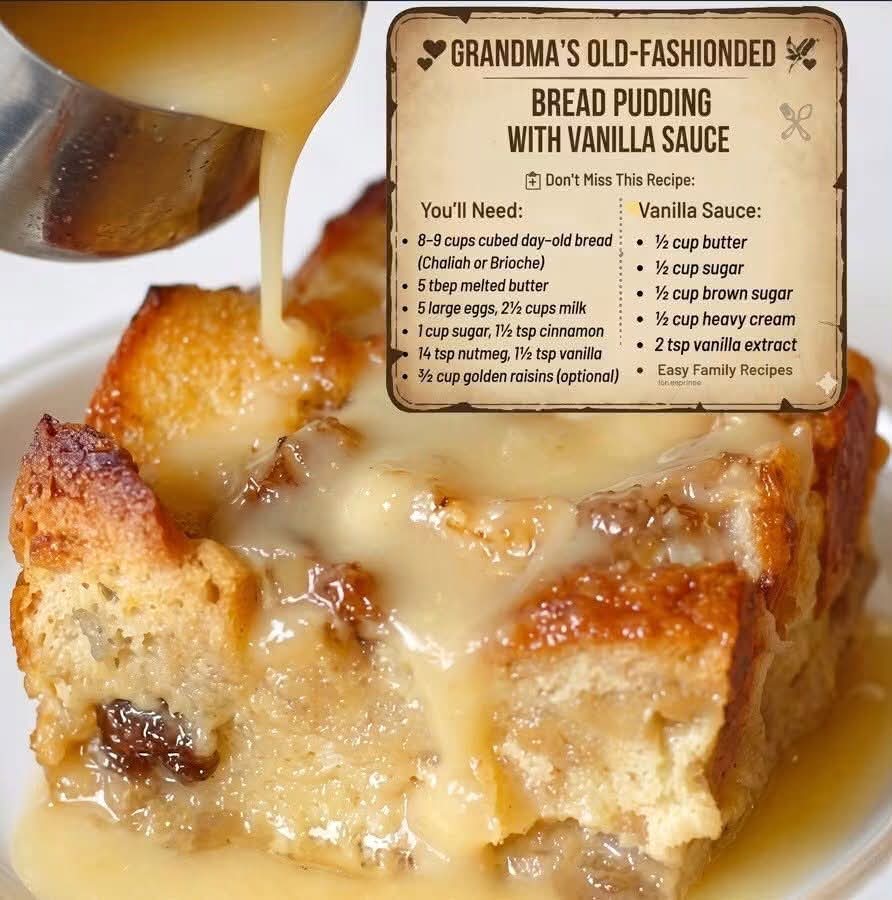
Bread Pudding with Rich Vanilla Sauce
Introduction
Bread pudding is one of those timeless desserts that turns simple pantry ingredients into something wonderfully comforting. This version takes humble cubes of bread and transforms them into a soft, custardy pudding filled with plump raisins, warm cinnamon, and crunchy pecans.
What makes this bread pudding especially delicious is the homemade vanilla sauce. Served warm over the freshly baked pudding, the buttery sauce soaks into the tender bread, creating a rich, creamy dessert that is perfect for family dinners, holidays, Sunday gatherings, or a cozy evening at home.
Ingredients
For the Bread Pudding
- 4 cups white bread, cut into cubes, about 8 slices
- 1/2 cup raisins
- 2 cups whole milk
- 1/4 cup unsalted butter
- 1/2 cup granulated sugar
- 2 large eggs, lightly beaten
- 1 teaspoon vanilla extract
- 1 teaspoon ground cinnamon
- 1/4 teaspoon ground nutmeg
- 1/4 teaspoon salt
- 1/2 cup chopped pecans
- 1 tablespoon brown sugar, optional, for the top
For the Vanilla Sauce
- 1/2 cup unsalted butter
- 1/2 cup granulated sugar
- 1/2 cup heavy cream or whole milk
- 1 teaspoon vanilla extract
- 1/4 teaspoon salt
- 1 tablespoon all-purpose flour or cornstarch, optional, for a slightly thicker sauce
Instructions
1. Prepare the Bread
Preheat the oven to 350°F (175°C). Lightly grease a 9-inch square baking dish or a similar-sized casserole dish.
Cut the bread into bite-sized cubes. Slightly stale bread works particularly well because it absorbs the custard without becoming excessively mushy.
Place the bread cubes in a large mixing bowl and set aside.
2. Warm the Milk and Butter
Place the milk and butter in a saucepan over medium-low heat. Warm gently until the butter has completely melted and the milk is hot but not boiling.
Remove the saucepan from the heat and allow the mixture to cool for a few minutes.
3. Make the Custard
In another bowl, whisk together the eggs, sugar, vanilla extract, cinnamon, nutmeg, and salt.
Slowly pour the warm milk mixture into the eggs while whisking constantly. This gradual process prevents the eggs from scrambling.
Continue whisking until everything is smooth and well combined.
4. Assemble the Pudding
Pour the custard mixture over the cubed bread.
Gently toss the bread until every piece is coated. Add the raisins and chopped pecans and fold them throughout the mixture.
Allow the bread to sit for approximately 10 to 15 minutes. This resting period allows the bread to absorb the custard and helps create the soft, creamy texture that makes excellent bread pudding.
5. Prepare for Baking
Transfer the soaked bread mixture into the prepared baking dish.
Spread it evenly and gently press down on the surface.
If desired, sprinkle a tablespoon of brown sugar over the top for a lightly caramelized crust.
6. Bake
Place the dish in the preheated oven and bake for approximately 40 to 50 minutes.
The pudding should be golden brown on top, lightly puffed, and set around the edges. The center should remain tender and slightly soft but should not appear completely liquid.
Remove from the oven and allow it to rest for 10 to 15 minutes before serving.
Making the Vanilla Sauce
While the pudding is baking, prepare the sauce.
Place the butter, sugar, cream or milk, and salt in a small saucepan over medium-low heat.
Stir continuously until the butter melts and the sugar dissolves.
If you prefer a thicker sauce, whisk the flour or cornstarch with a small amount of cold milk before adding it to the saucepan. Continue cooking gently for several minutes, stirring constantly, until the sauce thickens slightly.
Remove from the heat and stir in the vanilla extract.
Do not allow the sauce to boil aggressively, as gentle heating produces a smoother, silkier sauce.
Serving Method
Spoon a generous portion of warm bread pudding onto a dessert plate or into a bowl.
Pour the warm vanilla sauce generously over the top and allow it to soak into the pudding.
For an extra-special presentation, serve it with a scoop of vanilla ice cream, a dollop of whipped cream, or a light sprinkling of chopped pecans.
The contrast between the warm pudding and cool ice cream makes this dessert particularly memorable.
The History of Bread Pudding
Bread pudding has a long history rooted in the tradition of avoiding food waste. Across different cultures, leftover or stale bread was transformed into nourishing and satisfying dishes rather than being thrown away.
Early versions were generally simple, combining bread with milk, eggs, and sweeteners. Over generations, cooks began adding spices, dried fruits, nuts, and other ingredients according to what was available.
Bread pudding eventually became especially associated with traditional home cooking because it was economical, adaptable, and comforting. The dessert could be made with ordinary ingredients while still feeling special when served warm with a sauce.
Today’s versions range from simple family recipes to elaborate restaurant desserts, but the basic idea remains the same: transform leftover bread into something delicious.
Formation and Texture
The secret to excellent bread pudding is balance.
The bread needs to absorb enough custard to become soft and creamy, but it should retain enough structure to prevent the finished dessert from becoming soggy.
Stale or day-old bread is ideal because it absorbs the milk and egg mixture more effectively than very fresh bread.
The eggs provide structure as the pudding bakes, while the milk creates tenderness. Butter contributes richness, cinnamon and nutmeg provide warmth, raisins add natural sweetness, and pecans give the dessert a pleasant crunch.
The result should have a golden exterior with a soft, moist, custard-like interior.
Tips for the Best Bread Pudding
- Use day-old bread whenever possible.
- Do not rush the soaking process; give the bread time to absorb the custard.
- Avoid boiling the milk when preparing the custard.
- Whisk the warm milk into the eggs gradually.
- Do not overbake the pudding. Overbaking can make it dry.
- Toast the pecans lightly before adding them for deeper flavor.
- Soak the raisins in warm water for 5 to 10 minutes if they are particularly dry, then drain them well.
- Let the pudding rest for several minutes after baking so the custard can finish setting.
- Serve the vanilla sauce warm for the best consistency.
Variations
Apple Cinnamon Bread Pudding
Add 1 cup of peeled, finely diced apples along with the raisins and pecans. A little extra cinnamon makes this version especially comforting.
Chocolate Bread Pudding
Add 1/2 to 1 cup of chocolate chips to the bread mixture. The chocolate melts throughout the pudding as it bakes.
Bourbon-Style Vanilla Sauce
For an adult variation, a small amount of bourbon can be added to the finished vanilla sauce. The alcohol should be added carefully and according to your preferences.
Coconut Bread Pudding
Replace part of the milk with coconut milk and add shredded coconut for a tropical variation.
Make-Ahead Method
The pudding can be assembled several hours before baking. Cover the prepared dish and refrigerate it until you are ready to bake.
Allow the dish to sit at room temperature briefly while the oven preheats, then bake according to the instructions.
The vanilla sauce can also be prepared ahead of time and gently reheated over low heat. Add a small splash of milk or cream if the sauce becomes too thick.
Conclusion
This bread pudding is a beautiful example of how simple ingredients can become an unforgettable dessert. Soft bread, creamy custard, fragrant cinnamon, sweet raisins, and crunchy pecans come together to create a dessert that is both nostalgic and indulgent.
The warm vanilla sauce is what truly completes the dish. It melts over the pudding and settles into every tender layer, adding buttery sweetness and rich vanilla flavor.
For bread-pudding lovers, this is the kind of dessert that belongs in the family recipe collection. It is comforting enough for an ordinary evening but special enough for holidays and celebrations.
For Bread Pudding Lovers
If you love desserts that are warm, homemade, and full of traditional flavor, this recipe is one to keep close. It is forgiving, adaptable, economical, and incredibly satisfying.
Serve it warm, pour the vanilla sauce generously over each portion, and enjoy the simple pleasure of a classic dessert made from humble ingredients.