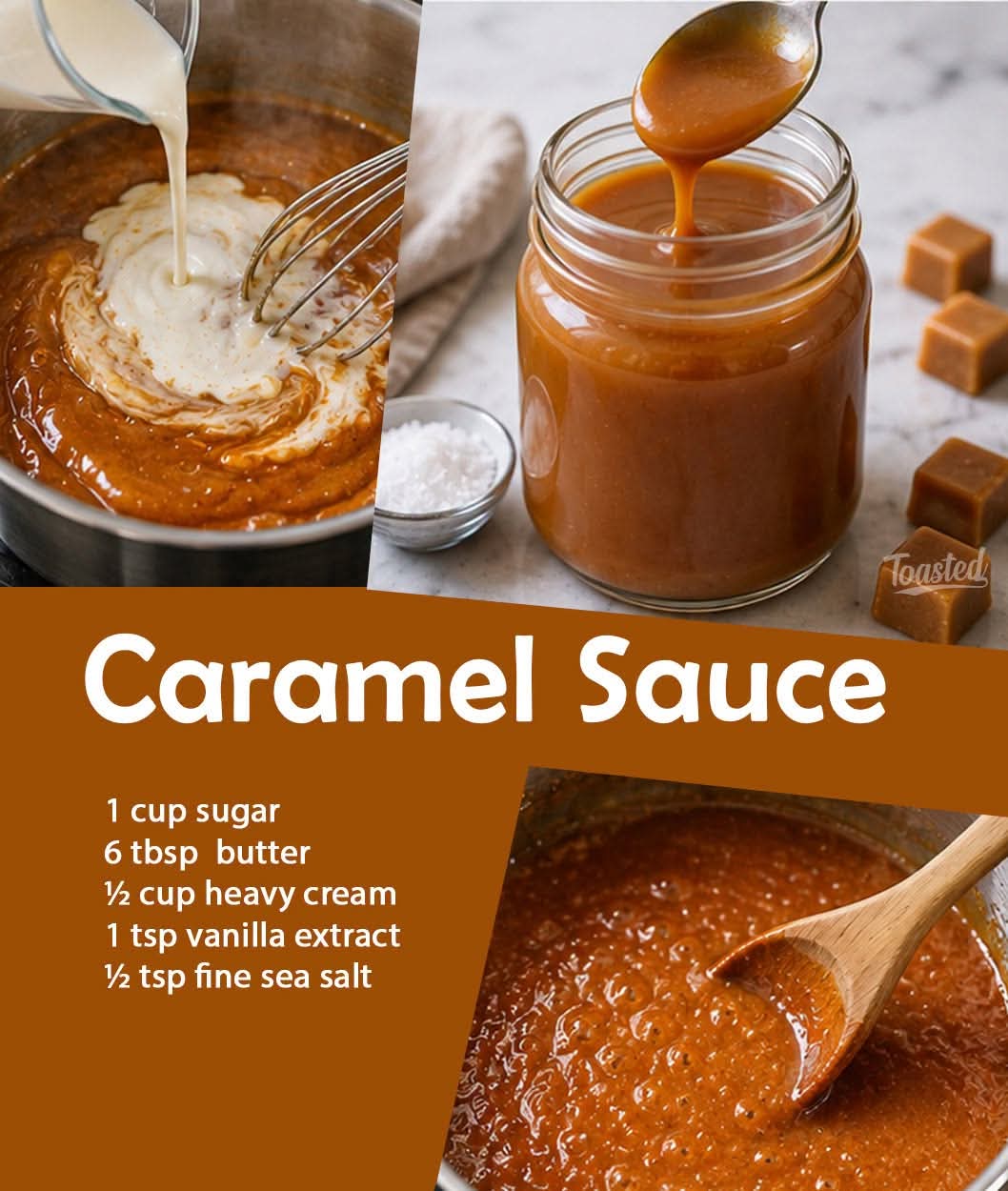
🍯 Homemade Caramel Sauce — Rich, Silky & Buttery
Introduction
There is something wonderfully comforting about homemade caramel sauce. It is rich, glossy, buttery, sweet, and just a little salty, with a deep toasted-sugar flavor that makes almost any dessert feel special. The best part is that it requires only a handful of simple ingredients and can be prepared in a single saucepan.
This homemade caramel is delicious drizzled over ice cream, cheesecake, brownies, pancakes, waffles, apple pie, cakes, bread pudding, French toast, or fresh fruit. Once you learn the technique, you may never want to buy bottled caramel sauce again!
🍯 Ingredients
Main Ingredients
- 1 cup (200 g) granulated sugar
- 6 tablespoons (85 g) unsalted butter, cut into small pieces
- ½ cup (120 ml) heavy cream, preferably at room temperature
- 1 teaspoon vanilla extract
- ½ teaspoon fine sea salt
Optional Additions
For different variations, you can add:
- ½ teaspoon cinnamon for a warm spiced caramel
- 1 tablespoon bourbon for bourbon caramel
- ½ teaspoon espresso powder for coffee caramel
- A pinch of flaky sea salt for salted caramel
- ½ teaspoon almond extract for a nutty flavor
👩🍳 Instructions
1. Prepare Your Ingredients
Before beginning, measure everything and have the butter and cream ready beside the stove. Caramel moves quickly once the sugar reaches the proper temperature, so preparation is important.
Cut the butter into pieces so it melts evenly when added to the hot sugar.
If possible, allow the heavy cream to come to room temperature. Cold cream can cause the caramel to bubble much more aggressively when added.
2. Melt the Sugar
Place the granulated sugar in a heavy-bottomed saucepan over medium heat.
Allow the sugar to begin melting.
As it melts, gently stir with a heat-resistant spatula or wooden spoon. At first, the sugar may look dry and grainy. Then it will begin forming wet clumps before gradually turning into liquid caramel.
Continue cooking until the sugar is completely melted and reaches a deep amber color.
Don’t rush this step. The deeper the amber color, the more developed the caramel flavor will be—but be careful not to let it become very dark or black, because burnt sugar will taste bitter.
3. Add the Butter
Once the sugar has reached a beautiful deep amber color, carefully add the butter pieces.
The mixture will bubble vigorously, so keep your hands and face away from the saucepan.
Whisk or stir continuously until the butter has completely melted and is incorporated into the caramel.
The mixture may look separated for a moment. Keep stirring until it becomes smooth.
4. Add the Heavy Cream
Slowly pour the room-temperature heavy cream into the caramel while whisking continuously.
Be extremely careful during this step. The cream causes the extremely hot caramel to bubble rapidly and produce hot steam.
Pour slowly rather than all at once.
Continue whisking until the cream is fully incorporated and the sauce becomes smooth, glossy, and creamy.
5. Simmer the Caramel
Allow the caramel sauce to bubble gently for approximately 1 minute.
This gives the sauce time to develop its final consistency and flavor.
Do not walk away from the pan. Caramel can change quickly.
6. Add Vanilla & Salt
Remove the saucepan from the heat.
Immediately stir in:
- 1 teaspoon vanilla extract
- ½ teaspoon fine sea salt
Mix thoroughly.
The vanilla gives the caramel a beautiful aroma, while the salt balances the sweetness and makes the buttery caramel flavor even more pronounced.
✨ The Formation of Caramel
The magic of caramel happens when sugar is heated.
As granulated sugar becomes hot, it begins to melt and undergoes caramelization. The sugar molecules break down and form hundreds of new flavor and aroma compounds. This is what creates the characteristic golden-brown color and deep toasted flavor.
When butter is added, it contributes richness and a creamy texture. Heavy cream then transforms the concentrated caramelized sugar into a smooth, pourable sauce.
Finally, vanilla adds fragrance and salt balances the sweetness.
So although the ingredient list is short, every ingredient has an important role.
🍮 Cooling the Sauce
Let the caramel cool in the saucepan for approximately 10–15 minutes.
As it cools, it will become noticeably thicker.
Transfer it carefully to a clean heatproof jar or container.
Don’t worry if the caramel seems thinner than expected while it is hot. Caramel sauce thickens considerably as its temperature drops.
❤️ Tips for Perfect Homemade Caramel
Use a heavy saucepan
A heavy-bottomed pan distributes heat more evenly and reduces the chance of burning the sugar.
Don’t use very high heat
Medium heat gives you better control. High heat can cause the sugar to burn before you have time to react.
Watch the color
You want a deep amber color. Pale caramel will have a lighter, sweeter flavor, while very dark caramel can become bitter.
Be careful with the cream
Hot caramel and cream create intense bubbling and steam. Pour slowly and keep your face away from the pan.
Don’t panic if it separates
If the caramel looks greasy or separated after adding the butter or cream, continue whisking gently. It will often come together into a smooth sauce.
Add flaky salt
For an elegant salted caramel, sprinkle a small amount of flaky sea salt over the finished sauce.
🍨 Ways to Enjoy Your Caramel
This sauce is incredibly versatile.
With Ice Cream
Pour warm caramel over vanilla, chocolate, coffee, or butter pecan ice cream.
With Cheesecake
Drizzle it over cheesecake with a little whipped cream for a luxurious dessert.
With Apple Desserts
Caramel and apples are a classic combination. Try it over apple pie, apple crisp, baked apples, or apple cake.
With Pancakes & Waffles
Replace maple syrup with warm caramel sauce for a decadent breakfast treat.
With Brownies
Drizzle caramel over warm brownies and add a pinch of sea salt.
With Cakes
Use caramel between cake layers, drizzle it over the top, or serve it alongside slices of pound cake.
With French Toast
Warm the sauce slightly and spoon it over cinnamon French toast with fresh berries.
🍯 Caramel Sauce Lovers’ Variations
Salted Caramel
Increase the sea salt slightly and finish the sauce with flaky salt.
Perfect for: ice cream, brownies, cheesecake, cookies, and chocolate desserts.
Cinnamon Caramel
Add about ½ teaspoon ground cinnamon after removing the caramel from the heat.
Perfect for: apples, pancakes, waffles, churros, and fall desserts.
Coffee Caramel
Add ½ teaspoon espresso powder to the finished caramel.
The coffee intensifies the caramel flavor without necessarily making the sauce taste strongly like coffee.
Bourbon Caramel
For an adult dessert variation, carefully stir in 1 tablespoon bourbon after removing the caramel from the heat.
Chocolate Caramel
Add a small amount of finely chopped chocolate to the hot caramel and stir until smooth.
🕰️ A Little History of Caramel
Caramel has its roots in the simple process of heating sugar until it changes color and develops a rich toasted flavor. Long before modern bottled caramel sauces existed, cooks discovered that heated sugar could become a wonderfully aromatic confection.
As sugar became more widely available, caramel appeared in candies, puddings, custards, cakes, and sauces. The addition of butter and cream transformed caramelized sugar into the smooth sauce that is familiar today.
Modern caramel sauce has become a favorite across many dessert traditions because it combines beautifully with both sweet and salty flavors.
🥄 Storage
Allow the sauce to cool completely before sealing the container.
Store it in the refrigerator in a clean, airtight jar.
Because the sauce becomes firm when chilled, gently warm the amount you need before serving.
You can warm it:
- In short bursts in the microwave
- In a saucepan over very low heat
- By placing the container in warm water
Always stir after warming.
🌟 Troubleshooting
My caramel is too thin.
It may simply need to cool further. If it remains too thin when completely cool, it can be gently reheated and simmered a little longer.
My caramel is too thick.
Warm it gently. If necessary, whisk in a small amount of warm heavy cream until you reach the desired consistency.
My sugar crystallized.
Avoid aggressive stirring while the sugar is melting. Crystallization can also happen if sugar crystals remain on the sides of the pan.
My caramel tastes bitter.
The sugar was probably cooked too far. Next time, remove it from the heat when it reaches a rich amber rather than very dark brown color.
🍰 Serving Method
For the most delicious presentation, warm a small amount of caramel until it becomes pourable.
Place your dessert on a serving plate and drizzle the caramel slowly over the top. Finish with a tiny pinch of flaky sea salt.
For an especially beautiful dessert, combine:
Vanilla ice cream + warm caramel + toasted pecans + whipped cream + flaky sea salt.
It’s simple, elegant, and absolutely irresistible.
❤️ Conclusion
Homemade caramel sauce is one of those recipes that looks sophisticated but is surprisingly simple once you understand the process. Sugar, butter, cream, vanilla, and salt come together to create a silky sauce with incredible depth of flavor.
The secret is patience: melt the sugar slowly, watch the color carefully, add the butter and cream cautiously, and let the finished sauce cool before judging its thickness.
Make a jar for your next family dessert, keep it in the refrigerator, and you’ll always have a special finishing touch ready for cakes, pies, ice cream, pancakes, brownies, and more.
🍯 One spoonful of homemade caramel is all it takes to turn an ordinary dessert into something unforgettable.