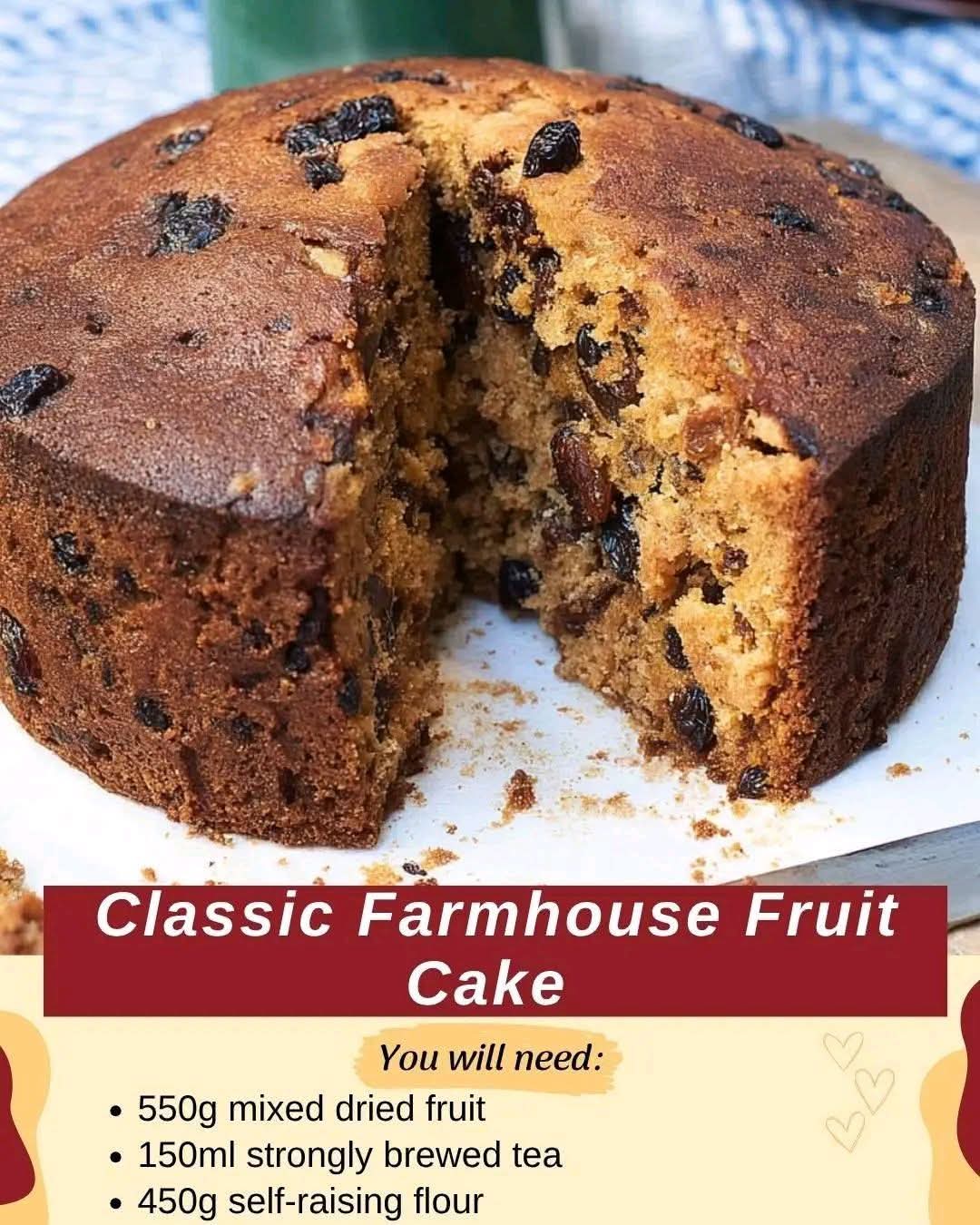
🍰 Classic Farmhouse Fruit Cake
🌾 Introduction
The Classic Farmhouse Fruit Cake is one of those timeless bakes that feels like home the moment it comes out of the oven. It is rich, moist, and deeply aromatic, filled with plump dried fruits that have been soaked in strong tea to enhance their sweetness and softness. This cake has long been a staple in rural kitchens, often baked in large batches and stored for days so the flavours could mature and deepen.
Perfect for afternoon tea, festive gatherings, or simple family moments, this cake carries a sense of tradition, comfort, and warmth in every slice.
🧾 Ingredients
🍇 Fruit Base
- 550g mixed dried fruit (raisins, sultanas, currants, chopped dates, peel if desired)
- 150ml strongly brewed black tea (hot)
🥣 Dry Ingredients
- 450g self-raising flour
- 1/2 tsp ground ginger
- 1/2 tsp ground cinnamon
- 1/4 tsp ground nutmeg
- 1/4 tsp ground cloves
- Pinch of salt
🧈 Wet Ingredients
- 300g unsalted butter, softened
- 300g caster sugar
- 4 medium eggs
- 300ml semi-skimmed milk
👩🍳 Instructions
1. Soaking the Fruit
Place the dried fruit in a large bowl and pour over the hot brewed tea. Stir gently, cover, and leave for at least 1 hour (or overnight for a richer, deeper flavour).
2. Preparing the Oven
Preheat your oven to 160°C (320°F). Grease and line a deep round cake tin with baking paper.
3. Creaming Stage
In a large mixing bowl, beat the butter and caster sugar together until the mixture becomes light, pale, and fluffy. This step is essential for a soft crumb.
4. Adding Eggs
Add the eggs one at a time, mixing well after each addition to maintain a smooth batter.
5. Dry Mix Incorporation
Sift in the flour, spices, and salt. Fold gently to avoid overmixing and to keep the cake tender.
6. Adding Milk
Pour in the milk gradually, stirring until the batter is smooth and slightly loose.
7. Fruit Folding
Add the soaked dried fruit (including any remaining tea liquid) and fold evenly so the fruit is well distributed.
8. Baking
Spoon the mixture into the prepared tin and level the top. Bake for 1 hour 45 minutes to 2 hours, or until a skewer inserted in the centre comes out clean.
9. Cooling
Allow the cake to cool in the tin for 20–30 minutes, then transfer to a wire rack to cool completely.
🔬 Methods (Baking Technique Explained)
This cake uses a traditional creaming method, where butter and sugar are whipped together to trap air. This creates a lighter texture despite the dense fruit content.
The tea-soaking method is key in farmhouse baking. It softens dried fruit naturally without added syrups, while also infusing subtle tannins that balance sweetness.
Slow baking at a moderate temperature ensures:
- Even cooking
- Moist interior
- Deep caramelised flavour without burning
📜 History of Farmhouse Fruit Cake
Farmhouse fruit cakes date back to rural European kitchens, especially in Britain and Ireland, where families used preserved dried fruits during winter months. Tea became a popular soaking liquid in the 19th century when it was widely available and inexpensive.
Unlike festive Christmas cakes, farmhouse fruit cakes were made year-round and were simpler, less alcoholic, and often enjoyed with daily tea breaks. They symbolized frugality, warmth, and homemade comfort.
🏗️ Formation (Structure of the Cake)
The structure of this cake is built in layers of texture:
- Base batter: soft and buttery
- Fruit layer: juicy, chewy bursts throughout
- Spice infusion: warm aromatic background
- Milk balance: keeps crumb tender despite density
When baked, the fruit settles evenly, creating a rich mosaic inside each slice.
❤️ Lovers of This Cake
People who love this cake usually enjoy:
- Traditional home baking
- Rich, moist fruit desserts
- Tea-time treats with depth of flavour
- Nostalgic, old-fashioned recipes
It is especially loved by those who prefer less frosting, more substance, and cakes that taste even better the next day.
🧁 Conclusion
The Classic Farmhouse Fruit Cake is more than just a dessert—it is a piece of baking heritage. Its simplicity hides its depth: slow-soaked fruit, gentle spices, and a soft buttery crumb come together in perfect harmony.
Whether served warm with butter or enjoyed cold with tea, this cake remains a symbol of comfort, tradition, and homemade love.
If you want, I can also turn this into a , a , or a .