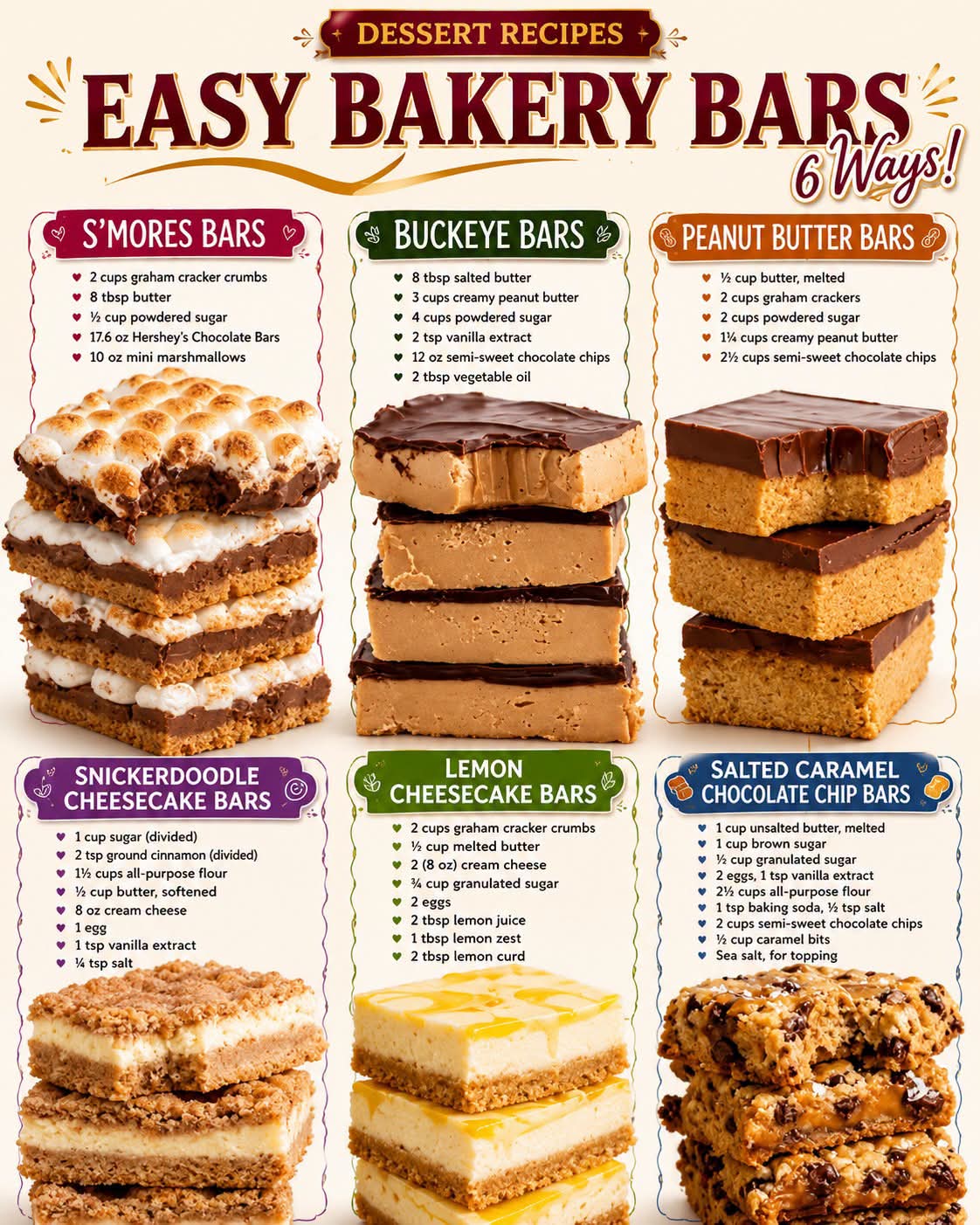
🍫 Six Delicious Reasons to Love Dessert Bars (Chocolate Graham Bars)
If there’s one dessert that never fails to disappear fast at a table, it’s chocolate dessert bars. They’re rich, layered, slightly crunchy, and melt-in-your-mouth soft at the same time. These bars combine a buttery graham cracker base with smooth melted chocolate, creating a dessert that feels both nostalgic and indulgent.
What makes them special is their simplicity—no complicated equipment, no baking stress, just layering, chilling, and slicing. They’re perfect for parties, tea time, school snacks, or late-night chocolate cravings.
🧁 Ingredients
Base Layer:
- 2 cups graham cracker crumbs
- ½ cup powdered sugar
- 8 to 12 tablespoons melted butter (adjust for texture)
Chocolate Layer:
- 4 Hershey’s chocolate bars (4.4 oz each), broken into pieces
🍰 Method & Instructions
1. Prepare the Base
In a mixing bowl, combine:
- graham cracker crumbs
- powdered sugar
- melted butter
Mix until the texture becomes like wet sand—soft, slightly sticky, and moldable. If it feels dry, add a little more butter one tablespoon at a time.
2. Form the Crust
Press the mixture firmly into a lined baking tray. Use the back of a spoon or a flat glass to compact it evenly. A well-pressed base is the secret to clean, solid bars that don’t crumble.
3. Melt the Chocolate
Break the Hershey’s chocolate bars into pieces and melt them using a double boiler or microwave in short bursts (20–30 seconds, stirring in between). Stir until smooth, glossy, and fully melted.
4. Layer the Chocolate
Pour the melted chocolate over the graham crust. Spread evenly using a spatula so every corner is covered. Tap the tray gently to remove air bubbles.
5. Chill & Set
Refrigerate for at least 2–3 hours, or until fully firm. For best results, chill overnight.
6. Slice & Serve
Once set, lift the slab from the tray and cut into neat squares or rectangles. Wipe the knife between cuts for clean edges.
🔥 Methods (Key Techniques)
- Pressing method: Compacting the crust ensures structure and prevents crumbling
- Melting method: Gentle heat keeps chocolate smooth and glossy
- Layering method: Even spreading guarantees every bite has perfect balance
- Chilling method: Slow setting improves texture and flavor bonding
📜 A Sweet “History” of Dessert Bars
Dessert bars trace their roots back to American home baking traditions in the early 20th century, when home cooks began combining pantry staples like crackers, butter, and chocolate into easy tray desserts. Graham cracker crusts became especially popular because they were cheap, shelf-stable, and versatile.
Over time, variations appeared—chocolate bars, caramel bars, peanut butter layers, and no-bake cheesecake bars. Today, they are a global favorite because they balance convenience with indulgence.
🏗️ Formation (How the Dessert Comes Together)
This dessert forms in three distinct phases:
- Base Formation: Crushed crumbs + butter create a solid foundation
- Chocolate Integration: Melted chocolate binds and enriches the structure
- Solidification Phase: Cooling transforms the mixture into firm, sliceable bars
The magic lies in the transformation from soft crumbs and liquid chocolate into a clean, structured dessert bar.
💛 Serving Ideas & Lovers of This Dessert
These bars are loved by:
- Chocolate lovers 🍫
- Kids and teens
- Party guests
- Busy home bakers
- Dessert lovers who want quick recipes
Best ways to serve:
- With cold milk 🥛
- With vanilla ice cream 🍦
- Drizzled with caramel or white chocolate
- Sprinkled with sea salt for contrast
🍫 Conclusion
Six reasons to love these dessert bars? They are:
- Easy
- No-bake
- Chocolate-rich
- Quick to prepare
- Crowd-pleasing
- Absolutely addictive
These bars prove that simple ingredients can create unforgettable desserts. Every bite delivers crunch, creaminess, and pure chocolate satisfaction.
If you want, I can also turn this into a viral TikTok-style recipe, a short caption version, or a step-by-step image guide.