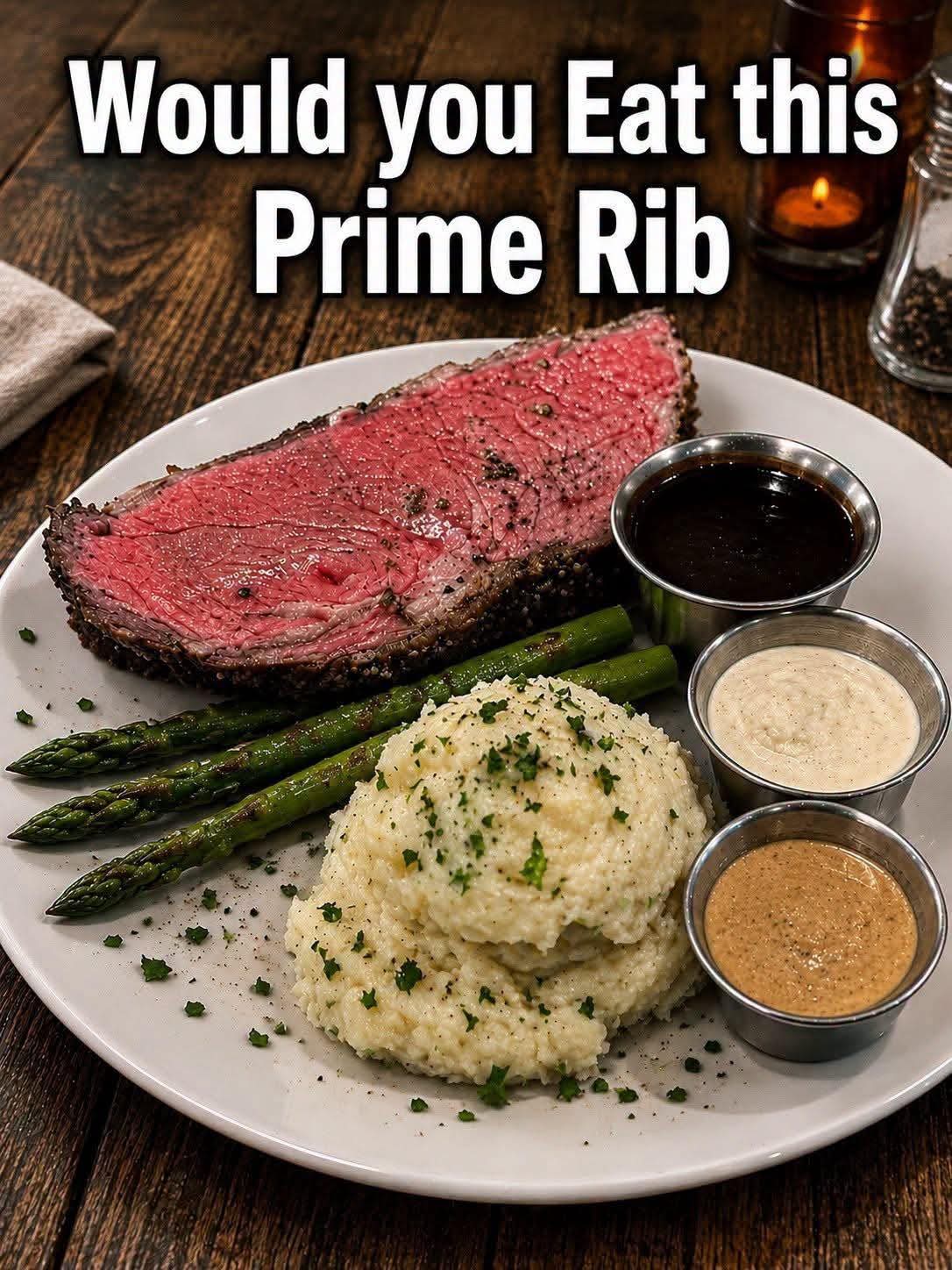
The Perfect Prime Rib Roast: A Carnivore’s Dream
—
Introduction
There’s nothing quite like the majestic sight of a perfectly roasted prime rib taking center stage at your dinner table. This iconic cut of beef, known for its exceptional marbling, tenderness, and rich flavor, has been the crown jewel of celebratory meals for generations. The “king of roasts” delivers an unforgettable dining experience that transforms ordinary gatherings into extraordinary feasts. When cooked to perfection, the meat boasts a crispy, herb-crusted exterior that gives way to a buttery, melt-in-your-mouth interior that practically dissolves on your tongue. This recipe will guide you through creating that show-stopping prime rib that will have your guests swooning and reaching for seconds—and thirds!
—
Ingredients
For the Prime Rib:
· 1 prime rib roast (4–5 lbs), bone-in preferred for maximum flavor
· 2 tbsp olive oil (extra virgin)
· 2 tsp kosher salt (Diamond Crystal recommended)
· 2 tsp freshly ground black pepper
For the Garlic Herb Crust:
· 6 cloves garlic, minced
· 2 tbsp fresh rosemary, finely chopped
· 2 tbsp fresh thyme, finely chopped
· 1 tbsp fresh sage, finely chopped
· 1 tsp smoked paprika (optional, for color and depth)
For the Au Jus (Optional but Highly Recommended):
· 1 cup beef broth
· ½ cup red wine (Cabernet or Merlot)
· 2 shallots, finely chopped
· 2 tbsp butter
For the Horseradish Cream Sauce:
· ½ cup sour cream
· ¼ cup prepared horseradish
· 1 tbsp Dijon mustard
· 1 tsp white wine vinegar
· Salt and pepper to taste
—
Instructions
Step 1: Preparation (24–48 Hours Before)
Remove the prime rib from the refrigerator and pat completely dry with paper towels. Mix the kosher salt, pepper, garlic, rosemary, thyme, sage, and smoked paprika in a small bowl. Rub the olive oil all over the roast, then generously coat with the herb mixture. Place the roast on a wire rack over a baking sheet and refrigerate uncovered for 24–48 hours. This dry-brine method ensures deep seasoning and a superior crust.
Step 2: Bringing to Room Temperature
Remove the roast from the refrigerator 2–3 hours before cooking. Allow it to come to room temperature for even cooking.
Step 3: Preheat the Oven
Preheat your oven to 450°F (232°C). Position the oven rack in the lower third.
Step 4: The High-Heat Searing Method
Place the roast fat-side up on a rack in a roasting pan. Roast at 450°F for 15 minutes to develop a beautiful brown crust. Then reduce heat to 325°F (163°C) without opening the oven.
Step 5: Roasting to Perfection
Continue roasting until the internal temperature reaches:
· Rare: 120–125°F (49–52°C) — 12–13 minutes per pound
· Medium-Rare: 130–135°F (54–57°C) — 14–15 minutes per pound
· Medium: 140–145°F (60–63°C) — 16–17 minutes per pound
For a 4–5 lb roast at medium-rare, expect approximately 1½ to 1¾ hours total cooking time.
Step 6: The Critical Resting Period
Remove the roast from the oven and tent loosely with aluminum foil. Do not skip this step! Let it rest for 20–30 minutes. The internal temperature will rise 5–10°F during rest, and the juices will redistribute throughout the meat.
Step 7: Carving
Carve against the grain into ½–¾ inch thick slices. Serve immediately with au jus and horseradish cream.
—
Methods
The Reverse Sear Method (Alternative): For even more control, start the roast at 250°F (121°C) and cook until the internal temperature reaches 120°F. Remove from the oven, rest for 20 minutes, then sear at 500°F for 6–10 minutes until a crisp crust forms.
Thermometer Method: Use a probe thermometer inserted into the center of the roast, avoiding the bone, for precise temperature monitoring without opening the oven door.
Bone-In vs. Boneless: Bone-in roasts offer superior flavor and natural insulation, while boneless provides easier carving. Adjust cooking time slightly for boneless (about 5% less).
—
History
Prime rib, also known as standing rib roast, traces its roots to medieval England, where beef was roasted over open fires and served to nobility. The term “prime” historically referred to the highest grade of beef designated by the USDA, though today it’s commonly used to describe the cut itself (from ribs 6 through 12). This cut was prized for its exceptional marbling and tenderness, making it a symbol of wealth and celebration. The tradition of the Sunday roast in Britain cemented prime rib’s status as a cornerstone of festive dining, eventually crossing the Atlantic to become a beloved American holiday centerpiece for Christmas, Easter, and New Year’s celebrations.
—
Nutritional Benefits
A 3-ounce serving of prime rib provides:
· Protein: ~22g (excellent for muscle repair and growth)
· Iron: ~15% DV (supports oxygen transport and energy)
· Zinc: ~30% DV (boosts immune function)
· Vitamin B12: ~100% DV (critical for neurological health)
· Selenium: ~35% DV (antioxidant support)
· Creatine: Naturally occurring for muscle energy
While rich and indulgent, prime rib is nutrient-dense and, when enjoyed in moderation, fits well into a balanced, protein-rich diet. The fat content includes conjugated linoleic acid (CLA), which has been linked to various health benefits.
—
Formation (Butcher’s Guide)
The prime rib comes from the primal rib section, specifically ribs 6 through 12 of the cow. This area experiences minimal muscle movement, resulting in exceptionally tender meat with abundant intramuscular fat (marbling). When the roast is prepared bone-in, the bones act as a natural roasting rack, insulating the meat and adding depth to the flavor. The “cap” (spinalis dorsi) is the outer layer of fat and muscle that provides the most flavor—this is the true delicacy that knowledgeable chefs seek.
—
Conclusion & Lovers’ Recommendations
Prime rib is more than just a meal—it’s an experience. Whether you’re celebrating a holiday, hosting a milestone dinner, or simply treating yourself to something extraordinary, this roast delivers unparalleled satisfaction. The magic lies in the simplicity: quality meat, careful seasoning, and patient cooking yield results that feel luxurious yet approachable.
Perfect Pairings:
· Wines: Cabernet Sauvignon, Malbec, or a bold Zinfandel
· Sides: Creamy mashed potatoes, Yorkshire pudding, roasted root vegetables, creamed spinach
· Leftovers: Transform into prime rib sandwiches with horseradish mayo, add to beef stroganoff, or slice thin for French dip sandwiches
Chef’s Tip: Always ask your butcher for the “first cut” (closer to the loin) for more tenderness, or the “second cut” (closer to the shoulder) for richer marbling—both are delicious!
—
Final Lovers’ Note
To the prime rib enthusiasts—the ones who know that a perfect slice, with its crisp crust and pink, juicy center, is pure poetry on a plate: this recipe is for you. Savor every bite, share generously, and remember that the best meals are made with love and patience. Happy roasting! 🥩✨
—
Nutrition Facts (Per 3 oz / 85g serving, without sauce)
Nutrient Amount
Calories 280–320
Total Fat 20–24g
Saturated Fat 8–10g
Cholesterol 75mg
Sodium 480mg
Protein 22g
Iron 2.5mg
Potassium 310mg
—
Remember: Always let the meat rest, trust your thermometer, and never underestimate the power of good horseradish! 🍽️