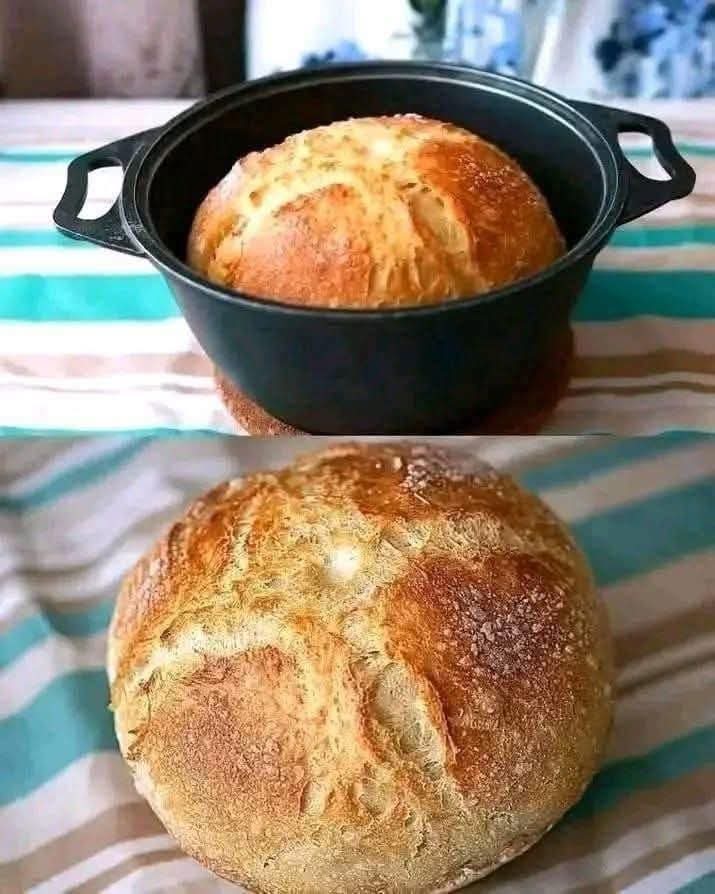
🥖 Homemade Olive Oil Bread – “You’ll Stop Buying Bread After This”
There’s something deeply satisfying about baking bread at home—the smell that fills the kitchen, the golden crust fresh from the oven, and that soft, warm center you tear into before it even cools. This simple olive oil bread is one of those recipes that turns everyday ingredients into something unforgettable. Once you make it, store-bought bread starts to feel unnecessary.
🧂 Ingredients
- 4 tablespoons (60 ml) olive oil
- 1 tablespoon (10 g) dry yeast
- 1 teaspoon salt
- 1 1/3 cups (320 ml) warm water
- 4 3/4 cups (570 g) plain all-purpose flour
🍞 Introduction
This bread is inspired by traditional Mediterranean-style farmhouse loaves—simple, rustic, and built on basic pantry ingredients. Olive oil gives it softness and flavor, while yeast creates that airy, fluffy texture we all love.
It’s the kind of bread that works for everything: sandwiches, toast, dipping in soup, or just eating warm with butter.
👩🍳 Instructions (Step-by-Step Method)
1. Activate the yeast
In a large bowl, mix warm water and dry yeast. Let it sit for 5–10 minutes until it becomes foamy.
👉 This step wakes the yeast up so your bread rises properly.
2. Add wet ingredients
Stir in olive oil and salt. Mix well so everything is evenly combined.
3. Add flour gradually
Add flour little by little while mixing. Continue until a soft dough forms.
4. Knead the dough
Place dough on a floured surface and knead for 8–10 minutes.
👉 The dough should become smooth, elastic, and slightly springy.
5. First rise
Place dough in a lightly oiled bowl. Cover with a cloth and let it rise for 1–1.5 hours, or until doubled in size.
6. Shape the bread
Punch down the dough gently. Shape into a loaf or round bread shape.
7. Second rise
Let it rest again for 30–40 minutes on a baking tray.
8. Bake
Bake in a preheated oven at 375°F (190°C) for 25–35 minutes, until golden brown on top.
9. Cool & enjoy
Let it cool slightly before slicing—if you can wait!
🔬 Method (Why This Works)
- Yeast fermentation creates air bubbles that make the bread rise
- Gluten formation from kneading gives structure and chewiness
- Olive oil softens the crumb and keeps it fresh longer
- Double rising improves flavor and texture
📜 A Small History of Bread
Bread is one of the oldest prepared foods in human history, dating back over 10,000 years. Early versions were flat and dense, but the discovery of yeast fermentation changed everything.
Mediterranean cultures especially embraced olive oil bread, using it in daily meals alongside soups, olives, and cheese. It became a symbol of simplicity and comfort food across generations.
🧱 Formation (How the Bread Builds Its Structure)
As the dough rests:
- Yeast produces gas bubbles
- Gluten traps those bubbles
- Dough expands like a soft sponge
When baked, the heat locks everything in place, creating a golden crust and airy interior.
❤️ Tips for Bread Lovers (“Lovers Methods”)
- Add garlic or herbs (rosemary, thyme) for extra flavor
- Brush top with olive oil before baking for a glossy crust
- Sprinkle sesame or nigella seeds for a bakery-style finish
- Serve warm with butter, honey, or olive tapenade
- Toast leftovers for next-day perfection
🍽️ Conclusion
This homemade olive oil bread proves that you don’t need complicated ingredients or professional skills to make something truly delicious. It’s simple, forgiving, and deeply rewarding.
Once you bake it a few times, it becomes second nature—and honestly, store-bought bread won’t feel the same anymore.
If you want, I can also turn this into:
- or