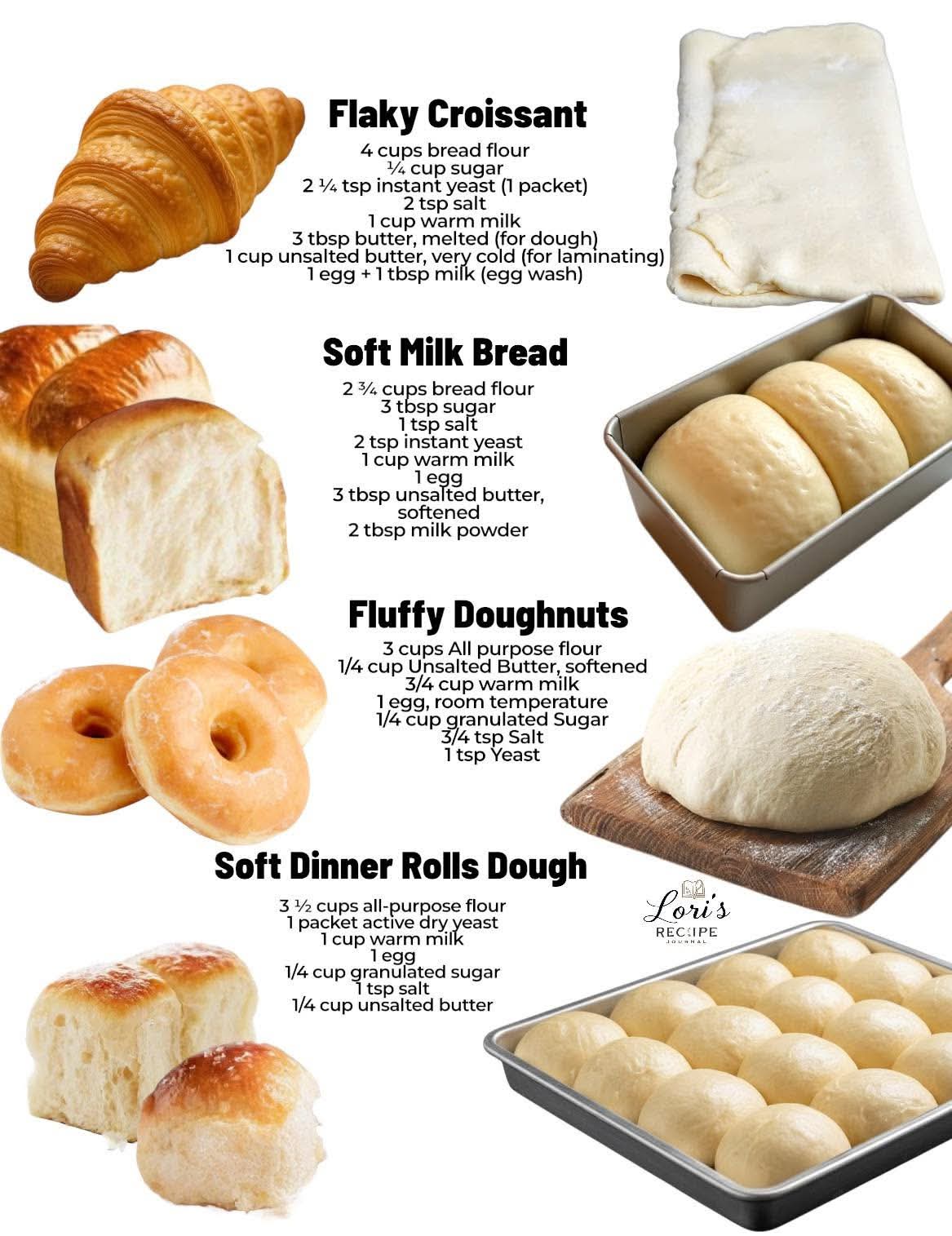
The Ultimate Guide to Homemade Croissants, Milk Bread, Doughnuts & Dinner Rolls
Freshly baked bread has been a symbol of comfort, celebration, and family gatherings for centuries. From the buttery layers of French croissants to the pillowy softness of Japanese milk bread, the sweet indulgence of homemade doughnuts, and the warm comfort of dinner rolls, mastering these doughs opens the door to a world of bakery-quality treats right from your own kitchen.
These four classic recipes share a common foundation: a perfectly prepared yeast dough. Understanding the ingredients, methods, and history behind each bread will help you achieve delicious results every time.
1. Flaky Homemade Croissants
Introduction
Croissants are one of the most famous pastries in the world. Their golden exterior, crisp layers, and buttery aroma make them a breakfast favorite. Although they require patience, the reward is a bakery-quality pastry with hundreds of delicate flaky layers.
History of Croissants
The croissant traces its origins to Austria’s “kipferl,” a crescent-shaped pastry dating back hundreds of years. The French later adopted and transformed it using laminated dough techniques, creating the buttery croissant we know today.
Today, croissants are considered one of France’s most iconic baked goods.
Ingredients
Dough
- 4 cups bread flour
- ¼ cup sugar
- 2¼ tsp instant yeast
- 2 tsp salt
- 1 cup warm milk
- 3 tbsp melted butter
Butter Layer
- 1 cup unsalted butter, very cold
Egg Wash
- 1 egg
- 1 tbsp milk
Method
Step 1: Make the Dough
Combine flour, sugar, yeast, salt, milk, and melted butter. Knead until smooth and elastic.
Step 2: First Rest
Cover and refrigerate for 1 hour.
Step 3: Prepare Butter Block
Shape cold butter into a square between parchment paper.
Step 4: Lamination
Enclose butter inside the dough.
Roll and fold:
- Fold #1 → Chill
- Fold #2 → Chill
- Fold #3 → Chill
This process creates the signature layers.
Step 5: Shape
Roll dough into a rectangle.
Cut long triangles and roll from the base to the tip.
Shape into crescents.
Step 6: Proof
Allow to rise for 1–2 hours until puffy.
Step 7: Bake
Brush with egg wash.
Bake at 400°F (200°C) for 15–20 minutes.
Formation
The magic of croissants comes from laminated dough. Thin layers of butter become trapped between sheets of dough. During baking, water in the butter turns to steam, separating the layers and creating a flaky texture.
Why People Love Croissants
Croissant lovers enjoy:
- Buttery flavor
- Crispy exterior
- Tender interior
- Beautiful layers
- Versatility for sweet and savory fillings
2. Japanese Soft Milk Bread
Introduction
Milk bread is famous for its incredibly soft, cloud-like texture. Every slice is light, fluffy, and slightly sweet, making it ideal for sandwiches, toast, or enjoying plain.
History
Japanese milk bread became popular throughout Asia due to its unique softness and long-lasting freshness. Many bakeries use special techniques to create the bread’s signature pillowy texture.
Ingredients
- 2¾ cups bread flour
- 3 tbsp sugar
- 1 tsp salt
- 2 tsp instant yeast
- 1 cup warm milk
- 1 egg
- 3 tbsp softened butter
- 2 tbsp milk powder (optional)
Method
Step 1
Activate yeast in warm milk with sugar.
Step 2
Combine flour, salt, sugar, and milk powder.
Step 3
Add yeast mixture, egg, and butter.
Step 4
Knead 8–10 minutes until elastic.
Step 5
Let rise for 1–1½ hours.
Step 6
Divide into 3–4 portions.
Shape into smooth balls.
Step 7
Place in loaf pan.
Allow a second rise.
Step 8
Bake at 350°F (175°C) for 25–30 minutes.
Formation
The rich combination of milk, butter, and eggs produces an extremely soft crumb. The dough develops strong gluten while remaining moist, creating a bread that practically melts in your mouth.
Why Bread Lovers Adore It
Milk bread enthusiasts love:
- Feather-light texture
- Slight sweetness
- Beautiful pull-apart crumb
- Excellent sandwich bread
- Softness that lasts for days
3. Homemade Fluffy Doughnuts
Introduction
Homemade doughnuts are one of life’s sweetest pleasures. Freshly fried and coated with sugar or glaze, they are soft, airy, and impossible to resist.
History
Fried dough treats have existed for centuries across Europe and America. Modern ring doughnuts became especially popular in the United States during the early 20th century and remain a beloved bakery staple today.
Ingredients
Dough
- 3 cups flour
- ¾ cup warm milk
- ¼ cup softened butter
- 1 egg
- ¼ cup sugar
- ¾ tsp salt
- 1 tsp yeast
Glaze
- 1 cup powdered sugar
- 1 tsp vanilla extract
- 2 tbsp milk
Method
Step 1
Mix milk, sugar, salt, yeast, and egg.
Step 2
Add butter and flour.
Mix until shaggy.
Step 3
Knead 10–12 minutes.
Step 4
Rest dough 15 minutes.
Step 5
Divide into 12 pieces.
Step 6
Shape into smooth balls.
Rest another 15 minutes.
Step 7
Create doughnut holes using your thumb.
Step 8
Proof 35–40 minutes.
Step 9
Heat oil to 350°F (175°C).
Step 10
Fry 1½ minutes per side.
Step 11
Drain and cool.
Step 12
Coat with sugar or glaze.
Formation
Yeast creates thousands of tiny air pockets throughout the dough. During frying, moisture converts to steam, expanding these pockets and creating a light, fluffy interior.
Why Doughnut Lovers Can’t Resist
They love:
- Soft texture
- Sweet glaze
- Fresh fried flavor
- Endless topping possibilities
- Bakery-quality results at home
4. Soft Dinner Rolls
Introduction
Dinner rolls are a timeless side dish that complements everything from holiday feasts to everyday meals. Soft, buttery, and fluffy, they bring warmth to any table.
History
Rolls evolved from traditional European bread-making traditions and became a staple of family dinners around the world. Their convenient size and soft texture made them a household favorite.
Ingredients
- 3½ cups all-purpose flour
- 2¼ tsp active dry yeast
- 1 cup warm milk
- ¼ cup sugar
- 1 tsp salt
- 1 egg
- ¼ cup softened butter
Method
Step 1
Combine warm milk, sugar, and yeast.
Allow to foam.
Step 2
Mix flour and salt.
Add yeast mixture, egg, and butter.
Step 3
Knead until smooth.
Step 4
Allow first rise until doubled.
Step 5
Divide into 12 equal pieces.
Shape into balls.
Step 6
Place in baking dish.
Step 7
Let rise until puffy.
Step 8
Bake at 375°F (190°C) for 15–18 minutes.
Step 9
Brush with melted butter.
Serve warm.
Formation
The soft structure comes from enriched dough containing milk, butter, and eggs. These ingredients soften gluten strands, resulting in tender, fluffy rolls.
Why Roll Lovers Enjoy Them
People love dinner rolls because they are:
- Soft and buttery
- Easy to make
- Perfect for holidays
- Great for sandwiches
- Wonderful with soups and stews
Master Dough-Making Tips
- Use fresh yeast.
- Measure ingredients accurately.
- Knead until dough is smooth and elastic.
- Allow adequate proofing time.
- Avoid overheating dough.
- Use quality butter.
- Bake until golden brown.
- Cool properly before slicing.
Conclusion
Croissants, milk bread, doughnuts, and dinner rolls each showcase the incredible versatility of yeast dough. While their textures and techniques differ, they all begin with simple ingredients transformed through mixing, kneading, proofing, and baking. Whether you’re seeking flaky pastry layers, cloud-soft bread, fluffy fried treats, or warm buttery rolls, these recipes provide everything needed to create bakery-style results at home.
For bread lovers, few experiences compare to the aroma of freshly baked dough filling the kitchen and the satisfaction of enjoying warm homemade bread straight from the oven. Happy baking! 🍞🥐🍩🥖✨