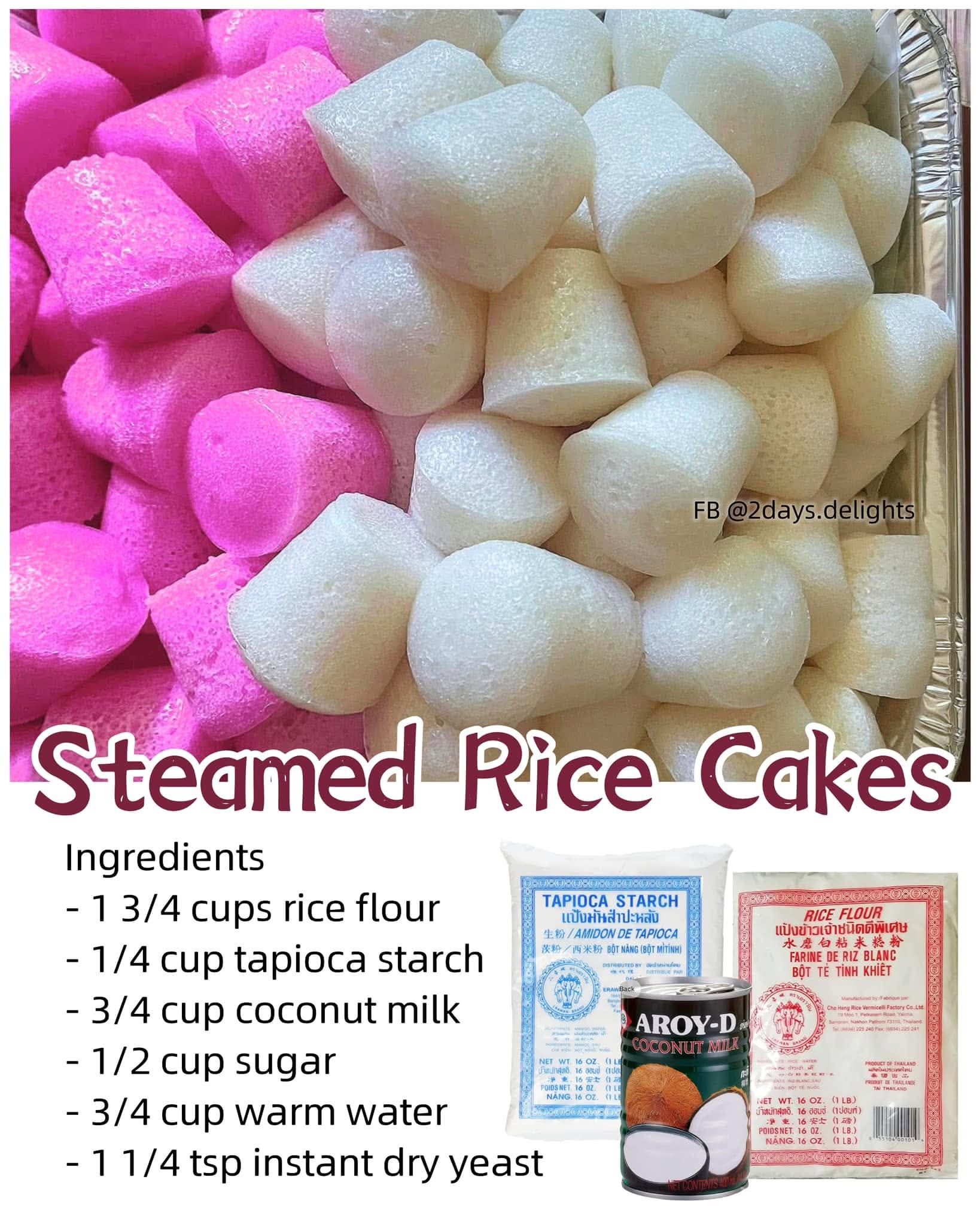
🍚 Delicious Steamed Rice Cakes (Fermented Coconut Rice Cakes)
✨ Introduction
Delicious Steamed Rice Cakes are soft, fluffy, lightly sweet treats made from rice flour, coconut milk, and yeast. These traditional cakes are popular throughout many parts of Asia and are loved for their airy texture, delicate sweetness, and beautiful honeycomb-like interior. Steamed rather than baked, they are naturally light and moist, making them perfect for breakfast, snacks, desserts, or festive celebrations.
The fermentation process creates tiny bubbles throughout the batter, giving the cakes their signature fluffy structure and slightly tangy aroma. Combined with rich coconut milk, these steamed rice cakes become a comforting delicacy enjoyed by both children and adults.
📜 History of Steamed Rice Cakes
Rice cakes have been enjoyed for centuries across Asia, where rice has long been a staple food. Different countries developed their own versions using local ingredients and cooking techniques.
Traditional fermented rice cakes were often prepared during festivals, family gatherings, religious celebrations, and special occasions. Before modern baking became common, steaming was one of the primary cooking methods, making these cakes accessible and economical.
The addition of coconut milk became popular in tropical regions where coconuts were abundant. Over time, families passed down their unique recipes from generation to generation, creating countless regional variations.
Today, steamed rice cakes remain beloved for their simplicity, natural ingredients, and nostalgic connection to traditional home cooking.
🥥 Ingredients
Main Batter
- 220g rice flour (1¾ cups)
- 40g tapioca starch (¼ cup)
- 200ml coconut milk (½ can)
- 100g granulated sugar (½ cup)
- 180ml warm water (¾ cup)
- 3.5g instant dry yeast (1¼ teaspoons)
Optional Flavor Enhancements
- 1 teaspoon vanilla extract
- ¼ teaspoon salt
- Pandan extract for green-colored cakes
- Ube flavoring for purple cakes
- Grated coconut for topping
- Sesame seeds for garnish
🥄 Equipment Needed
- Mixing bowl
- Whisk or spoon
- Measuring cups and spoons
- Silicone molds or small ramekins
- Steamer with lid
- Kitchen towel
- Cooling rack
👩🍳 Preparation Method
Step 1: Prepare the Batter
- In a large mixing bowl, combine:
- Rice flour
- Tapioca starch
- Sugar
- Add:
- Coconut milk
- Warm water
- Instant dry yeast
- Stir until a smooth batter forms.
- Make sure no lumps remain.
Step 2: Fermentation Process
- Cover the bowl with plastic wrap or a clean kitchen towel.
- Place in a warm location.
- Allow the batter to ferment for 1–2 hours.
During fermentation:
- Yeast activates.
- Tiny bubbles form.
- The batter expands slightly.
- Flavor develops.
The batter is ready when it looks bubbly and airy.
Step 3: Prepare the Steamer
- Fill a steamer pot with water.
- Bring water to a gentle boil.
- Place silicone molds inside the steamer.
- Allow molds to heat for several minutes.
Preheating helps the cakes rise properly.
Step 4: Fill the Molds
- Stir the fermented batter gently.
- Pour batter into the hot molds.
Fill each mold about 80–90% full to allow room for expansion.
Step 5: Steam the Cakes
- Cover the steamer lid with a kitchen towel.
- Secure the towel to prevent contact with the flame.
This prevents condensation from dripping onto the cakes.
- Steam for 10–15 minutes.
The cakes will puff up and develop their characteristic honeycomb structure.
Step 6: Cooling
- Turn off the heat.
- Let cakes rest for 2–3 minutes.
- Remove from steamer.
- Cool slightly before unmolding.
🎂 Formation and Texture
A perfectly made steamed rice cake should have:
Appearance
- Smooth top
- Light golden-white color
- Slightly domed surface
Interior Structure
- Honeycomb-like holes
- Soft and fluffy crumb
- Moist texture
Flavor
- Mild sweetness
- Gentle coconut aroma
- Slight fermented note
The tapioca starch contributes chewiness while the rice flour provides a delicate crumb.
🌟 Expert Tips for Success
✅ Use fresh yeast.
✅ Keep fermentation temperature warm but not hot.
✅ Do not overmix after fermentation.
✅ Preheat molds before filling.
✅ Steam over medium heat.
✅ Always wrap the steamer lid with a towel.
✅ Serve fresh for best texture.
🍓 Delicious Variations
Pandan Rice Cakes
Add pandan extract for a fragrant green version.
Ube Rice Cakes
Mix in ube flavoring for a vibrant purple dessert.
Coconut Topped Cakes
Sprinkle grated coconut over the batter before steaming.
Sesame Rice Cakes
Top with toasted sesame seeds.
Palm Sugar Rice Cakes
Replace white sugar with palm sugar for a deeper caramel flavor.
❤️ Why People Love These Rice Cakes
These steamed rice cakes are loved because they are:
- Soft and fluffy
- Naturally gluten-free
- Easy to prepare
- Budget-friendly
- Perfect for breakfast or dessert
- Rich in coconut flavor
- Light yet satisfying
Families often enjoy them with tea, coffee, or hot chocolate, making them a comforting homemade treat.
🎉 Serving Suggestions
Serve with:
- Fresh fruit
- Coconut flakes
- Honey drizzle
- Tea
- Coffee
- Hot chocolate
They are perfect for:
- Breakfast
- Afternoon snacks
- Family gatherings
- Holiday celebrations
- Potluck parties
🏁 Conclusion
Delicious Steamed Rice Cakes are a wonderful example of how simple ingredients can create something truly special. Through the magic of fermentation and steaming, rice flour, coconut milk, and yeast transform into soft, airy cakes with a delightful honeycomb texture. Whether enjoyed plain or customized with pandan, ube, coconut, or sesame, these traditional treats continue to bring comfort and joy to generations of rice cake lovers around the world. 🍚🥥✨❤️