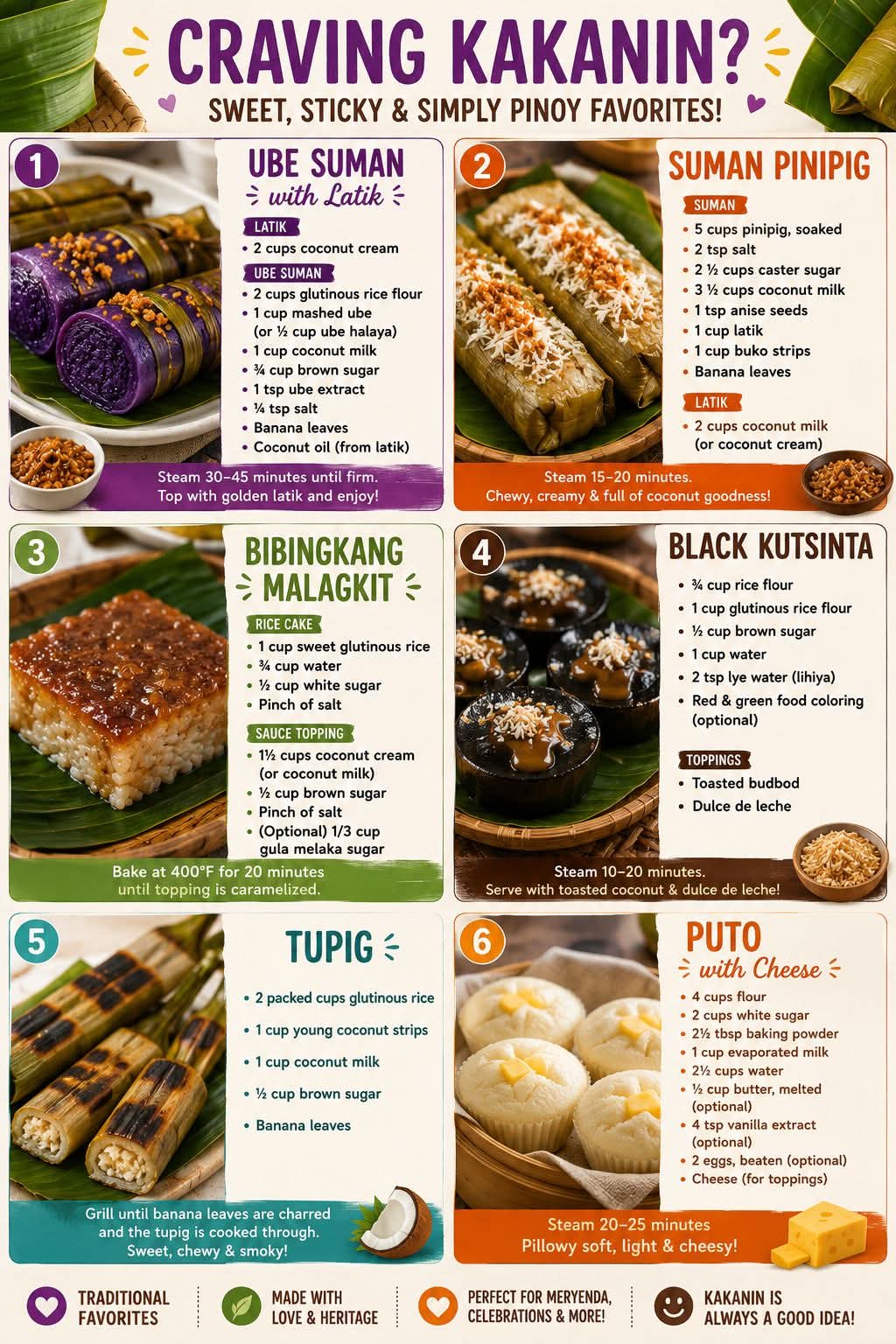
🍠✨ The Ultimate Guide to Filipino Kakanin (Traditional Rice Cakes) 🇵🇭🥥
Introduction
Kakanin is the collective name for a beloved group of traditional Filipino rice cakes made primarily from rice, glutinous rice, coconut milk, sugar, and various local ingredients. These sweet delicacies have been enjoyed for centuries and remain an essential part of Filipino culture. They are commonly served during family gatherings, fiestas, holidays, birthdays, religious celebrations, and everyday merienda (afternoon snack).
Every region in the Philippines has its own unique kakanin recipes, passed down from generation to generation. Whether steamed, baked, grilled, or wrapped in banana leaves, kakanin represents the warmth, hospitality, and culinary heritage of Filipino families.
💜 Ube Suman with Latik
History
Suman is one of the oldest Filipino rice cakes, dating back to pre-colonial times. Traditionally wrapped in banana leaves and steamed, suman was a practical food for travelers and farmers. The addition of ube (purple yam) and latik (coconut curds) creates a modern and luxurious version.
Ingredients
For the Ube Suman
- 2 cups glutinous rice
- 1 cup coconut milk
- 1 cup water
- 1 cup ube halaya
- ½ cup sugar
- Banana leaves for wrapping
For the Latik
- 2 cups coconut cream
Instructions
- Wash and soak glutinous rice for 4 hours.
- Drain and mix with coconut milk, water, sugar, and ube halaya.
- Cook over medium heat until partially cooked.
- Cool slightly.
- Wrap portions in banana leaves.
- Steam for 45–60 minutes.
- For latik, simmer coconut cream until oil separates and brown curds form.
- Sprinkle latik over the suman before serving.
Characteristics
- Soft and chewy texture
- Rich coconut flavor
- Vibrant purple color
- Sweet and creamy finish
🌾 Suman Pinipig
History
Pinipig is made from young flattened rice grains traditionally harvested by hand. Combining pinipig with suman creates a unique texture and flavor loved throughout the Philippines.
Ingredients
- 2 cups pinipig
- 1½ cups coconut milk
- ½ cup sugar
- ½ teaspoon salt
- Banana leaves
Instructions
- Soak pinipig for 30 minutes.
- Mix with coconut milk, sugar, and salt.
- Wrap portions in banana leaves.
- Tie securely.
- Steam for 45 minutes.
- Cool before serving.
Characteristics
- Nutty aroma
- Slightly crunchy texture
- Sweet coconut flavor
- Traditional appearance
🥥 Bibingkang Malagkit
History
Bibingkang Malagkit is a sticky rice cake often prepared during Christmas celebrations and family reunions. It combines sweet coconut rice with a rich caramel coconut topping.
Ingredients
Rice Layer
- 2 cups glutinous rice
- 4 cups water
- 2 cups coconut milk
- 1 cup brown sugar
Topping
- 2 cups coconut cream
- 1 cup brown sugar
Instructions
- Cook rice in water until tender.
- Stir in coconut milk and brown sugar.
- Cook until thick and sticky.
- Transfer to a greased baking dish.
- Simmer coconut cream and brown sugar until thick.
- Spread topping over rice.
- Bake at 350°F (175°C) for 25 minutes.
- Broil briefly for a caramelized finish.
Characteristics
- Sticky and chewy
- Rich caramel flavor
- Creamy coconut aroma
- Perfect for celebrations
🖤 Black Kutsinta
History
Kutsinta is a steamed rice cake influenced by Chinese cooking traditions. Its dark color comes from brown sugar and lye water.
Ingredients
- 1 cup all-purpose flour
- 1 cup tapioca flour
- 1 cup brown sugar
- 3 cups water
- 1 teaspoon lye water
- Grated coconut for topping
Instructions
- Dissolve sugar in water.
- Add flour and tapioca flour.
- Mix until smooth.
- Add lye water.
- Pour into molds.
- Steam for 40 minutes.
- Cool completely.
- Top with grated coconut.
Characteristics
- Jelly-like texture
- Deep caramel flavor
- Glossy appearance
- Delightfully chewy
🔥 Tupig
History
Tupig originates from Northern Luzon and is famous for its smoky flavor. Traditionally grilled over charcoal, it is wrapped in banana leaves and filled with sweet coconut.
Ingredients
- 2 cups glutinous rice flour
- 1 cup coconut meat
- ¾ cup brown sugar
- 2 eggs
- Banana leaves
Instructions
- Mix all ingredients thoroughly.
- Place mixture onto banana leaves.
- Fold into rectangular packets.
- Grill over charcoal.
- Turn frequently.
- Cook until lightly charred.
- Serve warm.
Characteristics
- Smoky aroma
- Soft interior
- Slightly crispy exterior
- Rich coconut flavor
🧀 Puto with Cheese
History
Puto is among the most famous Filipino steamed cakes. Originally made from fermented rice, modern versions use flour and baking powder for convenience.
Ingredients
- 2 cups all-purpose flour
- 1 cup sugar
- 1 tablespoon baking powder
- 1½ cups milk
- 2 eggs
- ½ cup melted butter
- Cheese slices
Instructions
- Mix dry ingredients.
- Add milk, eggs, and butter.
- Stir until smooth.
- Fill puto molds three-quarters full.
- Top each with cheese.
- Steam for 15–20 minutes.
- Cool slightly before serving.
Characteristics
- Soft and fluffy
- Slightly sweet
- Creamy cheese topping
- Perfect with coffee or tea
🥥 Traditional Methods of Making Kakanin
1. Steaming
The most common method used for puto, kutsinta, and suman. Steaming preserves moisture and creates a soft texture.
2. Grilling
Used for tupig and some bibingka varieties. The banana leaves impart a smoky fragrance.
3. Baking
Popular for bibingkang malagkit and festive rice cakes.
4. Wrapping in Banana Leaves
Adds aroma, prevents sticking, and preserves traditional authenticity.
5. Coconut Milk Cooking
Provides richness, creaminess, and the signature flavor of Filipino kakanin.
❤️ Why Kakanin Lovers Adore These Treats
Kakanin lovers cherish these desserts because they:
- Bring back childhood memories.
- Represent Filipino family traditions.
- Feature comforting coconut flavors.
- Offer unique chewy textures.
- Are perfect for sharing during gatherings.
- Showcase the rich agricultural heritage of the Philippines.
- Pair beautifully with coffee, tea, or hot chocolate.
Serving Suggestions
- Serve with hot chocolate (Tsokolate).
- Pair with Filipino coffee.
- Enjoy during merienda.
- Present on banana leaf-lined platters.
- Share during holidays and family reunions.
Conclusion
Filipino kakanin is more than just dessert—it is a celebration of culture, family, and tradition. From the vibrant sweetness of Ube Suman with Latik to the smoky goodness of Tupig and the fluffy delight of Cheese Puto, each rice cake tells a story of Filipino heritage. These timeless treats continue to unite generations through their comforting flavors, beautiful presentation, and the love poured into every batch. 🍠🥥🇵🇭✨❤️