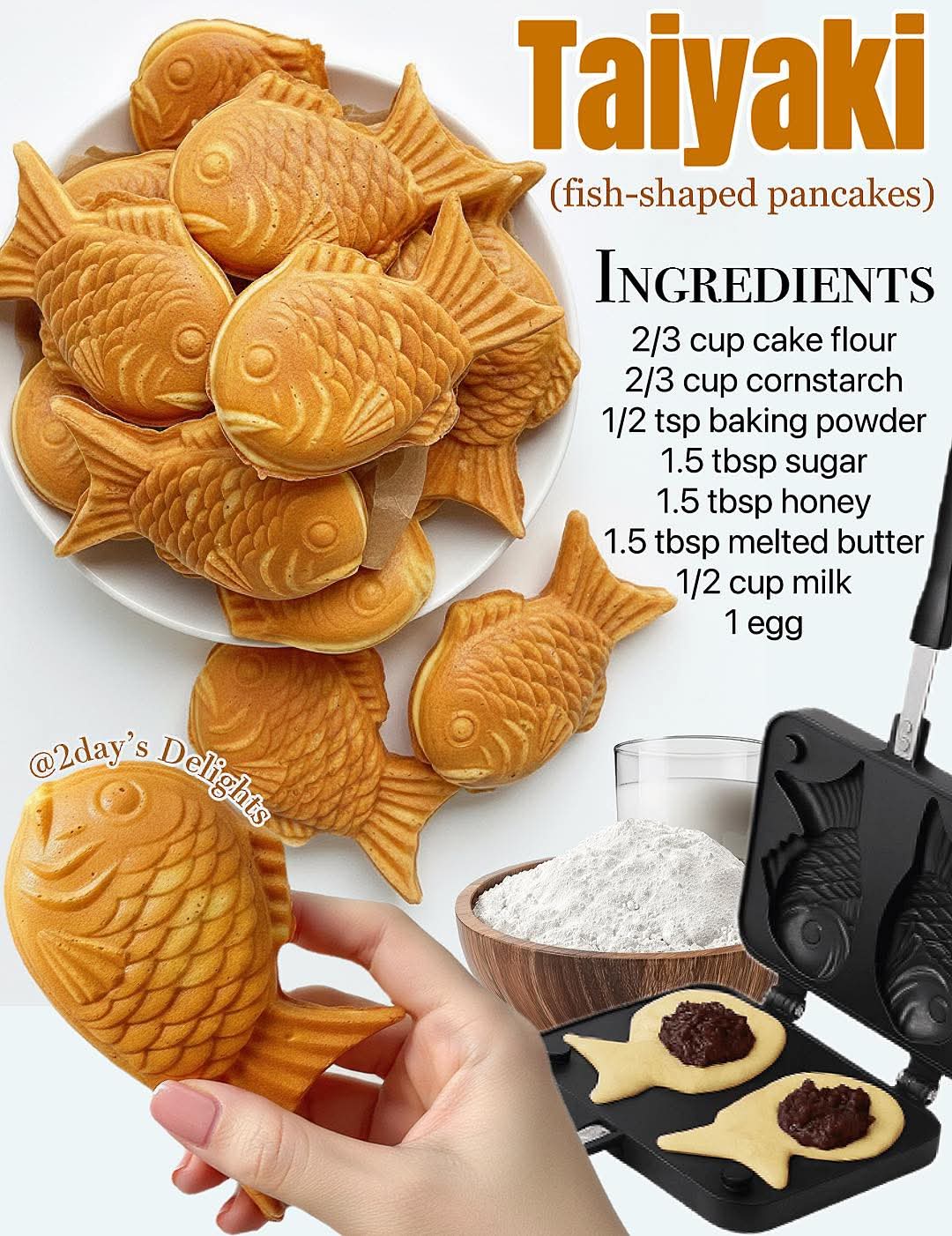
🐟 Crispy & Soft Taiyaki (Japanese Fish-Shaped Filled Cakes)
Golden on the outside, fluffy on the inside, and hiding sweet or savory surprises—taiyaki is one of Japan’s most comforting street foods. Every bite gives you a contrast: crispy edges, soft cake-like batter, and a warm filling that melts or oozes depending on what you choose.
This version is designed to be light, slightly crisp, and flexible so you can use both sweet and savory fillings.
🍡 Introduction
Taiyaki is a traditional Japanese dessert shaped like a fish (usually a sea bream). It became popular in Tokyo in the early 1900s as a creative twist on imagawayaki (round stuffed pancakes). The fish shape was chosen because sea bream (“tai” in Japanese) symbolizes luck and celebration.
Today, taiyaki is a beloved street snack across Japan and beyond, often filled with red bean paste, custard, chocolate, or even cheese and savory fillings.
🧾 Ingredients
Batter
- 2/3 cup cake flour (80g)
- 2/3 cup cornstarch (80g)
- 1/2 tsp baking powder (2g)
- 1½ tbsp white sugar (20g)
- 1½ tbsp honey (20g)
- 1½ tbsp melted butter (20g)
- 1/2 cup milk or water (100ml)
- 1 egg
Optional Fillings (choose your favorite)
- Red bean paste (classic)
- Custard cream
- Chocolate spread
- Cheese (sweet-salty version)
- Corn + mayo (savory style)
- Black sesame paste
- Sweet potato mash
👩🍳 Instructions
1. Melt the Butter
Gently melt the butter and let it cool slightly so it doesn’t cook the egg later.
2. Mix Wet Ingredients
In a bowl, whisk together the egg, sugar, honey, and melted butter until smooth and glossy.
3. Add Milk
Pour in milk (or water) and mix until fully combined.
4. Add Dry Ingredients
Sift in cake flour, cornstarch, and baking powder. Mix until smooth and lump-free. The batter should be slightly thick but pourable.
5. Rest the Batter
Cover and let the batter rest for 30 minutes. This helps the flour hydrate and gives softer texture with better crisp edges when cooked.
6. Preheat the Mold
Heat your taiyaki pan on low to medium heat. Lightly grease both sides to prevent sticking.
7. Fill the Mold
Pour batter into one side of the mold, spreading it into a fish shape. Add your filling in the center (don’t overfill or it will leak).
8. Close & Cook
Pour a little more batter on top, close the mold, and cook for about 1 minute per side (2–3 minutes total depending on heat). Flip halfway if needed.
9. Check & Remove
Open the mold and check for golden-brown color. Use a bamboo stick or spatula to gently release the taiyaki.
10. Trim & Shape
Trim any excess crispy edges for a clean fish shape (optional but gives a bakery-style finish).
🔬 Cooking Methods Explained
- Cornstarch + Cake Flour Blend: Creates a balance of crisp exterior and soft interior.
- Resting the Batter: Allows gluten relaxation and smoother texture.
- Dual-Sided Iron Cooking: Gives signature patterned crust and even browning.
- Low-Medium Heat Cooking: Prevents burning while allowing fillings to heat properly.
📜 History & Formation
Taiyaki originated in Japan during the Meiji era and became widely popular in the early 20th century. It evolved from imagawayaki, a round filled pancake.
Street vendors shaped it like a sea bream to make it more festive and symbolic. Over time, taiyaki became a cultural icon—especially associated with festivals, winter streets, and warm handheld desserts.
Modern versions now include creative fillings, from matcha custard to ice cream-filled “cold taiyaki,” showing how flexible and globally loved it has become.
💛 Conclusion
Taiyaki is more than just a snack—it’s comfort food shaped like tradition. It’s crispy, soft, warm, and endlessly customizable. Every batch feels like a small celebration, especially when you open the mold and see perfectly golden fish-shaped cakes ready to enjoy.
Fresh from the pan, they rarely stay in the plate for long.
😋 For Lovers of Sweet Street Food
If you love taiyaki, you’ll also enjoy:
- Pancakes with molten centers
- Cream-filled waffles
- Japanese dorayaki
- Custard-filled buns
Taiyaki is best enjoyed warm, shared with friends—or eaten quietly while pretending you’ll only have one… but going back for three more.
If you want, I can also make:
- or a