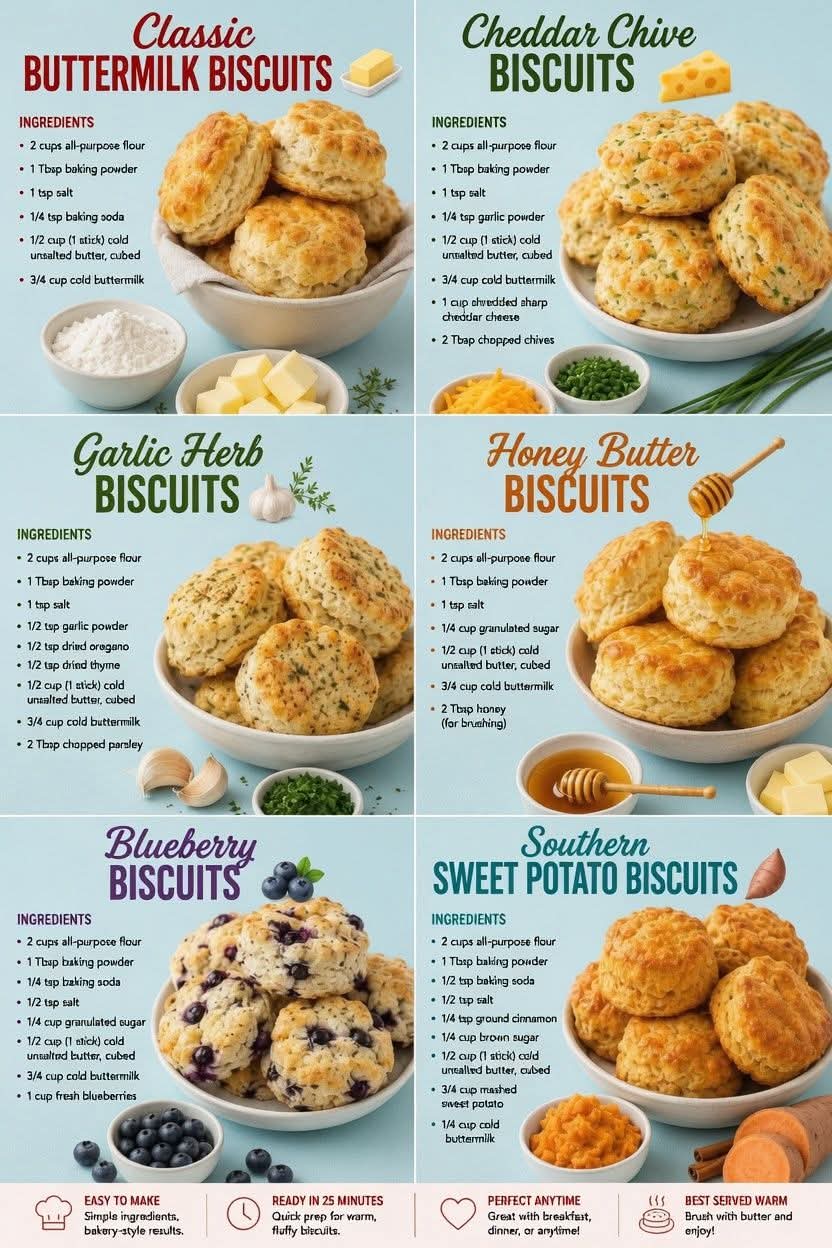
Classic Buttermilk Biscuits
🧈 Classic Buttermilk Biscuits
Introduction
Few baked goods are as comforting and timeless as a batch of warm, flaky buttermilk biscuits fresh from the oven. With their golden tops, tender layers, and rich buttery flavor, these classic biscuits have been a staple of Southern kitchens and family tables for generations. Whether served alongside breakfast, paired with soups and stews, or enjoyed simply with butter and jam, buttermilk biscuits bring warmth and homemade goodness to every meal.
The secret to perfect biscuits lies in the combination of cold butter and tangy buttermilk. As the biscuits bake, the butter creates delicate layers while the buttermilk keeps the interior moist and tender. The result is a biscuit that is crisp on the outside and wonderfully soft on the inside.
—
History of Buttermilk Biscuits
Biscuits have deep roots in American culinary history, especially in the Southern United States. Early settlers adapted European bread-making techniques to available ingredients. Since yeast was often difficult to obtain, cooks relied on baking soda and baking powder as leavening agents.
Buttermilk became a popular ingredient because it was readily available after churning butter. The natural acidity of buttermilk reacted with baking soda to create light, fluffy baked goods. Over time, buttermilk biscuits became a beloved comfort food served at family gatherings, church suppers, and holiday feasts.
Today, they remain a symbol of hospitality, tradition, and simple homemade cooking.
—
Ingredients
For the Biscuits
2 cups all-purpose flour
1 tablespoon baking powder
1 teaspoon salt
¼ teaspoon baking soda
½ cup (1 stick) cold unsalted butter, cubed
¾ cup cold buttermilk
Optional Toppings
Melted butter for brushing
Honey
Fruit preserves or jam
Sausage gravy
Cheddar cheese
Fresh herbs
—
Equipment Needed
Large mixing bowl
Pastry cutter or fork
Biscuit cutter
Baking sheet
Parchment paper
Rolling pin (optional)
Pastry brush
—
Preparation Method
Step 1: Prepare the Oven
Preheat your oven to 425°F (220°C). Line a baking sheet with parchment paper or lightly grease it.
Step 2: Combine Dry Ingredients
In a large bowl, whisk together:
Flour
Baking powder
Salt
Baking soda
Mix thoroughly to ensure even distribution.
Step 3: Cut in the Butter
Add the cold cubed butter to the flour mixture.
Using a pastry cutter or fork, work the butter into the flour until the mixture resembles coarse crumbs with pea-sized pieces of butter remaining.
Step 4: Add Buttermilk
Pour in the cold buttermilk.
Stir gently until a soft dough forms. Avoid overmixing, as this can make the biscuits tough.
Step 5: Shape the Dough
Turn the dough onto a lightly floured surface.
Gently pat it into a rectangle about 1 inch thick.
For extra flaky layers, fold the dough in half and pat it out again. Repeat this process two or three times.
Step 6: Cut the Biscuits
Use a biscuit cutter to cut straight down into the dough.
Avoid twisting the cutter, as this can prevent the biscuits from rising properly.
Step 7: Arrange for Baking
Place biscuits on the prepared baking sheet.
For softer sides, place them close together.
For crispier edges, space them apart.
Step 8: Bake
Bake for 12–15 minutes or until the tops are beautifully golden brown.
Step 9: Finish and Serve
Brush with melted butter immediately after baking.
Serve warm and enjoy.
—
Formation of Perfect Biscuit Layers
The flaky structure of buttermilk biscuits is created through a simple but fascinating process:
1. Cold butter remains in small pieces throughout the dough.
2. During baking, the butter melts and releases steam.
3. The steam creates pockets between layers of dough.
4. Baking powder and baking soda produce additional lift.
5. The result is a light, fluffy, layered biscuit with a tender crumb.
This is why keeping ingredients cold is one of the most important steps in biscuit making.
—
Expert Methods for Success
Method 1: Keep Everything Cold
Cold butter and cold buttermilk create the flakiest texture.
Method 2: Handle Gently
The less the dough is worked, the more tender the biscuits will be.
Method 3: Fold for Layers
Folding the dough several times creates bakery-style layers.
Method 4: Bake Hot
A high oven temperature helps biscuits rise quickly.
Method 5: Brush with Butter
A final brush of melted butter adds flavor and gives the tops a beautiful shine.
—
Variations
Honey Butter Biscuits
Add 2 tablespoons honey to the buttermilk.
Cheddar Biscuits
Mix in 1 cup shredded cheddar cheese.
Garlic Herb Biscuits
Add garlic powder and chopped fresh herbs.
Sweet Biscuits
Increase sugar by 2 tablespoons and serve with fruit preserves.
Bacon Biscuits
Fold cooked crumbled bacon into the dough.
—
Why Biscuit Lovers Adore This Recipe
Buttermilk biscuit lovers appreciate this recipe because it delivers:
Perfect flaky layers
Rich buttery flavor
Soft, tender centers
Crispy golden tops
Easy preparation
Versatility for breakfast, lunch, or dinner
Many home bakers treasure biscuit recipes because they represent comfort, family traditions, and the simple joy of sharing homemade food.
—
Serving Suggestions for Biscuit Lovers
Serve these biscuits with:
Fresh butter and honey
Strawberry jam
Sausage gravy
Fried chicken
Scrambled eggs
Ham and cheese
Homemade soups
Beef stew
Fresh fruit preserves
They are equally delicious for breakfast, brunch, or dinner.
—
Conclusion
Classic Buttermilk Biscuits are one of the finest examples of simple ingredients transformed into something truly special. Their flaky layers, buttery flavor, and tender texture have made them a beloved favorite for generations. Whether you’re baking them for a family breakfast, a holiday gathering, or a cozy weeknight meal, these biscuits are guaranteed to bring comfort and satisfaction to everyone at the table.
Warm, golden, and irresistibly delicious, homemade buttermilk biscuits remain a timeless baking tradition that never goes out of style. 🧈🥐✨