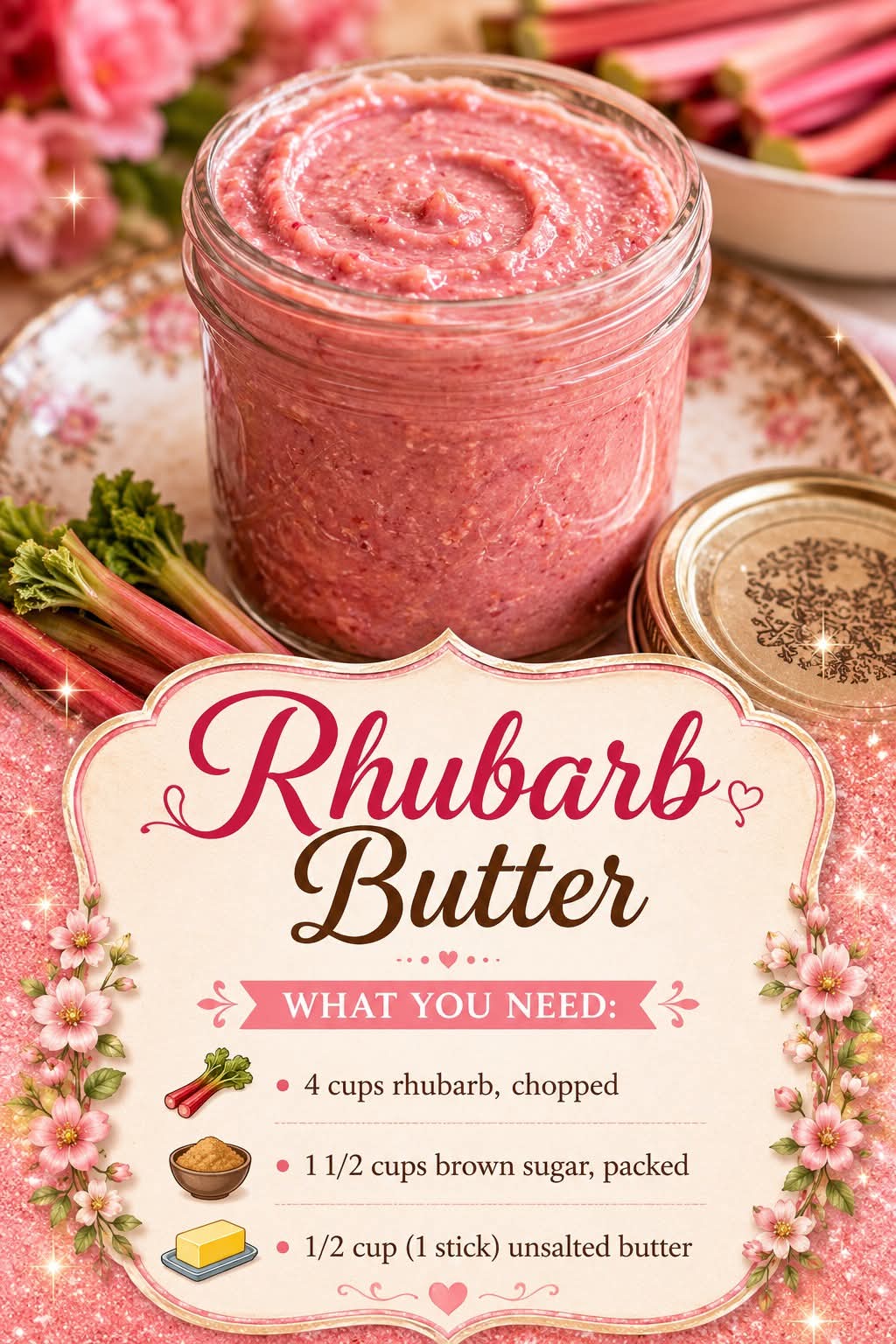
🍓 Rhubarb Butter (Sweet & Tangy Fruit Spread)
✨ Introduction
Rhubarb Butter is a smooth, velvety fruit spread made from slow-cooked , sugar, and butter. Despite the name, it contains no dairy-heavy richness like nut butter—it’s called “butter” because of its soft, spreadable texture. The result is a deep pink, glossy preserve with a perfect balance of tart and sweet, ideal for toast, pancakes, pastries, or even swirled into yogurt.
This recipe transforms humble garden rhubarb into something luxurious and comforting, with a flavor that feels both old-fashioned and timeless.
🧾 Ingredients
- 4 cups chopped rhubarb (fresh or frozen, thawed)
- 1 cup sugar
- 1/2 cup unsalted , softened
👩🍳 Instructions (Step-by-Step Method)
1. Prepare the rhubarb
Wash and chop rhubarb into small, even pieces. If using thick stalks, peel away tough strings for a smoother texture.
2. First cook (softening stage)
Place rhubarb and sugar in a heavy saucepan. Cook over medium heat, stirring occasionally until the rhubarb releases juice and breaks down (about 10–15 minutes).
3. Slow simmer (flavor building)
Reduce heat to low and continue cooking for 20–30 minutes. Stir often to prevent sticking. The mixture should become thick and jam-like.
4. Add butter
Stir in softened butter gradually. This step creates a silky, glossy finish and softens the tart edge of rhubarb.
5. Blend for smoothness (optional but recommended)
Use an immersion blender or mash thoroughly for a smooth, spreadable texture.
6. Final reduction
Simmer another 5–10 minutes until thick enough to coat a spoon.
7. Cool and store
Let cool completely, then transfer into sterilized jars. Refrigerate for up to 2–3 weeks.
🔬 Methods & Techniques Explained
- Slow simmering: Breaks down rhubarb fibers and concentrates flavor
- Sugar maceration: Draws out natural juices for a syrup base
- Fat enrichment (butter): Adds body, shine, and smooth mouthfeel
- Reduction cooking: Thickens the mixture without pectin or gel agents
- Optional blending: Creates a silky “fruit curd-like” consistency
📜 History & Formation
Rhubarb butter has roots in traditional European and North American home preserving. Rhubarb itself became popular in kitchens during the 18th and 19th centuries, especially in colder climates where it was one of the first spring harvests.
Before refrigeration, families used sugar cooking methods to preserve seasonal fruit. “Fruit butters” became a way to extend harvests into winter, especially in rural kitchens. Rhubarb butter emerged as a creative solution for its naturally tart flavor, transforming it into something sweet, spreadable, and long-lasting.
Over time, it became a nostalgic farmhouse recipe—simple, resourceful, and deeply connected to seasonal cooking.
🍽️ Serving Ideas
- Spread on warm toast or brioche
- Swirl into oatmeal or yogurt
- Fill pastries, donuts, or crepes
- Pair with cheese boards for a sweet-tart contrast
- Layer into cakes or sponge desserts
💞 “Lovers” Section (Food That Feels Like Romance)
Rhubarb Butter is not loud—it’s intimate. It’s the kind of flavor that lingers gently, like a quiet memory shared between two people in a kitchen.
For lovers of comfort food, it’s:
- A sunrise breakfast spread shared over coffee
- A homemade gift in a glass jar tied with string
- A spoonful stolen from the fridge at midnight
It pairs beautifully with soft textures—cream, buttered bread, warm pastries—foods that feel like closeness.
🧠 Final Conclusion
Rhubarb Butter is proof that simple ingredients can become something elegant with patience and heat. It turns tart spring stalks into a smooth, sweet preserve that carries both history and comfort in every spoonful.
It’s rustic, romantic, and endlessly versatile—a small jar of spring you can keep all year long.