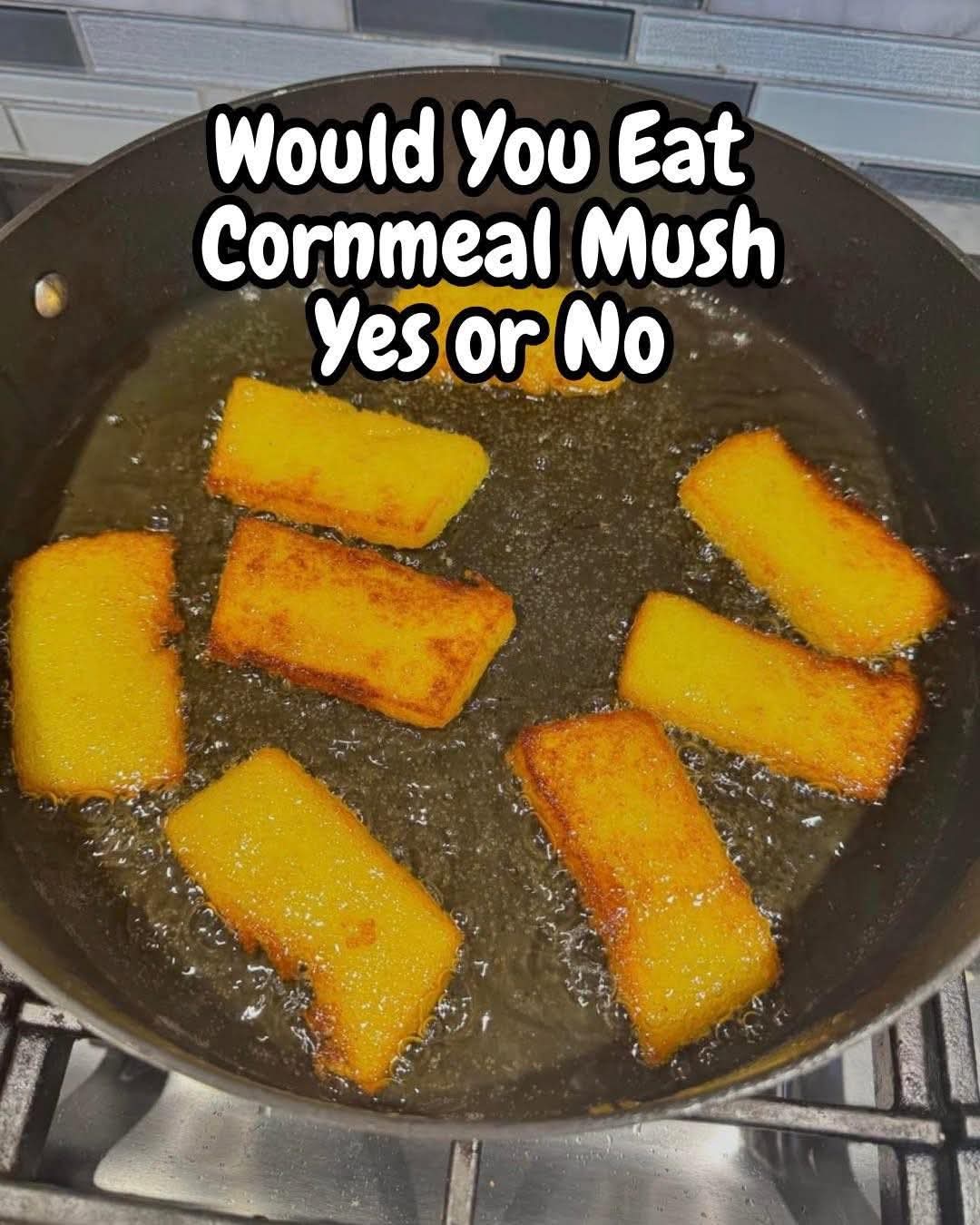
🌽 Cornmeal Mush (Old-Fashioned Comfort Food)
Cornmeal mush is one of those humble dishes that quietly carries generations of home cooking. Simple ingredients, slow cooking, and a transformation from liquid to sliceable comfort food—it’s the kind of recipe that proves how something basic can become deeply satisfying.
🧾 Ingredients
- 1 cup cornmeal (fine or medium grind)
- 4 cups water
- 1 teaspoon salt
- 2 tablespoons butter
🍳 Method / Instructions
1. Prepare the liquid base
In a medium saucepan, bring the 4 cups of water and salt to a steady boil. Make sure the water is fully bubbling before adding cornmeal.
2. Add cornmeal carefully
Slowly whisk in the cornmeal in a thin stream while stirring constantly. This step is important to avoid lumps and keep the texture smooth.
3. Cook until thickened
Reduce heat to low. Continue stirring frequently for about 10–15 minutes. The mixture will gradually thicken into a porridge-like consistency.
4. Enrich with butter
Stir in the butter while the mush is still hot. It should melt completely and blend into a smooth, glossy texture.
5. Set the mush
Pour the mixture into a greased loaf pan, dish, or container. Smooth the top evenly with a spatula.
6. Chill and firm up
Let it cool at room temperature, then refrigerate for at least 2 hours (or overnight) until fully set and firm.
7. Slice and serve
Once firm, cut into slices. You can serve it soft as-is, or pan-fry slices in butter until golden and crispy on both sides.
🔥 Cooking Method Summary
Cornmeal mush uses a gelatinization method, where heat activates starch in the cornmeal, causing it to absorb water and thicken. As it cools, it sets into a firm, sliceable loaf. When fried, the starches caramelize on the outside, creating a crispy crust while the inside stays soft.
📜 History of Cornmeal Mush
Cornmeal mush dates back centuries, especially in North American and European rural cooking traditions. Indigenous peoples first used ground maize as a staple food long before European settlers arrived. Later, settlers adopted cornmeal as an affordable, filling ingredient.
During the 18th and 19th centuries, cornmeal mush became a common breakfast and supper dish because:
- It was cheap and widely available
- It could feed large families
- It stretched ingredients during hard times
In many households, leftover mush was sliced and fried the next day—turning simple porridge into a crispy, satisfying meal.
🏗️ Formation (How It Transforms)
Cornmeal mush goes through a fascinating transformation:
- Liquid stage – watery cornmeal suspension
- Thick porridge stage – starch begins to swell
- Gel stage – structure forms as it cools
- Solid loaf stage – sliceable and firm
- Crispy fried stage (optional) – caramelized crust develops in butter
This progression is what makes it both versatile and comforting.
❤️ Ways to Enjoy (Lovers of Mush Styles)
Cornmeal mush has a surprisingly loyal fan base, and people enjoy it in different ways:
- 🧈 Classic buttery slices – simple, soft, and warm
- 🍯 Sweet version lovers – topped with honey, syrup, or sugar
- 🥓 Savory fans – paired with eggs, bacon, or gravy
- 🔥 Fried mush lovers – crispy edges with soft centers
- 🧂 Plain traditionalists – enjoy it exactly as it is
Each style reflects a different “love language” of comfort food.
🍽️ Serving Ideas
- Breakfast with maple syrup or honey
- Side dish with roasted meats or stews
- Fried slices topped with eggs
- Snack with butter and salt
🧡 Conclusion
Cornmeal mush is proof that simplicity can be timeless. With just cornmeal, water, salt, and butter, you get a dish that shifts from porridge to loaf to crispy fried comfort. It’s affordable, versatile, and deeply rooted in culinary history—yet still feels right at home on today’s table.
If you want, I can also turn this into a , , or .