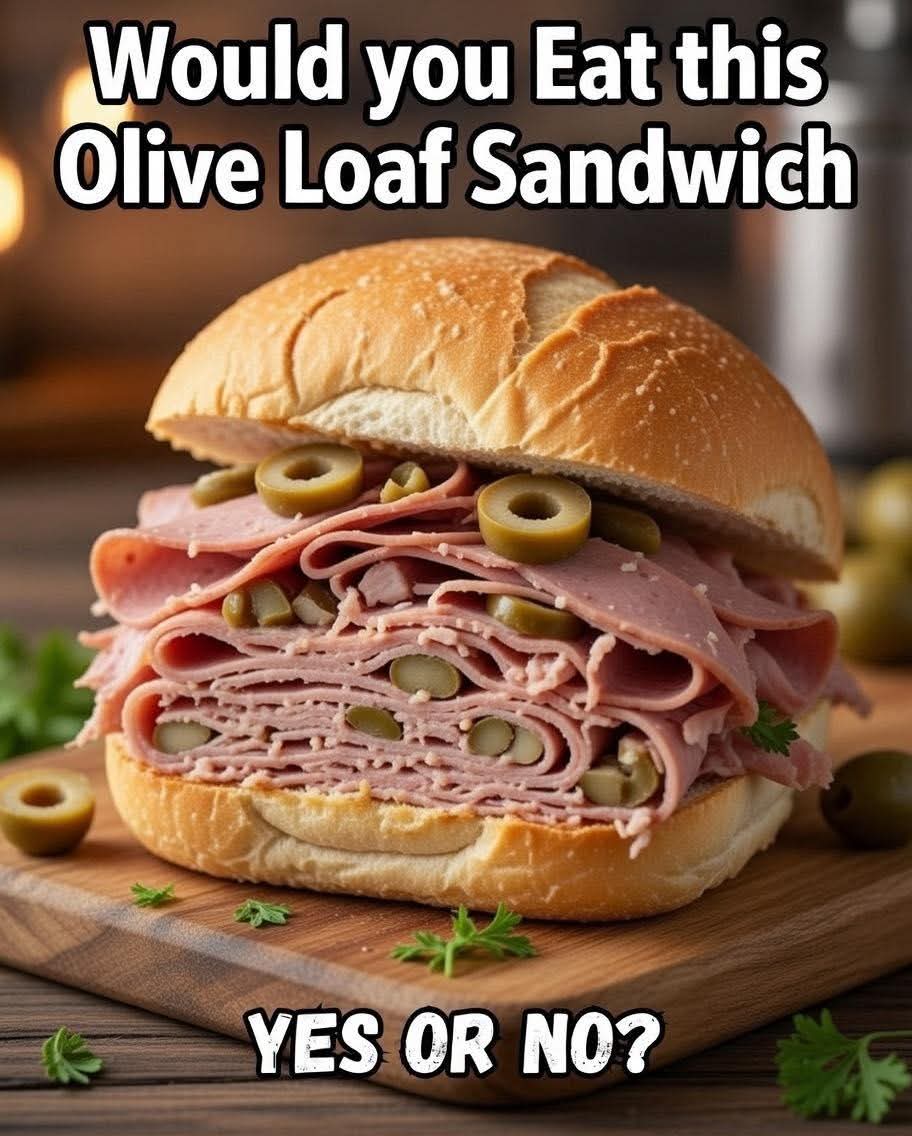
🥪✨ Olive Loaf Sandwich Deluxe ✨🥪
A nostalgic deli-style sandwich that blends creamy, savory, and slightly tangy flavors into one comforting bite. Simple ingredients, but big personality — the kind of sandwich that feels both old-fashioned and timeless.
📜 Introduction
The olive loaf sandwich is a classic American deli creation built around . It became popular in mid-20th-century delis when sliced luncheon meats were a quick, affordable, and satisfying lunch option.
What makes it special is contrast: salty olives inside soft, seasoned meat paired with creamy spreads and fresh vegetables. It’s not fancy — but it’s memorable, especially for anyone who grew up with deli counters or picnic lunches.
🛒 Ingredients
🥪 Base
- 🍞 4 slices sandwich bread (white, whole wheat, or brioche)
🥩 Main filling
- 🍖 6–8 slices olive loaf
🧴 Spreads & flavor
- 🥄 2 tbsp mayonnaise
- 🌭 1 tsp yellow mustard (optional)
🧀 Optional upgrades
- 🧀 2 slices cheddar or American cheese
🥬 Fresh layers
- 🥬 Lettuce leaves
- 🍅 Tomato slices
🧂 Seasoning
- Freshly ground black pepper, to taste
👩🍳 Instructions (Step-by-Step Method)
1️⃣ Prepare the bread
Lightly toast the bread if you want a warm, crisp texture. For a deli-style feel, keep it soft and fresh.
2️⃣ Build the flavor base
Spread mayonnaise evenly on all bread slices. Add mustard if you want a sharper, tangy kick.
3️⃣ Layer the olive loaf
Place slices of evenly on two slices of bread. Make sure full coverage for balanced bites.
4️⃣ Add extras
Layer cheese first (so it slightly melts against the meat), then lettuce and tomato for freshness. Sprinkle black pepper lightly.
5️⃣ Assemble
Top with remaining bread slices, mayo side facing inward.
6️⃣ Slice & serve
Cut diagonally for a classic deli presentation. Serve immediately for best texture and freshness.
🔬 Method (Cooking Logic Behind It)
This sandwich works through layer balancing:
- 🧂 Saltiness from olive loaf
- 🧴 Creaminess from mayonnaise
- 🥬 Fresh crunch from vegetables
- 🧀 Fat richness from optional cheese
- 🍞 Soft base that absorbs flavors without overpowering
No cooking required — just assembly, which is why it became a deli staple.
📚 History & Formation
Olive loaf emerged as part of early 20th-century processed deli meats in the United States. It was inspired by European sausage-making traditions, where olives and cured meats were often combined.
As delis expanded in American cities after World War II, olive loaf became a recognizable lunch meat because it was:
- Affordable
- Pre-sliced and convenient
- Flavorful without extra seasoning
The sandwich form evolved naturally — bread + deli meat + simple spreads = fast lunch culture.
❤️ “Lovers” Section (Why People Love It)
🥪 Deli lovers appreciate its nostalgic taste
🧑🍳 Home cooks love how fast it comes together
🧂 Flavor fans enjoy the salty olive bursts in every bite
🍱 Busy eaters love it as a no-cook meal
🧡 Comfort food lovers see it as simple, old-school satisfaction
Some say it tastes like a “retro lunch counter memory” — simple, but oddly comforting.
🔄 Variations & Methods of Enjoyment
- 🔥 Toasted version: grilled like a panini for a melty bite
- 🥗 Light version: skip cheese and use extra lettuce
- 🌶️ Spicy version: add hot mustard or chili flakes
- 🧄 Garlic mayo version: mix garlic into mayo for extra depth
- 🥒 Crunch version: add pickles or cucumbers
🍽️ Conclusion
The olive loaf sandwich is proof that simplicity can still be flavorful. It doesn’t rely on fancy ingredients or complex cooking — just balance, texture, and a bit of deli tradition.
It’s the kind of sandwich that quietly wins you over: not loud, not trendy, just reliably satisfying every time.
If you want, I can also turn this into a , a , or a .