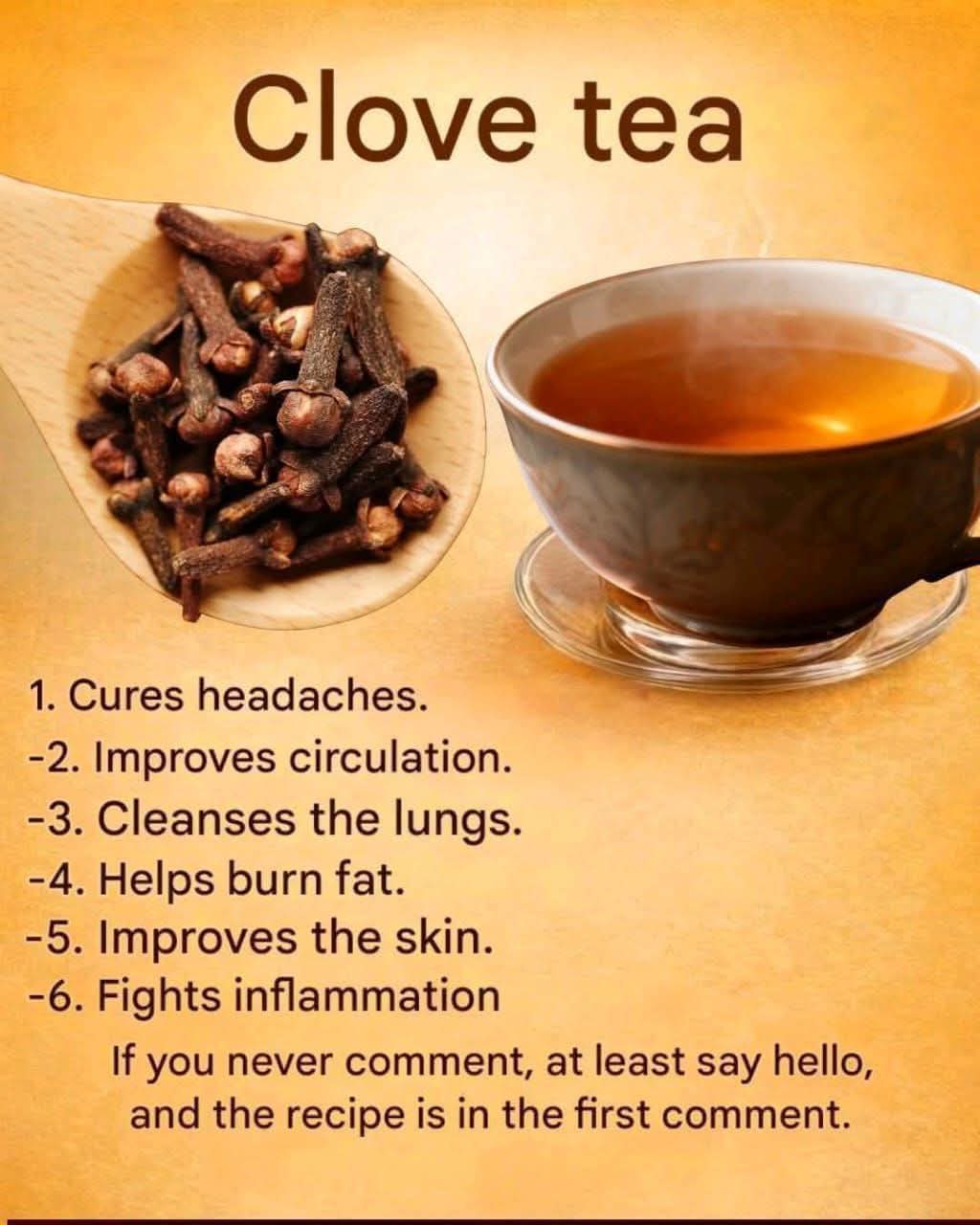
Clove tea has been enjoyed for centuries across Asia, the Middle East, and parts of Europe, often valued for its warm, aromatic comfort and deeply spiced flavor. Recently, it’s been trending again in wellness circles after claims (sometimes exaggerated online) about nighttime relaxation rituals inspired by traditional herbal practices. While it’s not a medical cure for anything, it is a soothing caffeine-free drink that many people enjoy before bed.
Here’s a full, rich guide to making it properly.
🌿✨ Clove Tea – Warm Nighttime Comfort Brew
📖 Introduction
Clove tea is a simple herbal infusion made from dried flower buds of the clove plant. Known for its intense aroma and naturally warming spice, it has been used in traditional remedies and home drinks for generations.
In many cultures, cloves were treasured more than gold at certain points in history due to their strong flavor, preservative qualities, and medicinal folklore uses. Today, clove tea is mainly enjoyed as a cozy evening drink that feels grounding and calming.
🌸 Ingredients
- 1 to 2 teaspoons whole cloves (or 6–10 cloves)
- 2 cups water
- 1 teaspoon honey (optional, for sweetness)
- 1 small cinnamon stick (optional, for warmth)
- 2–3 slices fresh ginger (optional, for extra spice)
- 1 slice lemon (optional, for brightness)
🍵 Instructions (Step-by-Step Method)
1. Prepare the cloves
Lightly crush the cloves using a spoon or mortar. This helps release their natural oils and boosts flavor.
2. Boil the water
In a small pot, bring 2 cups of water to a gentle boil.
3. Add spices
Add cloves (and cinnamon or ginger if using). Reduce heat to low.
4. Simmer
Let it simmer for 8–12 minutes. The water will turn slightly amber and fragrant.
5. Strain
Pour the tea through a strainer into a cup to remove spices.
6. Finish
Add honey and lemon if desired. Stir gently.
🔬 Methods & Brewing Variations
🌿 Traditional simmer method
Slow boiling extracts the deepest flavor from cloves. Best for strong tea lovers.
☕ Quick infusion method
Pour boiling water over crushed cloves and steep for 10–15 minutes. Lighter taste, faster preparation.
🫖 Concentrated night blend
Use more cloves (10–15) and longer simmer (15 minutes) for a strong aromatic brew often used in evening routines.
🍯 Sweet comfort version
Add honey + cinnamon for a dessert-like tea.
🍋 Detox-style version
Add lemon and ginger for a fresh, sharp herbal profile.
📜 History & Cultural Background
Cloves come from the flower buds of the evergreen tree native to Indonesia’s Maluku Islands (historically known as the “Spice Islands”). For centuries, they were a highly prized trading spice.
- Ancient Chinese and Ayurvedic traditions used cloves for digestion and breath freshness.
- Medieval European medicine used clove infusions for warmth and aroma therapy.
- In Middle Eastern tea culture, cloves are often combined with cardamom and cinnamon in spiced blends.
Clove tea itself likely evolved as a simple home remedy-style infusion rather than a formal ancient “recipe,” but it became popular wherever cloves were traded.
🧪 Formation (How the Flavor Develops)
When cloves are heated in water:
- Eugenol compounds are released → creates the warm, slightly numbing sensation
- Natural oils dissolve → giving deep aromatic spice
- Bitterness softens with slow simmering
- Sweetness (if added) balances intensity
The result is a bold, warming infusion with a slightly peppery, sweet-spice finish.
💕 Lovers’ Variations (Romantic Clove Tea Ideas)
Clove tea is often included in “cozy night” drink rituals shared between couples. Here are some romantic twists:
❤️ Honey & Vanilla Clove Tea
Add a drop of vanilla extract + honey for a soft dessert-like aroma.
💖 Rose Clove Tea
Add dried rose petals while steeping for floral sweetness.
💞 Cinnamon-Clove Love Blend
Mix equal parts cinnamon and clove for a warm, comforting shared cup.
💘 Milk Clove Latte
Add warm milk or oat milk to make it creamy and soothing.
🌙 Conclusion
Clove tea is not complicated, but it delivers a powerful sensory experience—spicy, warm, aromatic, and comforting. Whether you’re drinking it for relaxation, tradition, or simply curiosity, it’s a beautiful example of how a single spice can become a calming nighttime ritual.
It works best when enjoyed slowly, in a quiet moment, letting the aroma do most of the “work.”
If you want, I can also turn this into a viral-style TikTok script or a “Japanese doctor wellness routine” post format.