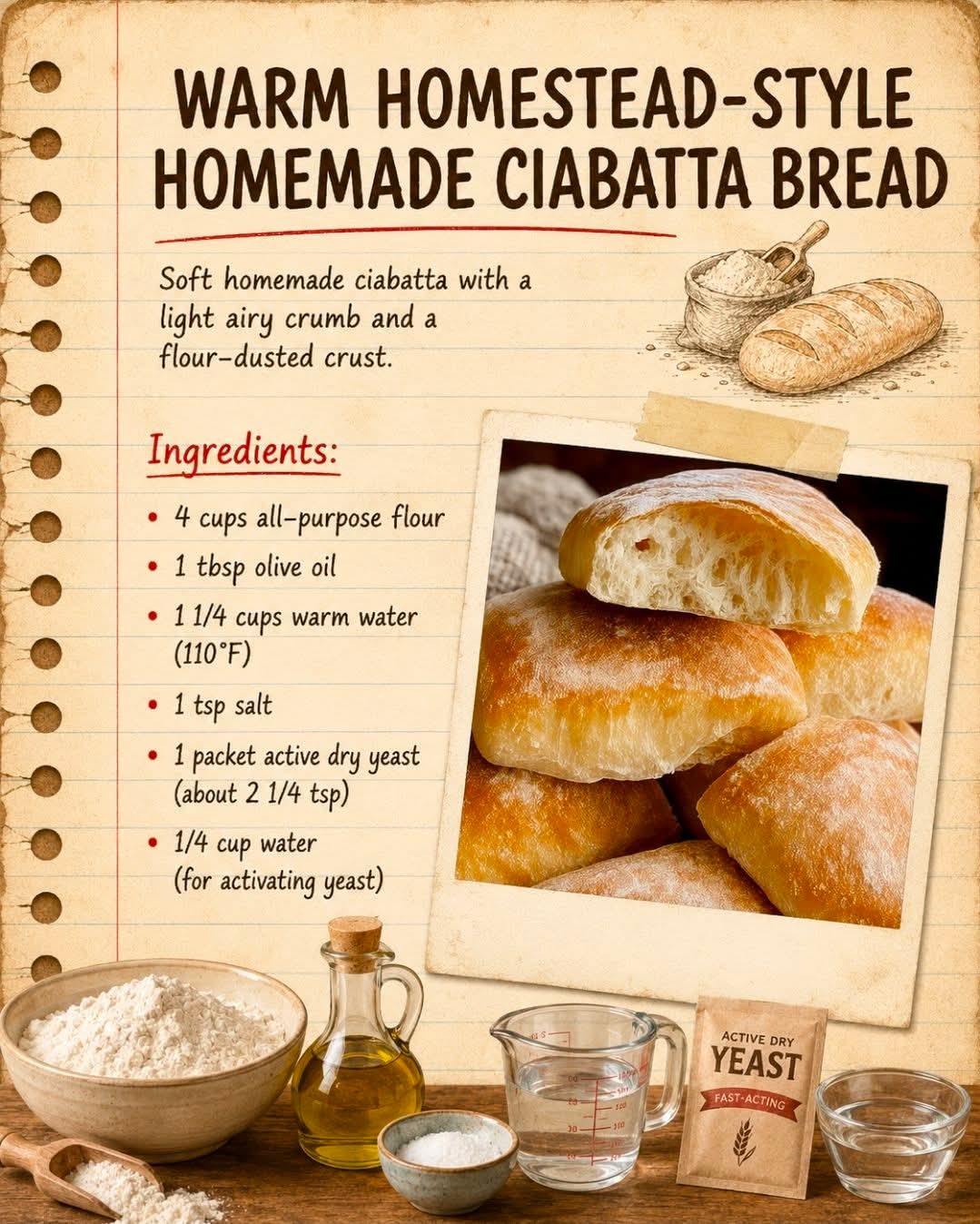
That “lovers with methods with lovers” part sounds like a copy-paste glitch, so I’ll clean it up and give you a proper, rich Italian bread-style recipe with all the sections you asked for.
Let’s go with a classic your Italian friend might realistically share: Rustic Italian Focaccia Bread—simple, golden, and unforgettable.
🇮🇹 Rustic Italian Focaccia Bread
🌿 Introduction
Focaccia is one of Italy’s most beloved breads, known for its soft, airy interior and crisp olive-oil crust. It’s often called the “mother of pizza” because it predates modern pizza and inspired many flatbreads around the world. Traditionally baked in wood-fired ovens, focaccia is more than food—it’s a symbol of Italian home baking, hospitality, and simplicity.
What makes it special is how a few humble ingredients transform into something rich, fragrant, and deeply satisfying.
🧂 Ingredients
- 500 g strong bread flour
- 325 ml warm water
- 7 g instant yeast (or 25 g fresh yeast)
- 10 g salt
- 1 tsp sugar
- 4 tbsp extra virgin olive oil (plus more for drizzling)
- Fresh rosemary (optional but traditional)
- Sea salt flakes for topping
👩🍳 Instructions & Methods
1. Activate the dough
In a large bowl, mix warm water, yeast, and sugar. Let it sit for 5–10 minutes until foamy. This shows the yeast is alive and ready.
2. Build the dough
Add flour, salt, and olive oil. Mix until a sticky dough forms. Don’t worry about smoothness—focaccia dough is meant to be wet and soft.
3. First rise
Cover the bowl and let the dough rest for 1–2 hours in a warm place until it doubles in size.
4. Stretch and fold (traditional method)
Instead of heavy kneading, gently stretch and fold the dough in the bowl every 20–30 minutes during the first hour. This builds structure without losing airiness.
5. Shape the dough
Pour olive oil into a baking tray. Transfer dough and gently stretch it to fit the pan. Let it rest again for 30–45 minutes.
6. Dimple and flavor
Press your fingers into the dough to create signature dimples. Drizzle generously with olive oil, sprinkle rosemary and sea salt.
7. Bake
Bake at 220°C (425°F) for 20–25 minutes until golden brown and crisp on top.
8. Cool and serve
Let it cool slightly before slicing. The aroma will be irresistible.
📜 History
Focaccia dates back to ancient Roman times, where it was called “panis focacius”—meaning “hearth bread.” It was baked directly on hot stones or ashes in fireplaces. Over centuries, it became a staple across Italian regions, especially Liguria, where modern focaccia reached perfection with olive oil and sea salt.
Each region in Italy has its own variation—some topped with tomatoes, olives, onions, or even cheese.
🧬 Formation (Why it works)
The magic of focaccia lies in:
- High hydration dough → creates airy holes
- Olive oil infusion → gives flavor + crisp crust
- Gentle handling → preserves bubbles inside
- Slow fermentation → improves texture and taste
This combination creates a bread that is soft inside, crispy outside, and deeply aromatic.
❤️ Lovers of Focaccia
Focaccia is loved by:
- Italian families serving it with olive oil and balsamic vinegar
- Bakers who enjoy rustic, forgiving doughs
- Street food lovers using it for sandwiches
- Anyone who loves warm, fresh bread straight from the oven
It’s the kind of bread that disappears quickly from the table—often before the main meal even arrives.
🍞 Conclusion
Focaccia isn’t just bread—it’s a warm piece of Italian tradition. It’s simple enough for beginners but satisfying enough for experienced bakers. Once you make it at home, it often becomes a weekly habit.
Soft, golden, fragrant, and endlessly customizable—it’s no surprise your Italian friend said it made them happier. Bread like this has that effect.
If you want, I can also give you the exact Italian version (Genovese focaccia, olive-stuffed, or cheesy focaccia breadsticks) or even your friend’s likely authentic regional version.