🥐
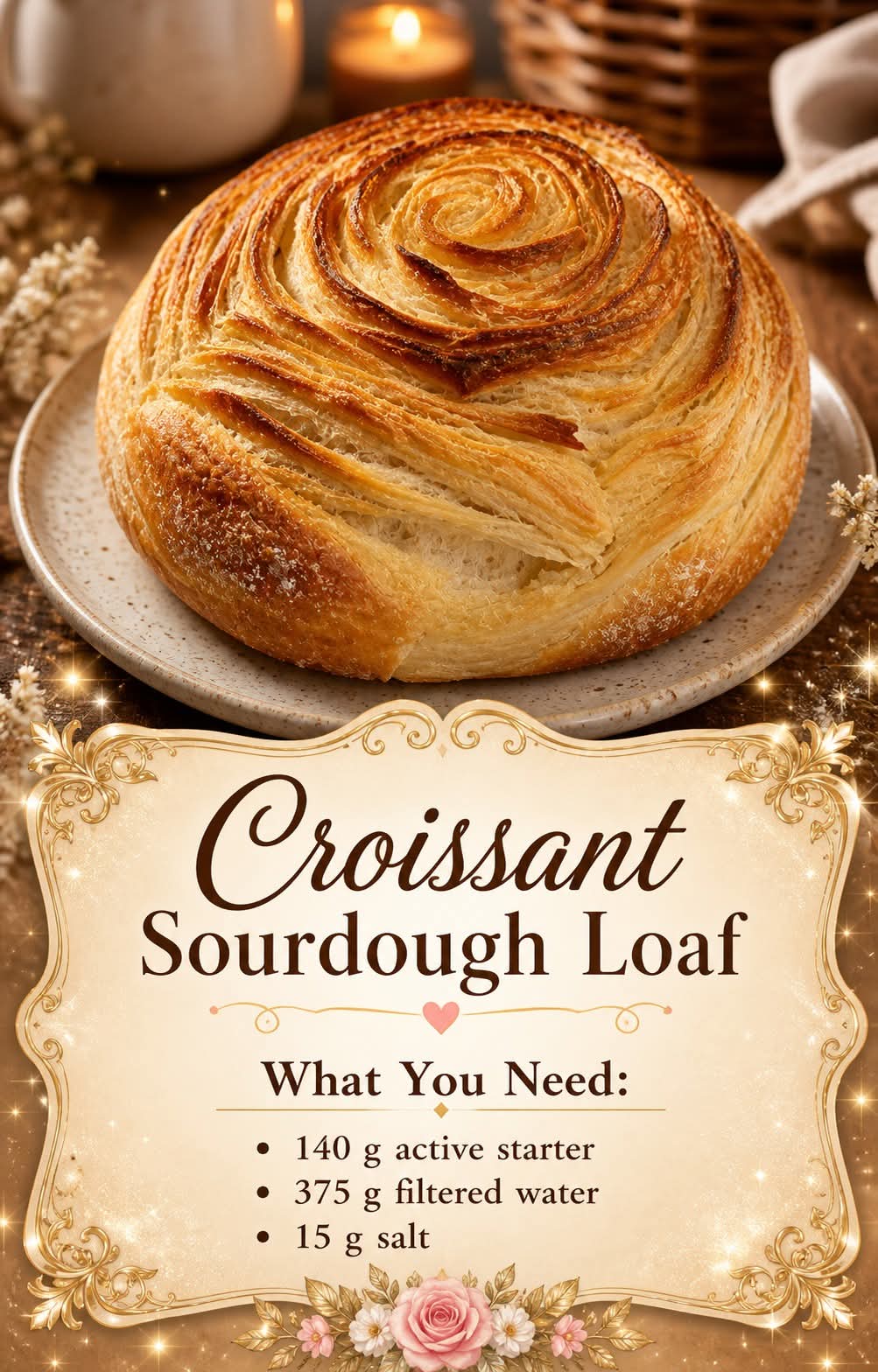
🥐 Croissant Sourdough Loaf (Flaky, Buttery & Fermented Perfection)
🌾 Introduction
This croissant-style sourdough loaf is what happens when classic sourdough bread meets the buttery, laminated layers of a croissant. The result is a loaf that bakes up golden, airy, slightly tangy, and beautifully layered inside—like a bakery pastry, but shaped into a sliceable loaf.
Unlike traditional croissants that require precise lamination and cold butter blocks, this version simplifies the process while still giving you that signature flaky, tear-apart texture. It relies on a strong, active sourdough starter and careful folding to build structure and layers over time.
It’s the kind of bake that feels rustic yet luxurious at the same time.
🧾 Ingredients
Dough Base
- 140 g active sourdough starter (bubbly and at peak)
- 375 g filtered water (room temperature)
- 500 g strong bread flour (high protein preferred)
- 10 g salt
- 20–30 g sugar (optional, but enhances browning and softness)
Butter Layer (Key to “croissant” effect)
- 120–150 g cold unsalted butter (thinly sliced or flattened into sheets)
🧑🍳 Method Overview
This loaf is built in stages:
- Mixing and autolyse
- Strength building folds
- Laminating with butter
- Cold fermentation
- Final shaping and baking
Each step contributes to the airy, layered crumb.
🔪 Step-by-Step Instructions
1. Mix the Dough
In a large bowl, combine:
- sourdough starter
- water
- flour
Mix until no dry flour remains. Cover and rest for 30–60 minutes (this is the autolyse stage).
Then add:
- salt
- sugar (if using)
Mix again until fully incorporated.
2. Build Strength (Stretch & Folds)
Over the next 2–3 hours:
- Perform 3–4 sets of stretch and folds, every 30–45 minutes.
The dough should become smoother, elastic, and slightly airy.
3. Lamination Stage (The “Croissant” Magic)
After the final fold and a short rest:
- Roll the dough into a large rectangle.
- Place thin slices of cold butter across the surface.
- Fold the dough like a letter (or envelope style).
- Repeat a gentle roll + fold once more.
This traps butter between layers, creating that croissant-like flake structure.
4. Bulk Fermentation
Place dough in a lightly oiled bowl:
- Cover and let ferment 4–8 hours at room temperature
OR - Refrigerate overnight (8–12 hours) for deeper flavor and easier handling
The dough should rise noticeably and feel airy.
5. Shape the Loaf
- Turn dough onto a lightly floured surface
- Shape into a tight loaf or batard
- Place into a lined loaf pan or proofing basket
Rest for 1–2 hours (or cold proof if not already refrigerated).
6. Bake
Preheat oven:
- 240°C (465°F)
Bake:
- 20 minutes with steam (or covered)
- Reduce to 200°C (390°F) for 20–25 minutes uncovered
The crust should turn deep golden brown and crisp.
🧠 Methods & Baking Science
This recipe relies on three key techniques:
1. Fermentation
The sourdough starter provides natural yeast and bacteria, creating:
- flavor complexity
- structure
- light acidity
2. Gluten Development
Stretching and folding builds a strong gluten network that traps gas and supports layering.
3. Lamination
Butter is folded into the dough in thin layers. During baking:
- water in butter turns to steam
- layers separate slightly
- crumb becomes flaky and airy
This is what gives the “croissant illusion” inside a loaf structure.
📜 A Bit of History & Inspiration
Traditional croissants come from Austrian kipferl pastries, later refined in France into the laminated butter pastry we know today. Sourdough bread, on the other hand, is one of the oldest fermented foods in human history.
This recipe is a modern fusion:
- French pastry technique (lamination)
- ancient fermentation (sourdough)
- modern home baking simplification
It represents how baking evolves—blending tradition with creativity.
🧱 Formation (What Happens Inside the Dough)
During baking, the loaf transforms:
- Yeast produces gas → creates lift
- Gluten traps gas → builds structure
- Butter melts → separates layers
- Steam expands → creates airy pockets
- Crust caramelizes → deep flavor + crunch
The result is a loaf with:
- crisp exterior
- tender, layered interior
- buttery aroma
- slight tang from fermentation
💛 Tips, “Lovers” Variations & Creative Twists
If we interpret “lovers” as ways people love to customize it, here are some popular variations:
🍯 Sweet Lovers Version
- Add cinnamon sugar between butter layers
- Drizzle honey after baking
- Add vanilla to dough
🧀 Savory Lovers Version
- Add shredded cheddar or parmesan
- Mix herbs like rosemary or thyme
- Sprinkle garlic butter layers
🍫 Dessert Version
- Add chocolate chunks during lamination
- Finish with powdered sugar
🧈 Extra Flaky Version
- Do two rounds of lamination instead of one
- Chill dough between folds for sharper layers
🏁 Conclusion
This croissant sourdough loaf is more than just bread—it’s a hybrid bake that bridges patience, technique, and creativity. It rewards attention with layers that feel indulgent but still rustic, and a flavor that balances buttery richness with sourdough depth.
It’s the kind of loaf that makes you stop slicing just to admire the crumb.
If anything, the hardest part isn’t making it—it’s waiting for it to cool before tearing into it.
(Flaky, Buttery & Fermented Perfection)
🌾 Introduction
This croissant-style sourdough loaf is what happens when classic sourdough bread meets the buttery, laminated layers of a croissant. The result is a loaf that bakes up golden, airy, slightly tangy, and beautifully layered inside—like a bakery pastry, but shaped into a sliceable loaf.
Unlike traditional croissants that require precise lamination and cold butter blocks, this version simplifies the process while still giving you that signature flaky, tear-apart texture. It relies on a strong, active sourdough starter and careful folding to build structure and layers over time.
It’s the kind of bake that feels rustic yet luxurious at the same time.
🧾 Ingredients
Dough Base
- 140 g active sourdough starter (bubbly and at peak)
- 375 g filtered water (room temperature)
- 500 g strong bread flour (high protein preferred)
- 10 g salt
- 20–30 g sugar (optional, but enhances browning and softness)
Butter Layer (Key to “croissant” effect)
- 120–150 g cold unsalted butter (thinly sliced or flattened into sheets)
🧑🍳 Method Overview
This loaf is built in stages:
- Mixing and autolyse
- Strength building folds
- Laminating with butter
- Cold fermentation
- Final shaping and baking
Each step contributes to the airy, layered crumb.
🔪 Step-by-Step Instructions
1. Mix the Dough
In a large bowl, combine:
- sourdough starter
- water
- flour
Mix until no dry flour remains. Cover and rest for 30–60 minutes (this is the autolyse stage).
Then add:
- salt
- sugar (if using)
Mix again until fully incorporated.
2. Build Strength (Stretch & Folds)
Over the next 2–3 hours:
- Perform 3–4 sets of stretch and folds, every 30–45 minutes.
The dough should become smoother, elastic, and slightly airy.
3. Lamination Stage (The “Croissant” Magic)
After the final fold and a short rest:
- Roll the dough into a large rectangle.
- Place thin slices of cold butter across the surface.
- Fold the dough like a letter (or envelope style).
- Repeat a gentle roll + fold once more.
This traps butter between layers, creating that croissant-like flake structure.
4. Bulk Fermentation
Place dough in a lightly oiled bowl:
- Cover and let ferment 4–8 hours at room temperature
OR - Refrigerate overnight (8–12 hours) for deeper flavor and easier handling
The dough should rise noticeably and feel airy.
5. Shape the Loaf
- Turn dough onto a lightly floured surface
- Shape into a tight loaf or batard
- Place into a lined loaf pan or proofing basket
Rest for 1–2 hours (or cold proof if not already refrigerated).
6. Bake
Preheat oven:
- 240°C (465°F)
Bake:
- 20 minutes with steam (or covered)
- Reduce to 200°C (390°F) for 20–25 minutes uncovered
The crust should turn deep golden brown and crisp.
🧠 Methods & Baking Science
This recipe relies on three key techniques:
1. Fermentation
The sourdough starter provides natural yeast and bacteria, creating:
- flavor complexity
- structure
- light acidity
2. Gluten Development
Stretching and folding builds a strong gluten network that traps gas and supports layering.
3. Lamination
Butter is folded into the dough in thin layers. During baking:
- water in butter turns to steam
- layers separate slightly
- crumb becomes flaky and airy
This is what gives the “croissant illusion” inside a loaf structure.
📜 A Bit of History & Inspiration
Traditional croissants come from Austrian kipferl pastries, later refined in France into the laminated butter pastry we know today. Sourdough bread, on the other hand, is one of the oldest fermented foods in human history.
This recipe is a modern fusion:
- French pastry technique (lamination)
- ancient fermentation (sourdough)
- modern home baking simplification
It represents how baking evolves—blending tradition with creativity.
🧱 Formation (What Happens Inside the Dough)
During baking, the loaf transforms:
- Yeast produces gas → creates lift
- Gluten traps gas → builds structure
- Butter melts → separates layers
- Steam expands → creates airy pockets
- Crust caramelizes → deep flavor + crunch
The result is a loaf with:
- crisp exterior
- tender, layered interior
- buttery aroma
- slight tang from fermentation
💛 Tips, “Lovers” Variations & Creative Twists
If we interpret “lovers” as ways people love to customize it, here are some popular variations:
🍯 Sweet Lovers Version
- Add cinnamon sugar between butter layers
- Drizzle honey after baking
- Add vanilla to dough
🧀 Savory Lovers Version
- Add shredded cheddar or parmesan
- Mix herbs like rosemary or thyme
- Sprinkle garlic butter layers
🍫 Dessert Version
- Add chocolate chunks during lamination
- Finish with powdered sugar
🧈 Extra Flaky Version
- Do two rounds of lamination instead of one
- Chill dough between folds for sharper layers
🏁 Conclusion
This croissant sourdough loaf is more than just bread—it’s a hybrid bake that bridges patience, technique, and creativity. It rewards attention with layers that feel indulgent but still rustic, and a flavor that balances buttery richness with sourdough depth.
It’s the kind of loaf that makes you stop slicing just to admire the crumb.
If anything, the hardest part isn’t making it—it’s waiting for it to cool before tearing into it.