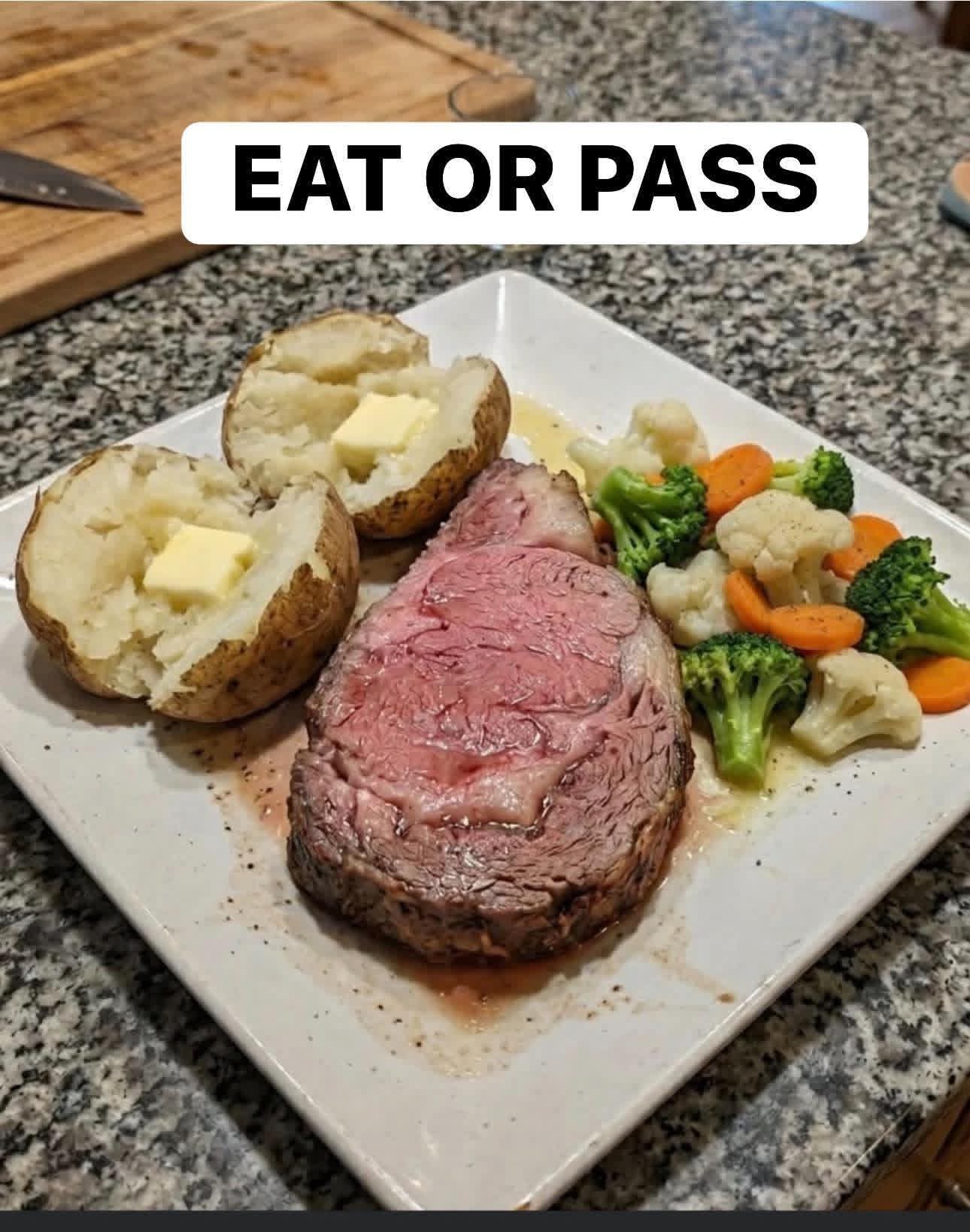
That still sounds like a solid birthday dinner — prime rib with all those sides is a serious feast. If it came out a bit more done than medium-rare, that usually comes down to temperature control, not your effort. Let’s turn this into a full, “restaurant-style” master recipe you can reuse and refine.
🥩 Prime Rib Roast Birthday Dinner (Full Master Recipe)
✨ Introduction
Prime rib roast is one of the most iconic celebration dishes in the world — rich, tender, deeply beefy, and traditionally served for holidays, birthdays, and family feasts. It’s a centerpiece cut that rewards patience and gentle cooking. When done right, it delivers a buttery medium-rare center with a flavorful crust.
Even when slightly over your target doneness (like yours turned out), it still carries incredible flavor when paired with roasted vegetables and baked potatoes, making it a complete celebration plate.
🧾 Ingredients
🥩 For the Prime Rib
- 1 bone-in prime rib roast (2–4 kg depending on guests)
- 2–3 tbsp olive oil or melted butter
- 1–2 tbsp kosher salt
- 1 tbsp black pepper
- 1 tbsp garlic powder (or 6 fresh garlic cloves, minced)
- 1 tbsp fresh rosemary (or 1 tsp dried)
- 1 tbsp fresh thyme (or 1 tsp dried)
- Optional: 1 tsp smoked paprika for deeper crust
🥔 Vegetables & Sides
- 4–6 large potatoes (for baking)
- 2 cups carrots, peeled and cut
- 2 cups broccoli florets
- 2 cups cauliflower florets
- Olive oil
- Salt & pepper
- Butter (for potatoes)
- Optional: sour cream, cheese, chives
🔥 Method / Instructions
🥩 1. Preparing the Prime Rib
- Remove the roast from the fridge at least 2–3 hours before cooking (important for even doneness).
- Pat dry with paper towels.
- Rub all over with olive oil or melted butter.
- Season heavily with salt, pepper, garlic, herbs, and spices.
- Let it sit while oven preheats — this builds flavor into the crust.
🔥 2. Roasting Method (Best Control Method)
- Preheat oven to 120–130°C (250–265°F).
- Place roast on a rack in a roasting pan (fat side up).
- Roast slowly until internal temperature reaches:
- 48–50°C (118–122°F) for medium-rare target (before resting)
- This usually takes 3–5 hours depending on size.
👉 IMPORTANT LESSON (your issue): If the thermometer is unreliable, always double-check with:
- A second thermometer
- Or test in multiple thick areas of the meat
🔥 3. Final Sear (Crust Stage)
- Remove roast and let it rest while you increase oven to 230°C (450°F).
- Return roast for 10–15 minutes to develop a deep crust.
- Remove and rest again.
⏳ 4. Resting (CRUCIAL)
- Rest at least 25–40 minutes
- Internal temperature will rise 3–5°C naturally
This step is where juiciness is locked in — skipping it leads to dry meat.
🥕 Vegetables & Sides Method
🥔 Baked Potatoes
- Rub potatoes with oil and salt.
- Bake at 200°C (400°F) for 45–60 minutes.
- Slice open and add butter, salt, and toppings.
🥦 Roasted Veggies
- Toss carrots, broccoli, cauliflower in olive oil, salt, pepper.
- Roast at 200°C (400°F) for 25–35 minutes until golden edges form.
📜 History of Prime Rib
Prime rib comes from European roasting traditions, especially British “standing rib roast,” a dish often served during Sunday feasts and Christmas dinners. The term “prime” refers to the USDA grading system, where the best marbled cuts were reserved for high-end roasts.
Over time, it became a global celebration dish — especially in American steakhouses, where slow-roasting and precise temperature control became the standard.
🧬 Formation (What Makes It Work)
Prime rib is successful because of:
- Marbling (fat distribution): melts during cooking → juiciness
- Bone structure: adds flavor and insulation
- Slow heat: breaks down connective tissue gently
- Resting phase: redistributes juices evenly
When any of these are rushed (especially temperature control), doneness can shift from medium-rare to medium or more.
💡 Key Method Improvements (From Your Experience)
Since your thermometer was acting up, here’s how to fix that next time:
- Always have a backup thermometer
- Use the “slow roast + final sear” method (more forgiving)
- Pull meat 5°C earlier than target
- Trust texture + firmness as a backup:
- Soft = rare/med-rare
- Firmer = medium+
🍽️ Serving “Lovers” (Pairing & Presentation Ideas)
Think of this as the “romantic plate building” stage:
- Slice roast thinly against the grain
- Spoon pan juices or simple au jus over meat
- Plate with colorful vegetables for contrast
- Add a baked potato half for balance
Optional sauces:
- Garlic butter drizzle
- Horseradish cream
- Red wine reduction
Serve warm, not piping hot — that’s when flavors shine most.
❤️ Conclusion
Even if the roast leaned slightly more done than planned, you still created a full celebration meal: rich prime rib, roasted vegetables, and comforting baked potatoes. That’s not a mistake dinner — that’s a proper birthday feast.
The biggest upgrade for next time isn’t ingredients, it’s temperature control and confidence in timing. Once you lock that in, your prime rib will consistently hit that perfect rosy medium-rare center.
If you want, I can also:
- Or
- Or