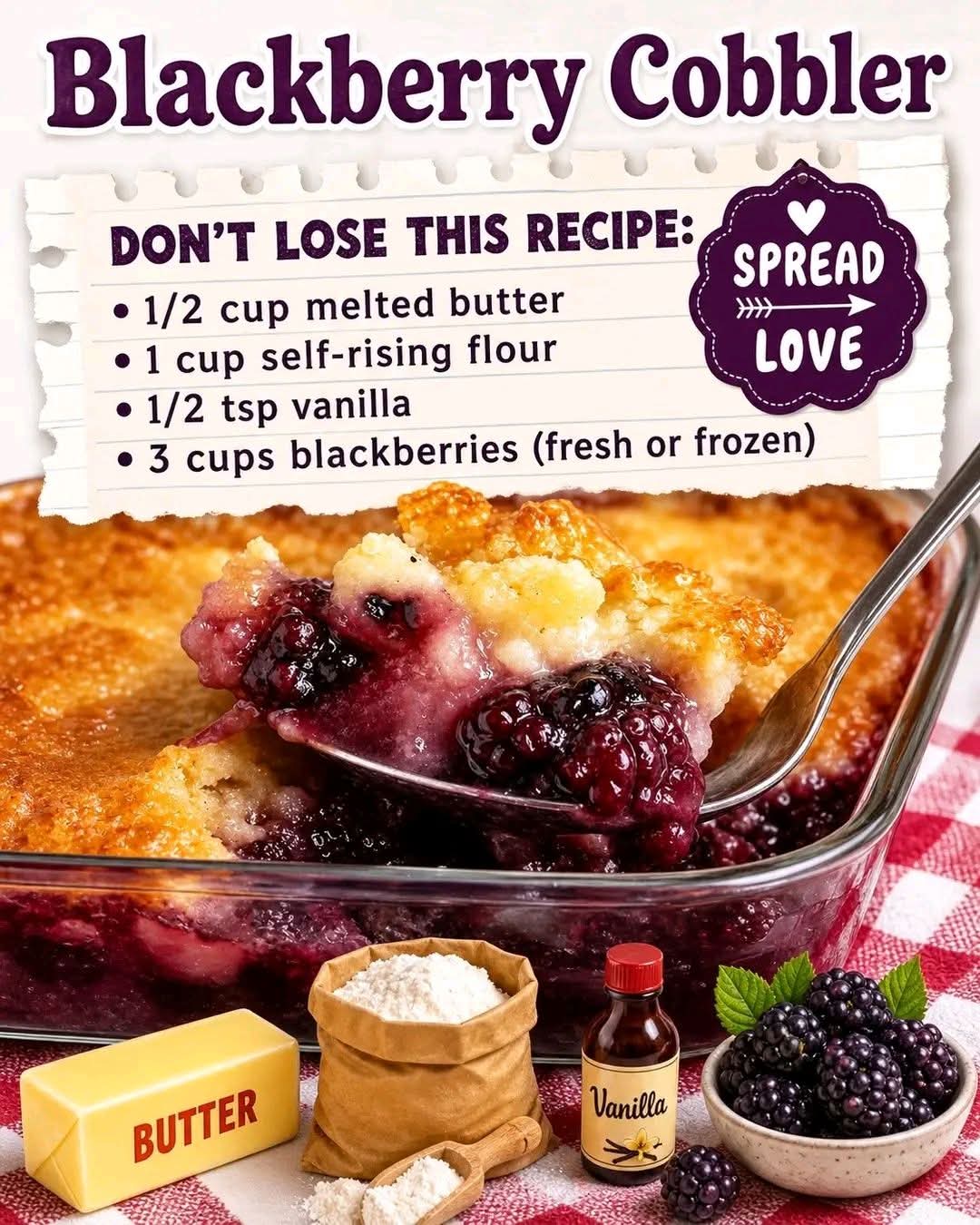
Here is a big, detailed Blackberry Cobbler recipe with everything you asked for—introduction, history, methods, and more.
🫐 Blackberry Cobbler (Old-Fashioned Southern Style)
🌿 Introduction
Blackberry cobbler is one of those timeless desserts that brings warmth, comfort, and nostalgia to the table. With its bubbling fruit, golden crust, and buttery sweetness, it represents simple home baking at its finest. Traditionally served in the American South, this dessert was often made during blackberry season when wild berries were freshly picked from fields and hedgerows.
What makes cobbler special is its rustic nature—no perfection required, just simple ingredients coming together into something magical.
🫐 Ingredients
Fruit Layer:
- 3 cups blackberries (fresh or frozen)
- 1 cup sugar (adjust depending on berry tartness)
- 1 tsp lemon juice (optional but enhances flavor)
Batter:
- 1/2 cup melted butter
- 1 cup self-rising flour
- 1 cup sugar
- 1 cup milk
- 1/2 tsp vanilla extract
👩🍳 Instructions
Step 1: Prepare the Oven
Preheat your oven to 350°F (175°C).
Step 2: Butter Base
Pour the melted butter into a 9×9-inch baking dish. Do not spread—just let it sit.
Step 3: Make the Batter
In a mixing bowl, whisk together:
- flour
- sugar
- milk
- vanilla
Mix until smooth and lump-free.
Step 4: Layer Without Stirring
Pour the batter directly over the butter in the baking dish. Do not stir—this is key to creating the cobbler’s signature layered texture.
Step 5: Add Blackberries
Evenly scatter blackberries over the batter. They will sink and rise naturally while baking.
Step 6: Bake
Bake for 45–55 minutes, or until:
- the top is golden brown
- edges are crisp
- filling is bubbling
Step 7: Cool and Serve
Let it cool for 10–15 minutes before serving.
Best served warm.
🔬 Methods (How It Works)
This cobbler uses a self-rising batter method, which creates a unique rise during baking.
- The butter floats at the bottom, creating a crisp golden crust.
- The batter rises through the fruit while baking.
- Blackberries release juice, forming a rich syrup inside.
- The result is a soft cake-like top with jammy fruit underneath.
This “no-stir” technique is what gives cobbler its signature rustic texture.
📜 History of Blackberry Cobbler
Cobbler originated in early American colonial kitchens. Settlers who lacked traditional ovens and pastry ingredients adapted by pouring biscuit or batter mixtures over fruit and baking them over open fires.
Blackberries were especially popular in the Southern United States due to their abundance in the wild. Families would gather berries during summer and preserve them through cobblers, jams, and pies.
Over time, cobbler became a staple of Southern comfort food, often passed down through generations as a cherished family recipe.
🧬 Formation (Texture & Flavor Development)
During baking:
- Sugar dissolves into berry juice → forms syrup
- Butter enriches the batter → creates richness
- Flour thickens into a soft cake layer
- Heat caramelizes the top → golden crust
This layering effect is what gives cobbler its signature “self-forming” structure.
🍽️ Serving Suggestions (Love for It)
Blackberry cobbler is often enjoyed:
- With vanilla ice cream (classic pairing)
- With whipped cream
- With a drizzle of warm cream or custard
It’s a dessert loved for its simplicity and emotional comfort—many people associate it with family gatherings, summer harvests, and homemade warmth.
❤️ Conclusion
Blackberry cobbler is more than just a dessert—it’s a piece of culinary tradition. Its beauty lies in its simplicity: no complicated steps, no perfect shaping, just honest ingredients transforming into something rich, warm, and deeply satisfying.
It reminds us that the best desserts are often the ones made with patience, memory, and a little bit of love.
💛 Final Thought
Whether you enjoy it fresh from the oven or reheated the next day, blackberry cobbler always carries that homemade charm that feels like a hug in a bowl.
If you want, I can also turn this into a , a , or a .