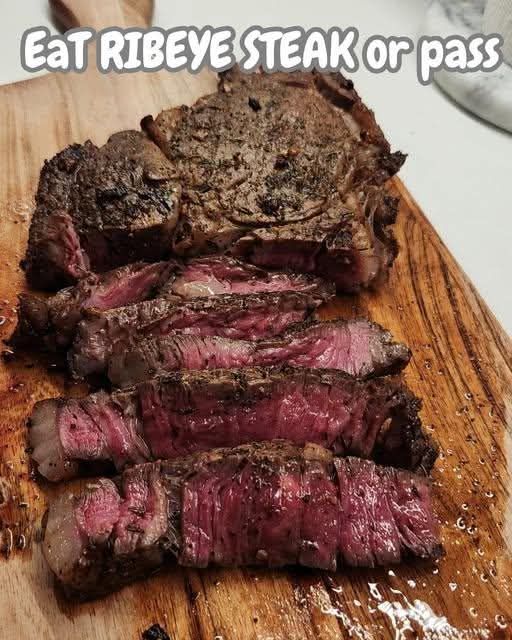
🥩 PERFECT RIBEYE STEAK (STEAKHOUSE STYLE AT HOME) 🔥
🌟 Introduction
A ribeye steak is one of the most prized cuts of beef thanks to its rich marbling, buttery texture, and deep beef flavor. When cooked properly in a hot pan and finished with butter and herbs, it turns into a restaurant-quality dish right in your kitchen. This recipe focuses on achieving a golden crust, juicy center, and bold flavor in every bite.
🛒 Ingredients
- 1–2 ribeye steaks (1 to 1½ inches thick)
- 1–2 tbsp salt (coarse or kosher preferred)
- 1 tbsp freshly ground black pepper
- 1 tsp garlic powder (optional)
- 1–2 tbsp high smoke point oil (canola, avocado, or vegetable oil)
- 3–4 tbsp butter
- 3–5 garlic cloves, smashed
- Fresh rosemary or thyme sprigs
👨🍳 Instructions
1. Prepare the steak
Pat the ribeye dry with paper towels. This step is crucial for a perfect crust. Moisture prevents proper searing.
Season generously on both sides with salt, pepper, and garlic powder (if using). Let it sit at room temperature for 20–30 minutes.
2. Heat the pan
Place a cast-iron skillet over high heat until it is smoking hot. A properly heated pan is the secret to a steakhouse crust.
Add the oil and swirl to coat the pan.
3. Sear the steak
Place the ribeye in the pan and do not move it. Sear for 2–3 minutes per side until a deep brown crust forms.
Use tongs to sear the fat edge as well for extra flavor.
4. Butter basting
Reduce heat to medium-low. Add butter, garlic, and herbs to the pan.
Tilt the pan slightly and continuously spoon the melted butter over the steak for 1–3 minutes. This builds flavor and keeps the steak juicy.
5. Check doneness
Use a meat thermometer for best results:
- Rare: 120–125°F (49–52°C)
- Medium rare: 130–135°F (54–57°C)
- Medium: 140–145°F (60–63°C)
6. Rest the steak
Remove the steak and let it rest for 5–10 minutes. This allows the juices to redistribute inside the meat.
🔥 Methods (Cooking Techniques Explained)
- Dry brining: Salting ahead of time helps tenderize and deepen flavor
- High-heat searing: Creates the Maillard reaction (crispy brown crust)
- Butter basting: Adds richness and aromatic herb flavor
- Resting: Prevents juices from spilling out when sliced
📜 Short History of Ribeye Steak
Ribeye comes from the rib section of the cow, a part that does little work, making it naturally tender. Historically, rib cuts were prized in European and American butchery traditions for their balance of tenderness and marbling. Over time, ribeye became a steakhouse favorite due to its rich flavor and forgiving cooking style.
🧬 Formation (Why It Tastes So Good)
The ribeye’s flavor comes from intramuscular fat (marbling). When heated, this fat melts into the muscle fibers, creating a buttery texture and enhancing juiciness. The crust forms through caramelization and the Maillard reaction, which develops deep, savory flavors.
💖 Lovers Section (For Steak Lovers)
For those who truly love steak, ribeye is more than food—it’s an experience. The aroma of garlic butter, the sound of a hot sear, and the first juicy bite create a moment that feels indulgent and satisfying. It’s the kind of meal shared on special nights, date dinners, or celebrations where flavor matters most.
🧑🍳 Extra Tips (Chef Secrets)
- Always use a very hot pan for the crust
- Don’t overcrowd the pan
- Use tongs, not a fork (keeps juices inside)
- Add a tiny pinch of flaky salt right before serving
🏁 Conclusion
A perfect ribeye steak is simple but powerful—quality meat, high heat, and butter finishing. Master these steps and you can bring steakhouse-level flavor into your home anytime. Once you try it this way, you may never order steak out the same way again.
If you want, I can also give you a to go with it.