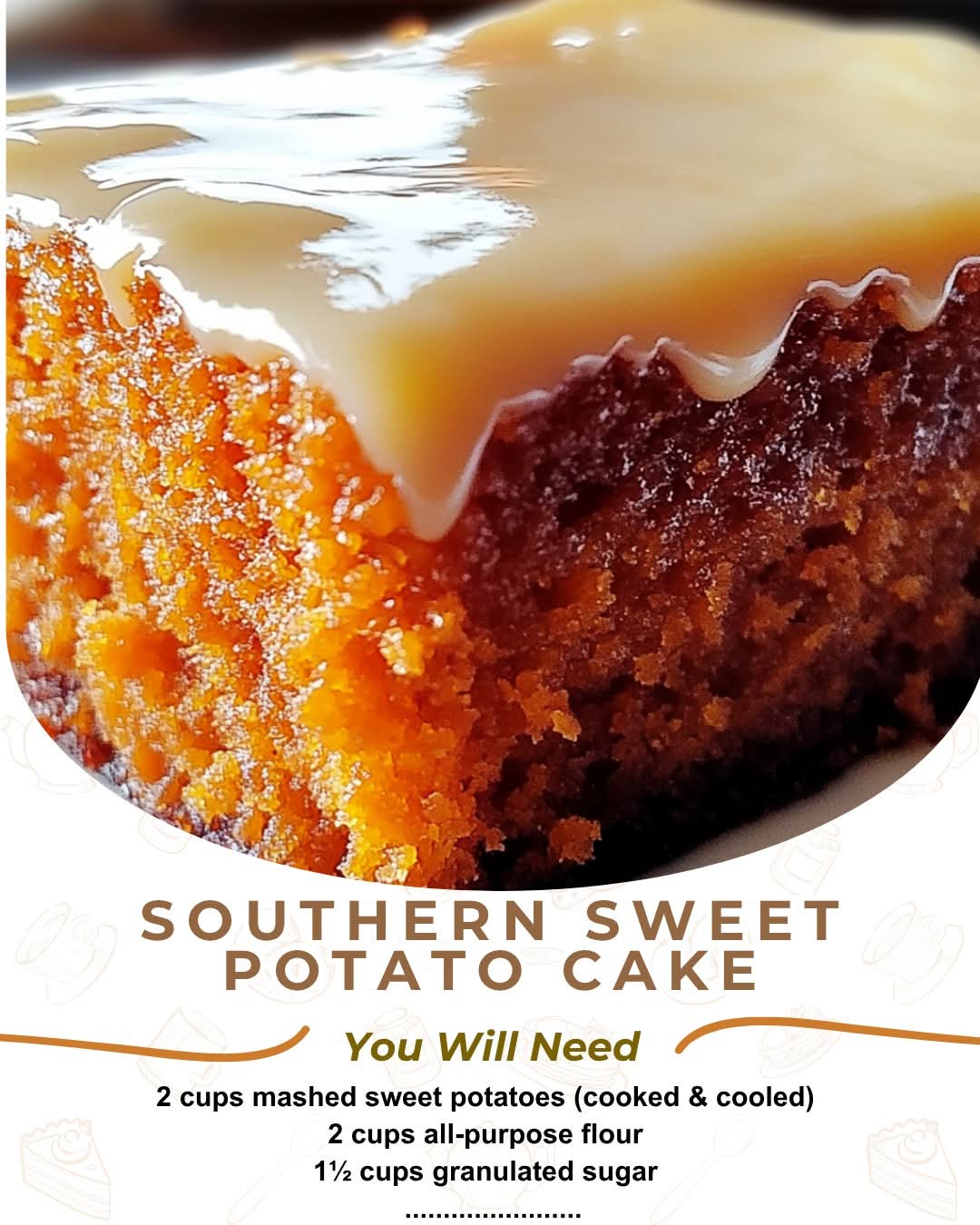
Here’s a full, indulgent, Southern-style recipe for your Southern Sweet Potato Cake 🍠 with everything you asked for—introduction, ingredients, instructions, methods, history, formation, and even a fun nod to sweet potato cake lovers.
Southern Sweet Potato Cake 🍠
Introduction
Southern Sweet Potato Cake is a warm, comforting dessert that celebrates the rich flavors of sweet potatoes, fragrant spices, and tender cake textures. A favorite in the American South, especially during the holidays, this cake balances earthy sweetness with a creamy vanilla glaze, making it irresistible to both family and friends. Perfect for festive gatherings, special occasions, or simply a cozy treat with afternoon tea, this cake is a true homage to Southern baking traditions.
Ingredients
For the Cake:
- 2 cups mashed sweet potatoes (cooked & cooled)
- 2 cups all-purpose flour
- 1½ cups granulated sugar
- ½ cup brown sugar
- 1 cup vegetable oil
- 4 large eggs
- 1 tsp vanilla extract
- 1 tsp baking soda
- ½ tsp baking powder
- ½ tsp salt
- 1½ tsp ground cinnamon
- ½ tsp ground nutmeg
- ¼ tsp ground cloves
For the Creamy Vanilla Glaze:
- 1 cup powdered sugar
- 2–3 tbsp milk (adjust for desired consistency)
- 1 tsp vanilla extract
- Pinch of salt
Instructions & Methods
Step 1: Prepare the Sweet Potatoes
- Peel and dice sweet potatoes.
- Boil or steam until tender (about 15–20 minutes).
- Drain and mash until smooth. Let cool completely.
Step 2: Preheat & Prepare
- Preheat your oven to 350°F (175°C).
- Grease and flour a 9×13-inch baking pan or line it with parchment paper.
Step 3: Mix the Wet Ingredients
- In a large bowl, whisk together the mashed sweet potatoes, granulated sugar, brown sugar, and vegetable oil until smooth.
- Beat in the eggs one at a time, then stir in vanilla extract.
Step 4: Combine the Dry Ingredients
- In a separate bowl, sift together the flour, baking soda, baking powder, salt, cinnamon, nutmeg, and cloves.
- Gradually fold the dry mixture into the wet mixture until fully incorporated.
Step 5: Bake the Cake
- Pour the batter into the prepared pan.
- Bake for 40–50 minutes, or until a toothpick inserted in the center comes out clean.
- Allow the cake to cool completely before glazing.
Step 6: Make the Creamy Vanilla Glaze
- In a small bowl, whisk together powdered sugar, milk, vanilla extract, and a pinch of salt.
- Adjust the consistency—thicker for drizzling or thinner for pouring.
- Drizzle over the cooled cake.
History & Formation
Sweet potatoes have been cultivated in the Americas for thousands of years, becoming a staple in Southern cuisine due to their natural sweetness and versatility. Sweet Potato Cake likely originated as a holiday dish in the Southern United States, combining mashed sweet potatoes with warming spices to create a dessert reminiscent of pumpkin pie but with a denser, cake-like texture. Its formation—a blend of moist cake and silky glaze—is designed to balance flavor and texture, making each bite rich yet delicate.
Conclusion
Southern Sweet Potato Cake is more than a dessert; it’s a celebration of tradition, warmth, and comfort. Its aromatic spices, soft crumb, and luscious glaze make it a crowd-pleaser, perfect for family dinners, Thanksgiving, or just a sweet afternoon indulgence.
Lovers’ Notes
This cake has a dedicated following among sweet potato enthusiasts! Lovers of Southern baking praise its moist texture, the subtle spice harmony, and how the creamy vanilla glaze elevates every bite. Some even enjoy it with a scoop of vanilla ice cream or a dollop of whipped cream for an extra touch of decadence.
Methods with Lovers
- Classic Method: Bake in a 9×13 pan and drizzle glaze over the top.
- Layered Method: Slice cake horizontally to create layers; fill with cream cheese frosting for extra indulgence.
- Mini Cakes: Pour batter into muffin tins for individual sweet potato cupcakes—perfect for gatherings.
If you want, I can also create a visually stunning step-by-step guide with images of each stage so it’s easier to bake like a pro. It would look like a magazine-style recipe!
Do you want me to do that next?