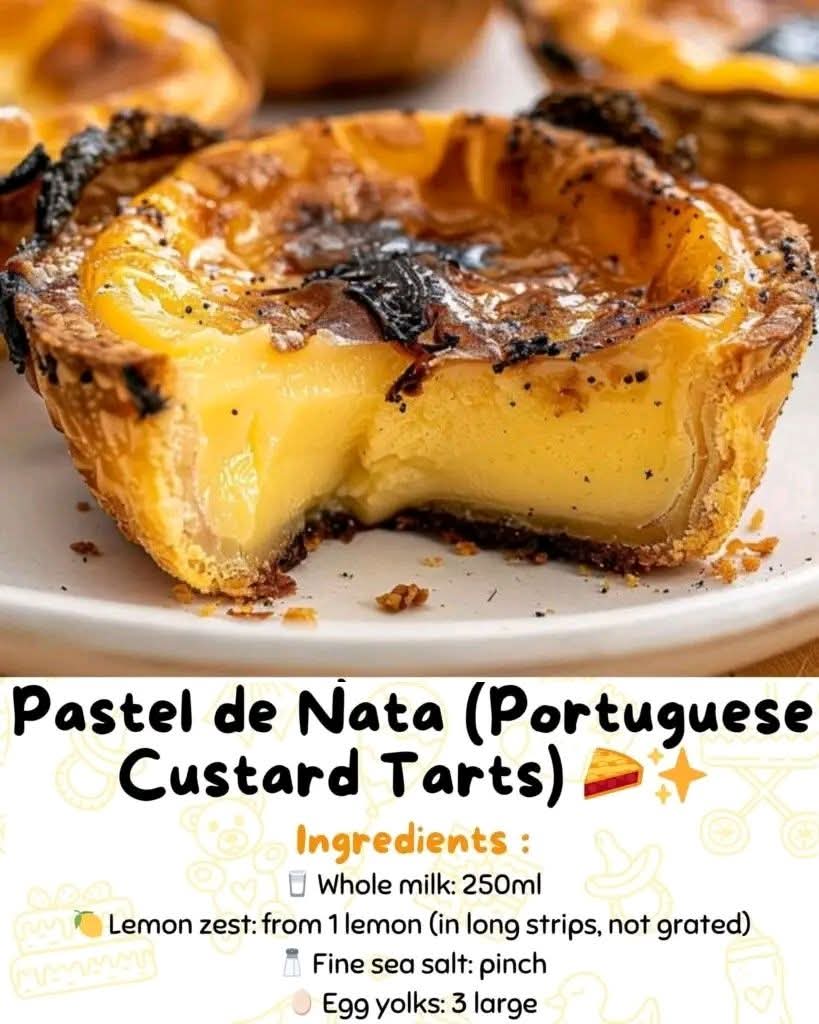
🇵🇹 Authentic Portuguese Custard Tarts (Pastéis de Nata)
✨ Introduction
Few desserts in the world are as iconic and irresistible as the Portuguese custard tart, known as . With its crisp, flaky pastry shell and silky, caramelized custard center, this treat is a perfect balance of texture and flavor. Traditionally enjoyed warm with a sprinkle of cinnamon or powdered sugar, these tarts are a staple in Portuguese cafés and bakeries.
🧾 Ingredients
🥛 Custard Filling
- 250 ml whole milk
- Zest of 1 lemon (long strips, no white pith)
- Pinch of fine sea salt
- 1 cinnamon stick
- 3 large egg yolks
- 100 g granulated sugar
- 30 g all-purpose flour
- 125 ml water
🥐 Pastry
- 1 sheet puff pastry (preferably high-quality or homemade)
- Butter (for greasing molds if needed)
🌟 Optional Toppings
- Ground cinnamon
- Powdered sugar
🍳 Instructions
1. Prepare the Custard Base
- In a saucepan, combine milk, lemon zest, cinnamon stick, and salt.
- Heat gently until steaming (do not boil), then remove from heat and let infuse for 10 minutes.
2. Make the Sugar Syrup
- In another saucepan, combine sugar and water.
- Bring to a boil and cook until it reaches a light syrup consistency (about 3–4 minutes).
- Set aside without stirring.
3. Create the Custard
- Whisk flour into the warm milk mixture until smooth.
- Return to heat and cook gently until slightly thickened.
- Slowly pour in the sugar syrup while whisking continuously.
- Remove from heat and let cool slightly.
- Whisk in egg yolks until fully combined.
- Strain the custard to remove zest and cinnamon stick.
🥐 Shaping the Pastry
- Roll the puff pastry tightly into a log.
- Cut into small pieces (about 2–3 cm thick).
- Place each piece into a tart mold or muffin tin.
- Press and stretch the dough up the sides to form a thin shell.
🔥 Baking
- Preheat oven to 250°C (480°F) — very hot is key!
- Fill each pastry shell about ¾ full with custard.
- Bake for 12–15 minutes until tops are blistered and caramelized.
- Cool slightly before removing from molds.
🧠 Methods & Tips (Chef Secrets)
- High Heat Magic: The signature dark spots come from intense heat—don’t be afraid of browning.
- Texture Balance: Custard should be creamy, not rubbery—avoid overbaking.
- Pastry Technique: Rolling the dough into a spiral creates the traditional flaky layers.
- Flavor Boost: Letting the milk infuse properly enhances the aromatic depth.
📜 History
The origins of date back to the 18th century in Lisbon, specifically at the famous monastery known as . Monks used leftover egg yolks (after using egg whites for starching clothes) to create rich pastries.
Later, the recipe was commercialized by the legendary bakery Pastéis de Belém, which still serves one of the most famous versions today.
🧁 Formation (What Makes It Special)
- Crispy outer shell from laminated pastry
- Silky custard center infused with citrus and spice
- Caramelized top with signature dark spots
- Perfect size for a quick indulgence
❤️ Why People Love It
- A comforting blend of creamy and crunchy
- Not overly sweet, with a refined flavor
- Perfect with coffee or tea
- A symbol of Portuguese culinary tradition
🏁 Conclusion
Making at home is a rewarding experience that brings a taste of Portugal right into your kitchen. While it may seem delicate, with the right technique and a bit of patience, you’ll create bakery-quality tarts that rival those found in Lisbon.
If you want, I can also give you a super easy shortcut version or a bakery-style professional version 👀