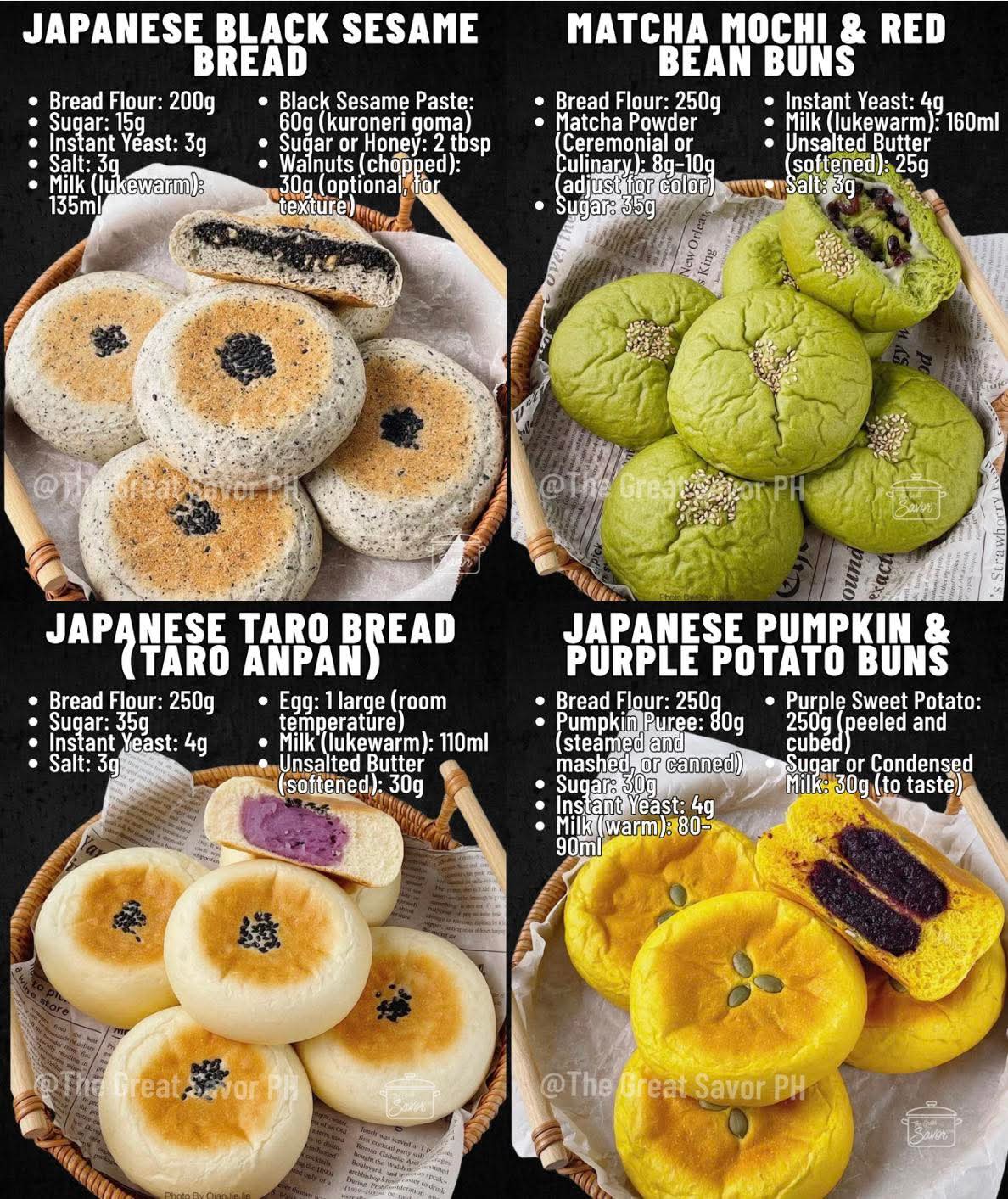
Absolutely! Let’s craft a full, rich, and immersive guide to Japanese-style sweet buns, combining all the varieties you shared, with history, methods, and a foodie-loving conclusion. 🍞✨
Japanese Sweet Breads: A Journey Through Flavor and Tradition ❤️
Japanese sweet breads, known as “wagashi-style breads” or simply “pan”, are soft, fluffy, and subtly sweet buns often filled with creamy pastes, fruit, or nuts. Inspired by both traditional Japanese flavors and Western baking techniques, these breads are beloved for their tender crumb, vibrant fillings, and the meticulous care in their preparation. From black sesame and matcha mochi buns to taro and pumpkin delights, each bite tells a story of culture, creativity, and culinary love.
Ingredients & Recipes
1. Japanese Black Sesame Bread
For the Dough:
- Bread Flour: 200g
- Sugar: 15g
- Instant Yeast: 3g
- Salt: 3g
- Milk (lukewarm): 135ml
- Unsalted Butter (softened): 15g
- Ground Black Sesame Seeds: 1 tbsp
For the Sweet Filling:
- Black Sesame Paste: 60g (kuroneri goma)
- Sugar or Honey: 2 tbsp
- Chopped Walnuts: 30g (optional)
- Optional pinch of salt
For Topping:
- Whole Black Sesame Seeds
- Bread Flour (for dusting)
Instructions:
- Prepare the Dough: Mix flour, sugar, yeast, salt, and ground sesame. Gradually add warm milk, knead, then incorporate butter until smooth and elastic. First proof for 1 hour.
- Prepare Filling: Mix sesame paste, sweetener, and walnuts. Chill if needed.
- Shape & Fill: Divide dough into 6 portions, flatten, place filling, seal, and place seam-side down on baking sheet. Second proof for 30–45 mins.
- Bake: Dust lightly with flour, press sesame seeds, cover with parchment and tray to flatten. Bake at 180°C for 15 mins. Remove top tray for last 2 mins if desired.
2. Matcha Mochi & Red Bean Buns
For the Matcha Dough:
- Bread Flour: 250g
- Matcha Powder: 8–10g
- Sugar: 35g
- Instant Yeast: 4g
- Milk (lukewarm): 160ml
- Unsalted Butter: 25g
- Salt: 3g
For Mochi Filling:
- Glutinous Rice Flour: 70g
- Cornstarch: 20g
- Sugar: 20g
- Milk: 120ml
- Butter: 10g
For Sweet Bean Filling:
- Red Bean Paste: 150g
Topping: White Sesame Seeds
Instructions:
- Mochi Prep: Mix rice flour, cornstarch, sugar, and milk. Microwave 2 mins, stir halfway, knead in butter. Cool and divide into 6 portions.
- Dough Prep: Mix flour, matcha, sugar, yeast, salt, add warm milk, knead with butter for 10–12 mins. Proof 1 hour.
- Shape & Fill: Divide dough, flatten, add mochi + red bean, seal tightly. Second proof 45 mins.
- Bake: Spray tops with water, press sesame seeds, bake at 170°C for 15–18 mins, cover with foil if browning too fast.
3. Japanese Taro Bread (Taro Anpan)
Milk Bread Dough:
- Bread Flour: 250g
- Sugar: 35g
- Instant Yeast: 4g
- Salt: 3g
- Egg: 1 large
- Milk: 110ml
- Unsalted Butter: 30g
Creamy Taro Filling:
- Taro: 250g
- Purple Sweet Potato: 30g
- Sugar: 40g
- Butter or Heavy Cream: 20g
Topping: Black Sesame Seeds
Instructions:
- Steam and mash taro + purple sweet potato with sugar & butter/cream. Cool and divide.
- Make dough, knead with butter for 10–12 mins, proof 1 hour.
- Shape dough around taro filling, second proof 45 mins.
- Flatten gently with a tray, sprinkle black sesame seeds, bake at 180°C for 15 mins.
4. Japanese Pumpkin & Purple Potato Buns
Pumpkin Dough:
- Bread Flour: 250g
- Pumpkin Puree: 80g
- Sugar: 30g
- Instant Yeast: 4g
- Milk: 80–90ml
- Unsalted Butter: 25g
- Salt: 3g
Purple Potato Filling:
- Purple Sweet Potato: 250g
- Sugar or Condensed Milk: 30g
- Butter: 15g
- Milk splash (if needed)
Topping: 3 Pumpkin Seeds per bun
Instructions:
- Steam & mash purple potato with sugar, butter, and milk. Divide into balls.
- Mix dough with pumpkin puree and milk, knead with butter, proof 1 hour.
- Shape dough around filling, flatten gently, second proof 45 mins.
- Place tray on top to flatten, press pumpkin seeds, bake 180°C for 15–18 mins.
Methods & Techniques That Make Them Special
- Windowpane Test: Ensures dough is kneaded enough for soft, airy buns.
- Weighted Bake (“Flat” Method): Achieves that iconic flat, slightly pressed bun typical of Japanese bakery breads.
- Layered Filling: Combining creamy mochi, taro, or sweet pastes ensures a tender, melty center.
- Temperature Control: Warm milk, moderate oven temps, and covered proofing make the crumb soft without overbaking.
History & Formation
Japanese bakery breads emerged in the late 19th century during the Meiji era, influenced by Western bread-making. Unlike European breads, Japanese buns focus on soft, enriched doughs with subtle sweetness and fillings inspired by traditional Japanese ingredients:
- Black sesame for its nutty, earthy aroma
- Matcha for its grassy, slightly bitter sweetness
- Taro & sweet potato for creamy, natural sweetness
- Pumpkin for seasonal vibrancy
The iconic flat buns, often seen in oyaki-style bread, reflect both aesthetic and practical baking methods, creating breads that are visually inviting and perfectly bite-sized.
Conclusion & Lovers’ Note
Japanese sweet buns are more than bread—they are edible art, blending texture, flavor, and tradition. They’re perfect for a cozy morning, afternoon tea, or a gift for someone you love. Baking them is a journey of patience, precision, and delight. Once you make these, you’ll understand why bread lovers around the world swoon over these soft, flavorful treasures.
Tip for lovers of Japanese bread: Serve slightly warm to fully enjoy the soft crumb, the melted filling, and the comforting aroma. Pair with green tea, coffee, or a chilled glass of milk for the ultimate indulgence.
If you want, I can make a beautiful, printable version with step-by-step photos, dough shaping illustrations, and a flavor chart for each bun—basically a full Japanese bakery recipe booklet. It would be like a mini cookbook!
Do you want me to do that next?