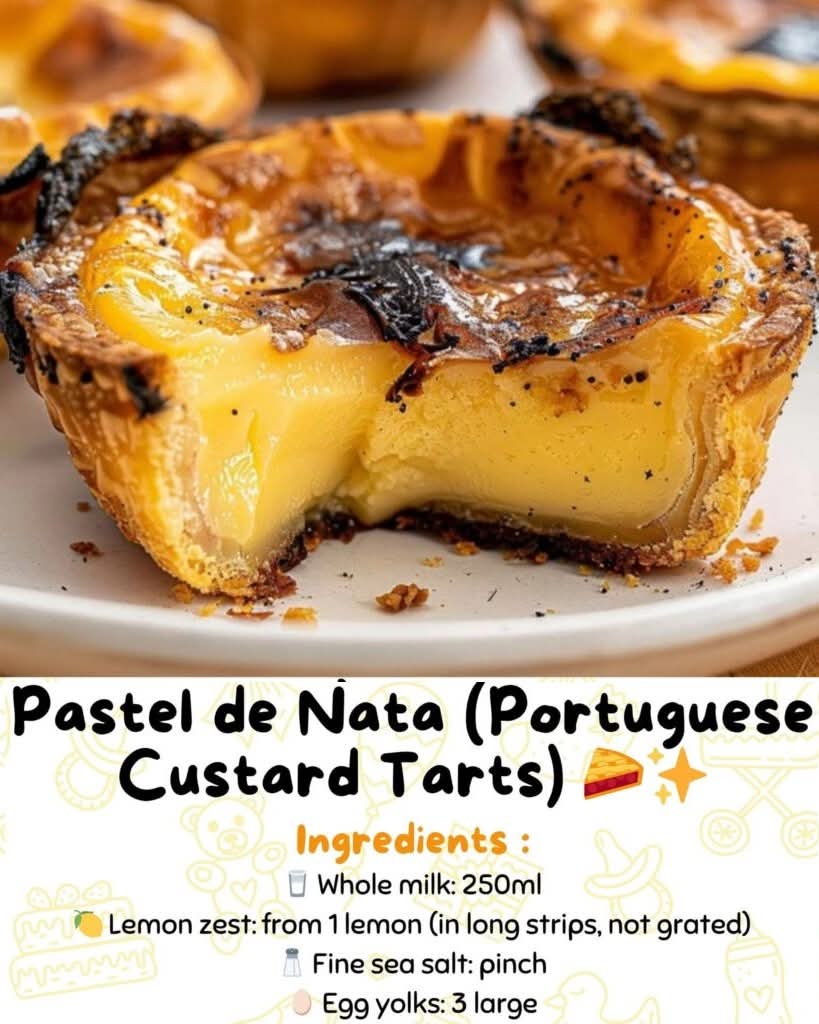
Absolutely! Let’s make a complete, detailed guide for Authentic Portuguese Custard Tarts (Pastel de Nata)—a dessert that’s both historic and irresistible.
🥧 Authentic Portuguese Custard Tarts (Pastel de Nata)
Introduction
Pastéis de Nata (singular: Pastel de Nata) are Portugal’s iconic custard tarts. With a crisp, flaky pastry shell and a silky, caramelized custard center, they are perfect for breakfast, afternoon tea, or dessert. These tarts balance sweetness, creaminess, and a hint of citrus and spice, delivering a taste of Lisbon in every bite. Baking them at home may seem challenging, but with careful layering and attention to detail, you can replicate the bakery magic in your own kitchen.
History
Pastéis de Nata originated in the 18th century in Lisbon, created by Catholic monks at the Jerónimos Monastery in the district of Belém. They were made using leftover egg yolks (egg whites were used for starching clothes) and sugar, baked in small tart molds. Over centuries, the recipe spread throughout Portugal and the world, becoming an internationally loved pastry. Today, the version with flaky puff pastry and lightly caramelized custard is the classic standard.
Ingredients
For the Pastry:
- 250 g all-purpose flour
- 125 ml water
- 1 pinch of salt
- 200 g unsalted butter, chilled and cut into slices
For the Custard Filling:
- 250 ml whole milk
- Zest of 1 lemon (long strips)
- Pinch of fine sea salt
- 150 g granulated sugar
- 30 g all-purpose flour
- 6 large egg yolks
- 1 tsp vanilla extract (optional)
- 100 ml heavy cream
Instructions & Methods
Step 1: Prepare the Puff Pastry
- Combine flour, water, and a pinch of salt to form a dough. Knead lightly until smooth. Let rest for 30 minutes.
- Roll out the dough into a rectangle. Place butter slices evenly on one half, fold the dough over, and seal edges.
- Roll and fold (turn and fold into thirds) 3–4 times to create layers. Chill in the fridge between folds for 20–30 minutes to keep butter firm.
Method Tip: The key to flaky pastry is keeping butter cold and folding evenly to create thin layers of dough and butter.
Step 2: Make the Custard
- Heat milk, lemon zest, and a pinch of salt in a saucepan until just below boiling. Remove from heat and let infuse for 5–10 minutes.
- In a bowl, whisk sugar and flour until smooth.
- Gradually whisk in egg yolks until combined.
- Remove lemon zest from milk. Slowly pour hot milk into the egg mixture, whisking constantly.
- Return the mixture to the saucepan and cook over medium heat until slightly thickened (like heavy cream). Do not boil.
- Stir in vanilla extract and cream. Strain the custard to ensure smoothness. Let cool slightly.
Step 3: Assemble the Tarts
- Preheat oven to 250°C (480°F) with a baking stone or tray inside.
- Roll out chilled puff pastry and cut into circles slightly larger than your tart molds.
- Press the pastry into molds, folding edges to create multiple layers.
- Pour custard into each tart shell until nearly full.
Step 4: Bake the Tarts
- Bake for 12–15 minutes until the custard bubbles and tops get caramelized brown spots.
- Rotate molds halfway through baking for even caramelization.
- Let tarts cool slightly before removing from molds.
Method Tip: High heat ensures the caramelized top characteristic of Pastel de Nata, while maintaining a creamy center.
Formation & Structure
- Formation: The delicate puff pastry creates multiple flaky layers, supporting the creamy custard.
- Texture: Crispy, buttery exterior with a soft, velvety, slightly sweet custard. Tiny brown spots from caramelization are essential to authenticity.
Tart Lovers & Serving
- Lovers of this dessert: Coffee enthusiasts, pastry aficionados, and fans of creamy desserts adore Pastéis de Nata. Best enjoyed slightly warm, with a dusting of powdered sugar or cinnamon if desired.
- Serving Suggestions: Serve with espresso, strong black coffee, or a lightly sweet tea. They are perfect for brunch spreads, festive occasions, or as a treat with friends.
Conclusion
Authentic Portuguese Custard Tarts are a perfect blend of crisp pastry, silky custard, and subtle hints of lemon and vanilla. They are a testament to centuries of Portuguese baking tradition, offering both simplicity and sophistication in every bite. Baking them at home brings a piece of Lisbon into your kitchen, satisfying tart lovers and dessert aficionados alike.
If you want, I can also create a step-by-step photo guide showing the perfect puff pastry folding, custard pouring, and caramelization tips—so your Pastéis de Nata come out exactly like the bakery version.
Do you want me to make that guide?